NCPEDP calls for political reservation for persons with disabilities
Hailing Prime Minister Narendra Modi for a landmark reform to mainstream women’s political participation, the National Centre for Promotion of Employment for Disabled People (NCPEDP) has called for a parallel national discourse on ensuring political representation for persons with disabilities.
As Parliament convenes from April 16–18 to deliberate on the Constitution (106th Amendment) Act, which proposes 33 per cent reservation for women in the Lok Sabha and State Legislative Assemblies, along with an expansion of seats, NCPEDP has termed this a historic opportunity to address the long-standing underrepresentation of persons with disabilities in legislative bodies.
In this regard, NCPEDP has written to the President of India, Vice President, Prime Minister, Lok Sabha Speaker, and leaders across political parties, urging the inclusion of political reservation for persons with disabilities within the broader electoral reform framework.
“While the Women’s Reservation Bill is a transformative step, it must also open the door for broader inclusion. Persons with disabilities remain significantly underrepresented in decision-making spaces. Ensuring their participation is essential for a truly inclusive democracy,” said Arman Ali, Executive Director, NCPEDP.
The organisation has highlighted that “political barriers” are explicitly recognised under the Rights of Persons with Disabilities Act, 2016, and the absence of representation often results in disability concerns being overlooked in policymaking.
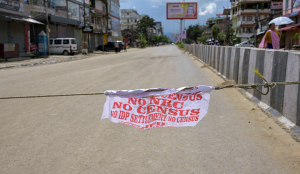
“India is home to one of the largest populations of persons with disabilities. As per the 2011 Census, over 2.68 crore individuals were identified as persons with disabilities, a number widely considered an underestimation. With updated data expected in the upcoming Census, the need for direct political representation has become increasingly urgent,” added Ali.
NCPEDP has urged Members of Parliament to take up this issue during the ongoing session and work towards integrating reservations for persons with disabilities within the broader electoral reforms.