Nano attempt, macro fallout

Two decades after the huge ‘Nano’ controversy, Singur, a small speck on the map of West Bengal, returns as a jumbo political issue. Just before the forthcoming assembly elections in the state, it raises the contentious issue about industry and manufacturing. In the past, Tata Group’s plan to make the small car in Singur disrupted local politics, and was partly responsible for the wreckage of the red bastion. Today, Chief Minister Mamta Banerjee, whose rise was cradled in Singur and its ‘nano’ politics, is battling the BJP over similar issues.
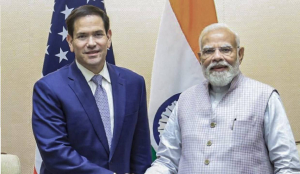
In West Bengal, and in Singur, which is a politically-sensitive region, ‘nano’ concepts tend to result in ‘macro’ political and economic fallouts. When Prime Minister Narendra Modi addressed a public rally in Singur (Hooghly district) last month, there were murmurs initiated by local BJP leaders that a major industrial investment was imminent in the area. Modi did not make lofty promises, but Banerjee reacted within 10 days. She landed with a clutch of projects and government initiatives. These were enough to re-stir the political cauldron, with each side trying to extract a magic electoral potion that will ensure victory.
Politically, Singur is one of West Bengal’s 294 assembly constituencies, where changing winds influence the voters. But the region’s story underscores the interplay between politics and business, as the extremely-emotive issue of farm land versus industry invariably dwells in the minds of the people. This is where a communist chief minister dreamt of attracting private capital decades ago in a state that hosted land reforms, but apparently neglected industry. In the state, and Singur, agrarian identities, and land ownership are crucial.
West Bengal is a dense patchwork of small farms, riverine plains, and peasant culture, which shaped politics for decades. Here, battles over land acquisitions by industry produce social, and political gains, and business trade-offs. Rural life is defined by smallholder cultivation, intensive rice and jute farming, and strong village institutions that tie land to social status and political efforts. Peasant movements and rural institutions historically anchored the Left’s rise, as land, tenancy rights, and rural patronage became the core of political legitimacy.
While the turf battle in Singur and Nandigram underscored West Bengal’s inherent romance with land, regular squabbles for upmanship, and administrative failure, the Centre allegedly remained indifferent to the state’s requirement, including adequate fund allotment. While the Economic Survey acknowledged the state's financial growth, it noted that West Bengal lagged Bihar, Jharkhand, and Odisha in terms of growth rate. The state's Net State Domestic Product (NSDP) at current prices grew by 9.86 per cent in 2024-25, an improvement from the 8.94 per cent in the previous fiscal, which is decent.
Although the numbers reflect growth, West Bengal is behind Bihar, which recorded an NSDP growth of 13.07 per cent in 2024-25, Odisha with 13.04 per cent, and Jharkhand with 10.88 per cent. One cannot even compare West Bengal to the larger states such as Tamil Nadu, with a robust growth of 15.76 per cent, Uttar Pradesh with 12.64 per cent, and Maharashtra with 11.85 per cent in the same year. Among other major economies, Karnataka and Andhra Pradesh posted growth rates of 12.79 per cent, and 12.28 per cent, respectively.
While it may provide little consolation, West Bengal performed better than some of the northern states and Union Territories, as the former’s growth was higher than Punjab’s 9.12 per cent, and Delhi’s 9.28 per cent. In addition, perceptions matter. Even today, despite some flows of capital in West Bengal, the state is seen as an industrial retard, or one where businesses tend to walk on eggshells, very carefully. Groups make a lot of noise, but are cagey to invest; they promise lots during the state’s investment summits, and sit tight.
Let us go back to history. Initially, the “tebhaga” movement, and the later peasant struggles created a political culture in the state where land reforms, and rural welfare served central electoral issues. The land reforms pursued two linked goals: Break the control of the large landlords, and secure rights for the actual tillers. Key measures included enforcing land ceilings, redistributing surplus land, and formalising tenancy through schemes like “Operation Barga,” which recorded sharecroppers’ rights and curtailed eviction.
These reforms aimed to reduce rural inequality, increase agricultural incentives, and stabilise peasant livelihoods. Early and mid-period reforms created a more egalitarian rural structure, and helped spur agricultural growth in the 1980s. The movement reduced landlessness among cultivators, secured the tillers, and led to a rise in productivity in some crops. But smaller landholding, benami transactions, and legal loopholes allowed land inequality to re-emerge. Implementation gaps and disputed titles constrained the reforms’ potential.
Meanwhile, business and industry, including multinationals, closed shops, and withdrew in the face of rising trade unionism, and a subtly unsupportive Centre that historically was opposed to the state regimes since the 1970s. Then came a communist leader, a poet and litterateur, realistic and go-getter, who made a tryst with capitalism, coining the slogan “Agriculture is our base, industry the future.” During his tenure, Chief Minister Buddhadeb Bhattacharjee meant business, literally, and was hailed by the industry as a poster boy for reforms.
“Reform, perform, or perish” was the communist chief minister’s message to the comrades, supporters, and voters. His oft-repeated mantra was, “Money has no colour.” In a red world, it was fine to woo greenbacks. However, the political tide turned against him, and Singur, where the Tata planned the Nano project, became a hot potato. Mamta’s rise ended the red raj, and shattered the communist-capitalist dreams. The Singur project, and a chemical hub in Nandigram were shelved.
Several interlocking factors explain the state’s industrial stagnation. Political-social resistance to land acquisition, like the conflicts at Singur and Nandigram over land for industrial projects, crystallised public opposition to forcible acquisition, and raised investor uncertainty. Another issue is that of policy and governance challenges, with periods of weak law-and-order perceptions, bureaucratic hurdles, and extortion concerns. Despite the land reforms, and land-driven local identities, there was still a need to woo investments and industry.
After assuming office, Mamata participated in business summits outside the state, and organised them in the state. She realised the land politics in Singur and Nandigram. When addressing prospective investors, she announced the creation of a “land bank” for the industry, which silently implied, and sent a strong message, that she would not repeat another episode of the ‘Nano’ Singur or Nandigram. The size, location, and other details of the land bank are not public.
(The author has more than three decades of experience across print, TV, and digital media); views are personal