Mumbai AQI hits 104, Bandra Kurla Complex in severe range
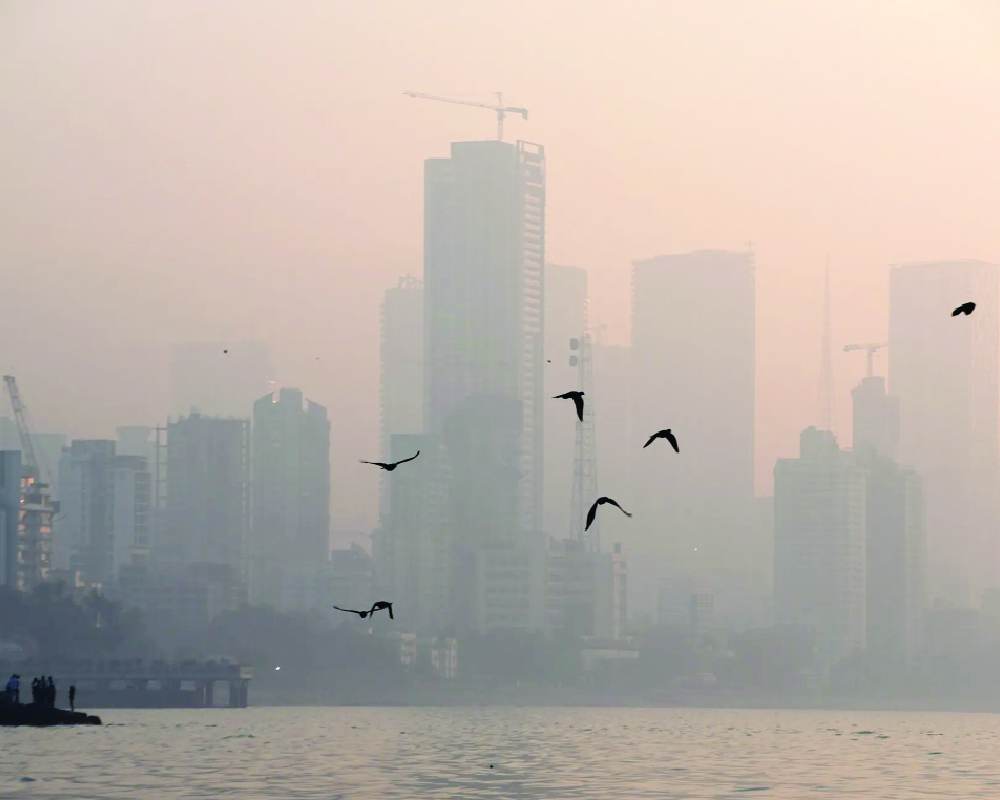
Experts have attributed the spike in the Air Quality Index (AQI) in Mumbai and its satellite cities to an increase in construction activities fuelled by various infrastructure projects as well as vehicular pollution. On Sunday, the average AQI of Mumbai was 104, which fell in the ‘moderate’ category. However, the AQI in some parts, like the Bandra Kurla Complex, was in the ‘severe’ range.
There are six AQI categories, which are good (0-50), satisfactory (51-100), moderately polluted (101-200), poor (201-300), very poor (301-400), and severe (401-500).
Angshuman Modak, a climate scientist with the Indian Institute of Technology Bombay, attributed the spike in the AQI level to construction activities and vehicular emissions as the main source of pollution.
Mumbai and its satellite cities are witnessing an urban transformation — from multiple Metro rail lines to road works, bridges and other building activities. Slums, chawls, the last of the mills and industrial units are giving way to skyscrapers.
Sushma Nair, a scientist with the India Meteorological Department (IMD), Mumbai, also attributed the worsening AQI Index to the infrastructure work in the city. Here is where the meteorological aspect also comes into play.
Nair said temperature inversion and north-easterly winds are a characteristic of this time of the season when there is a transition to winter. Conditions become favourable for temperature inversion when clearer skies allow the ground to cool rapidly and wind speeds are low.
So a layer of cold air gets trapped below warm air. Cold air being dense subsides, which does not allow the pollutants to disburse. However, for a metropolis like Mumbai, dense and tall urban structures can interfere with the air flow that can aid in dispersing the pollution, Nair explained.
On Thursday, the Brihanmumbai Municipal Corporation said various steps are being undertaken to address air pollution, including forcing bakeries and crematoriums to use cleaner fuels, introducing electric buses, managing construction debris scientifically, and using machines for sprinkling water on roads to control dust. In October last year, the BMC had issued 28 guidelines, which included installing metal fencing and green cloth covering around construction sites to control dust, carrying out water sprinkling, properly storing and transporting debris, installing air quality monitoring devices and setting up smoke absorption systems.
The BMC said it had issued a notice to stop work to 53 construction sites that were contributing to air pollution amid the deteriorating Air Quality Index in the metropolis.
These comprise 17 in Siddharth Nagar (G-South ward), five in Mazgaon (E ward) and 31 in Malad West (P-North ward). Additional Municipal Commissioner Ashwini Joshi also reviewed the operational status of sensor-based AQI monitoring systems at construction sites on Thursday. A total of 662 such systems have been installed across Mumbai, while the installation of another 251 is in progress.
Of these, 400 systems are integrated with a unified data dashboard. It was found that 117 systems are currently inactive. Joshi warned that strict action would be taken against responsible parties through the 95 ward-level flying squads if these sensors are found to be non-operational.