Move those vehicles off the roads
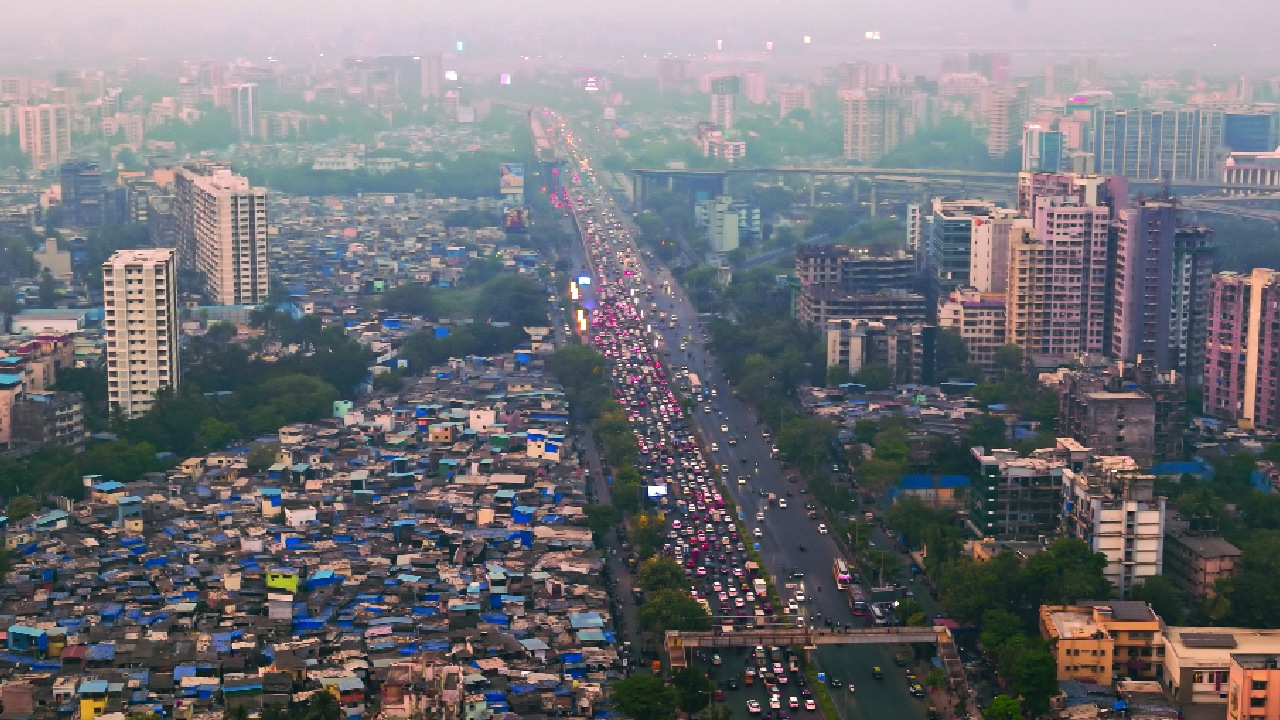
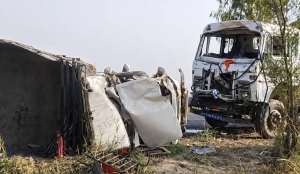
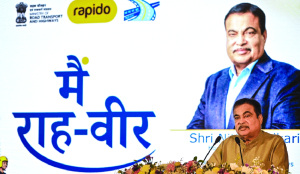
The rabbit is out of the hat. The cat is out of the bag, or rather set between the pigeons. Despite the cracking noises of Diwali crackers, crackling lights of farm fires, and flying dusts of creaking construction, vehicles are majorly responsible for the acute air pollution across Indian cities. Recently, the road transport and highways minister, Nitin Gadkari, publicly admitted that the transport sector contributes significantly to pollution, and stressed the urgent need to reduce the dependence on fossil fuels.
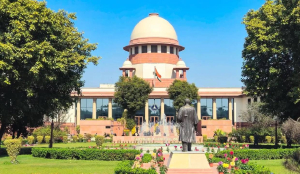
“I stay in Delhi for two days, and develop a throat infection,” he said, and added that 40 per cent of air pollution is linked to his ministry. Incidentally, experts have linked pollution to the number of vehicles as high density leads to increased emissions of particulate matter (PM), nitrogen oxides (NOx), and carbon monoxide (CO). Research proves that urban air quality deteriorates as the number of vehicles rises. Yet, over the years, the chief culprits and accused that stood in the Supreme Court included farmers, revelators, and builders.
India’s crackdown on pollution started with the apex court’s ban on crackers and sparklers. Although the prohibitions did not deter the celebrators, the Court came up with a unique concept of green crackers, whatever it means. This year, the smog clogged the lungs of citizens in Delhi, and other cities long after the Diwali smoke settled down. Obviously, Diwali was wrongly charged with murder in the pollution degree. “Parali,” or stubble burning, or the practice of clearing post-season crop residues by setting them on fire across North India found itself behind the bars. Yet, pollution roamed free.
Indian judges did not relent, and continued to grapple with the noxious issue through several stages of GRAP, or Graded Response Action Plan. It is a framework to manage air pollution in the National Capital Region (NCR), including Delhi. Under GRAP IV, construction is stopped, and vehicle movement restricted. The feeling was that the flying dust, sand, cement, and concrete cemented prolonged pollution. According to Gadkari, we were barking at the wrong trees, and missed the forest for the trees.
Earlier, Gadkari told the Lok Sabha that the number of registered vehicles in Delhi was more than half of the combined total of Mumbai, Kolkata, and Chennai. In July, he said that Delhi, with registered vehicles of more than 15 million then, accounted for more than 50 per cent of the vehicles in the four cities. Of the total of 30-odd million vehicles, 90 per cent (or 2.7 crore) were owned privately. To a parliamentary committee, the minister earlier admitted that a third of the vehicles plying in the Delhi-NCR region possibly did not have valid registrations, and fitness levels.
Yet, Gadkari, unlike recently, supported the Capital. Delhi-NCR region was at the forefront of adopting the emission norms. He told the committee that 8.5 million vehicles in the region complied with the BS-VI norms. Little did we know that this does not extinguish or exhaust emissions. Even with stricter norms like BS-VI, the cumulative effect overwhelms air quality. A study by the Institute of Electrical and Electronics Engineers emphasises that urbanisation, and rising vehicle numbers intensify pollution. It warned that the issue poses grave threats to both the environment and public health.
A recent article observes, “Road transport plays a crucial role as a source of urban air pollution in India, with vehicle stock growth directly linked to exhaust emissions.” The article, which analyses emissions between 1993 and 2018, concludes that the rapid increase in vehicle stock directly correlates with rising emissions. It highlights road transport as a dominant contributor to urban pollution. Another paper, published six years ago, reached the same conclusion. In addition, huge numbers lead to jams, and higher idling time, which raise per-vehicle emissions. Vehicles enhance the use of fossil fuels.
One knows that the 2024-25 list of the world’s top 20 most polluted cities includes 13 Indian ones. Delhi-NCR is the worst among the national capitals, and witnessed a sixth consecutive year of people being enveloped in thick layers of smog every winter. Maybe one can learn from the China experience. Until recently, Beijing and other Chinese cities were among the most polluted cities. The problems were mitigated as the Government developed practical and replicable practices. These included a scientific monitoring and regulatory system, transition to cleaner energy, and changes in industrial structures and layouts. Support came from the strengthening of joint regional prevention and control mechanisms.
Before 2013, Beijing's annual PM2.5 level was about 101.56 micrograms per cubic meter which, 10 years later came drastically down to 38.98 micrograms. “China and India share certain commonalities in the environmental challenges, and the sources of pollution,” observes an article in China’s People’s Daily news website. “Indian cities like Delhi are currently grappling with severe air pollution due to reasons including crop residue burning, vehicle emissions, and industrial activities, all of which have been key focuses in China's air governance agenda,” it states.
Clearly, two issues are crucial for the policy-makers, civil activists, and judiciary. First, there is a need to pinpoint the real causes of air pollution, and their contributions. As the smog in Delhi, and other parts of North India extend from October till January, blaming crackers and farm fires, which are temporary events, is not enough. One cannot stop construction, which is probably the most labour-intensive activity, and provides livelihoods to millions. One needs to stop illegal construction, which accounts for half or more of the total activity. Bulldozer-decisions are not a solution, as the destruction creates more pollution, and debris keeps lying for months and years.
The trick is to stop illegal activities through high fines. In addition, there may be a need to regularise existing illegal buildings through huge payments to re-register them. Second, the nation needs to find a comprehensive, and uniform policy to tackle the problem. Knee-jerk, emotional, and reactive decisions and bans will not work. They only enhance the rent-seeking activities. Policy-makers and implementers should tackle pollution at all levels, and in all its forms. The blame-game needs to stop, and a new gameplay must be in place.
Nothing proves this better than the scrapping policy for the vehicles. The Supreme Court banned petrol vehicles over 15 years, and diesel ones over 10 years. The Government opted for mandatory scrapping. The apex court allowed 15+5 policy if pollution norms are met. There is confusion and chaos. No one seems to ask the obvious question: How can a vehicle which is a polluter in Delhi-NCR become a non-polluter in other cities and states? This encouraged the rent-seekers.
(The author has more than three decades of experience across print, TV, and digital media); views are personal