Millionaires want super-rich taxed
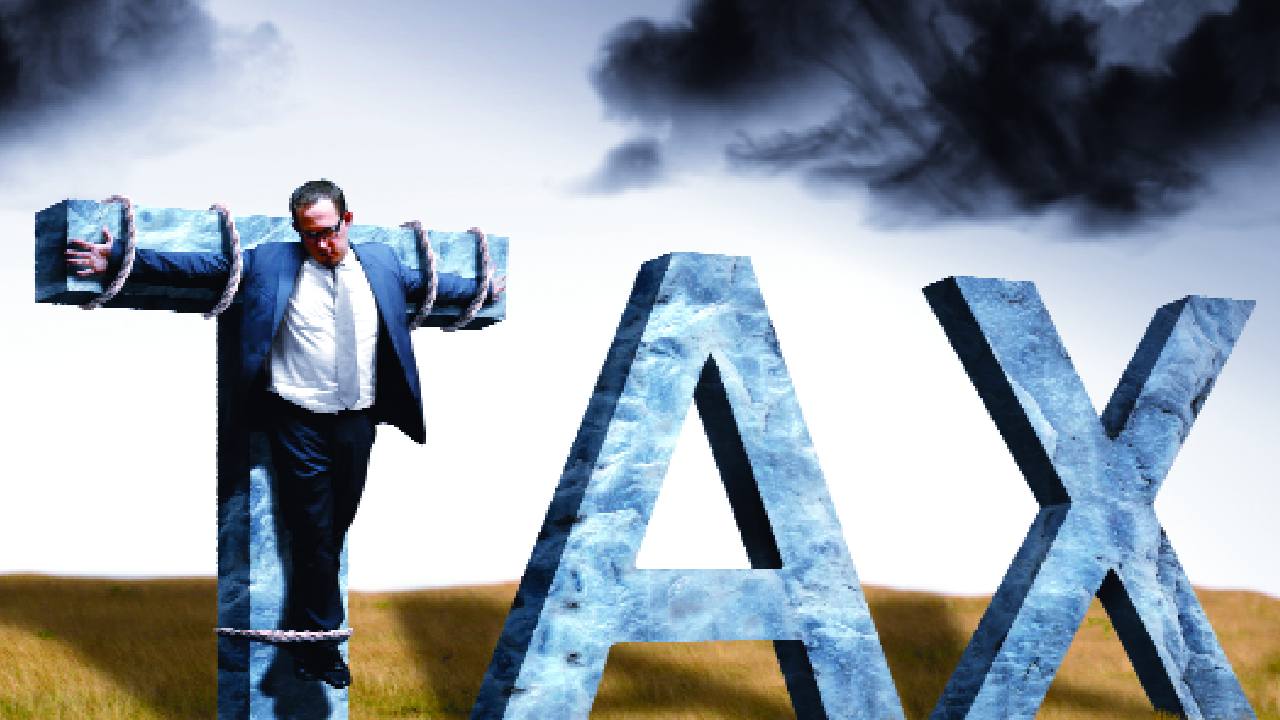
In an unprecedented move, 400 millionaires from 24 nations, who include known musicians, actors, film-makers, and physicists, wrote an ‘open letter’ to the world leaders at Davos. The dollar-millionaires demanded that their billionaire counterparts need to pay more tax to remove the existing inequalities. The letter stated that the issue was crucial, it was like a ticking social nuclear bomb, as the “gap between the super-rich and everyone else grows larger every day, stretching cross neighbourhoods, nations, and perhaps most of all, generations.” The letter, dubbed ‘Time to Win,’ added that the ultra-rich had “captured governments, stifled media, controlled technology, and worsened inequality, and environmental decline.” Hence, extreme wealth, which was concentrated in a few individuals, like the top one per cent, was harming the society, and pushing nations and the world “towards a dangerous tipping point.” It was a matter of time before the globe toppled on its head, and turned 180 degrees.
Another survey among 3,900 millionaires in G-20 nations found that 60 per cent of the respondents blame the antics of a “lawless president,” America’s Donald Trump, on extreme wealth. “Extreme wealth inequality enabled his every step, and is the root cause of the trend towards authoritarianism we are witnessing in the US, and around the world. If the leaders at Davos are serious about the threat to democracy, and the rule of law, they must get serious about combating extreme wealth concentration,” said one of the signatories to the millionaires’ letter. This is because, as the larger poll found, wealth is a threat to democracy. Of the 3,900 millionaires, 77 per cent believe that the super-rich “buy” political influence, and 71 per cent contend that they can “sway elections.” Hence, the solutions against extreme wealth need to be extreme, i.e., limits on political donations, and higher taxes on the super-rich.
Over the past few years, especially since the pandemic wealth inequality has gone up in most nations. This was stimulated by two parallel developments. The wealth of the middle class, and lower ones, dipped fantastically due to job and income losses, salary cuts and freezes, and work-from-home, which became like part-time work for many employees. Across several sectors, like construction, hospitality, and travel, jobs just vanished. Although the economies rebounded quite fast, the revival was not the same for each nation. Hence, the income-job impact of the pandemic lingered on for the employees, and became the norm in many cases, as firms realised that they could indeed do more work with less workers. The induction of technology, and AI tools, which combined with the revivals in the post-pandemic period, although one is not sure about the cause-and-effect, dented employment opportunities. Many employees, who were asked to work from home, stayed at home.
For the wealthy, the dips in stock markets, commodities, and businesses were scary and seemed earth-shattering. But when some of the sectors revived within a few months, the upturns were magical. Stock prices went through the roofs, commodity prices jumped, and bullion went tizzy with dizzying effects. Within no time, the super-rich were richer than the pre-pandemic period. Indeed, within a few years, they were multiple times richer than before. Their wealth zoomed to never-seen-before heights. Valuations were crazy and, as is usual, the retail investors, and the middle class, was quite late in joining the wealth party. The never-ending party further divided the super-rich and others, as wealth inequalities widened. According to the IMF, “As suffering and poverty have risen, some data show an increase in another extreme: The wealth of billionaires. With both extreme poverty and billionaire wealth on the rise, the pandemic’s effect on inequality may seem obvious.”
Moreover, most governments across nations are not interested in wealth or income inequalities. They are most satisfied with the number of people who rise above the poverty line in their respective nations, or the number of people who graduate from one income level to a higher level due to GDP growth, development, and prosperity. If these two indicators are evident, the wealth inequality seems meaningless for the policy-makers. Let the rich become richer at a faster pace, as long as the incomes and wealth of the rest of the society keeps growing. For example, in India, the regimes proudly claim that they have pulled out hundreds of millions of people from poverty, with the percentage below the poverty line being as low as 10 per cent, as per one official estimate. They do not focus on the extent of crony capitalism, which allows the largest business empires to take over complete sectors at the expense of the others.
According to one line of thinking, “Inequality may be overlooked by governments prioritising rapid economic growth, as they often believe that disparities incentivise innovation, investment, and productivity. Some officials view inequality as a natural outcome of differing skills and distributions, focusing instead on absolute poverty reduction, rather than the relative income gap.” Hence, the main goal for the ruling regimes is to redistribute wealth, not to reduce inequality, which may hamper growth, but to alleviate poverty, and improve overall prosperity. “Disparity in income is often considered necessary to reward hard work and talent, creating incentives that drive, rather than hinder, economic progress.” Hence, governments focus, as mentioned earlier, on “lifting the bottom, rather than reducing the top, believing that absolute wealth increases for all are more important than relative disparities.” For politicians, wealth inequality safeguards their elite interests, as politics intertwines with economics and business, to maintain its electoral power and influence over the national voters.
“We are worn out watching this happen. We want our democracies back. We want our communities back. We want our future back,” stated the open letter written by the 400 millionaires to the world leaders present at Davos. According to them, politicians need to implement a simple, straightforward solution, which is to impose a super-tax on the super-rich, which will be supported by the public and the rich classes. “Stop squandering the time we have, tax the super-rich,” the letter stated. “It is beyond comprehension that the richest one per cent now one three times more than the world’s total public wealth combined. This is a stark indictment illustrating just how nonsensical the gulf now is between oligarchs, and the rest of humanity. Governments must implement taxes on the super-rich now, and prioritise reducing inequality, (as) the world cannot continue on this obscene trajectory,” said one of the letter signatories.