Migratory bird numbers decline at Yamuna, NCR wetlands: AWC 2026
The number of migratory birds at the River Yamuna and wetlands in NCR has declined due to global climate change and growing human intervention in the natural habitats, according to Wetlands International’s annual Asian Waterbird Census (AWC) 2026.
The AWC supports conservation of wetland and water birds globally, and it is an important supportive tool that generates the data for the Ministry of Environment, Forest & Climate Change (MoEFCC), Govt of India’s “National Action Plan for conservation of Migratory Birds & their habitats along the Central Asian Flyway”.
The latest census of AWC was conducted here on Saturday, and it recorded decreased water bird species diversity, i.e., 20 species in total with a total population of 1,564, including 20 resident species and 20 migratory species, in comparison to AWC 2025, i.e., 2,123, which includes 16 resident species and 9 migratory species, and 2024, i.e., 22 species with a total population of 2,037, which includes 8 resident species and 14 migratory species.
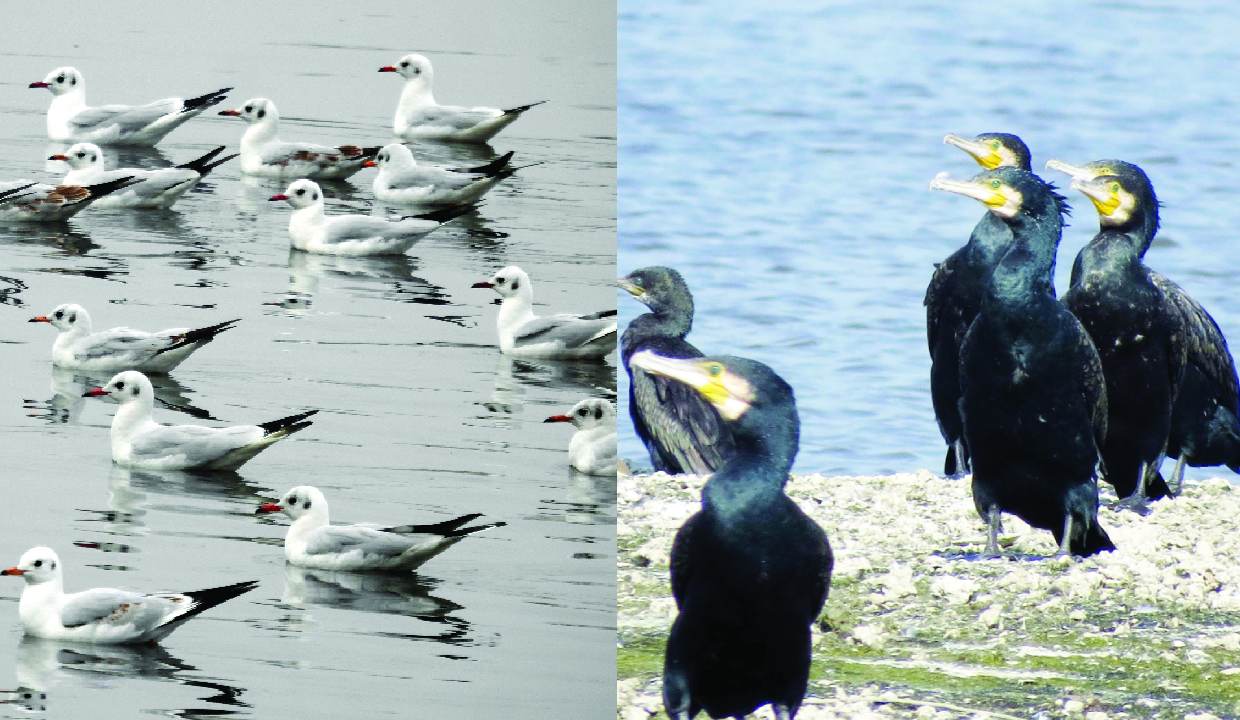
In 2026, among 10 migratory species, including largely Black-headed Gulls (1,275) and Great Cormorants (63), and among 10 resident species, largely Black-winged Stilts (124) and Red-wattled Lapwings (39), in comparison to AWC 2025, among 09 migratory species, including largely Black-headed Gulls (1,636), and among 16 resident species, largely Little Cormorants (104).
Gulls cannot stay longer in the most degraded, polluted riverine habitat due to a lack of food and keep moving in search of food, according to ecologist T K Roy, who is the Delhi co-ordinator of AWC.
He said among the winter migratory duck species recorded, there was only a flock of 16 Gadwall and other smaller species in small numbers. Common Sandpipers 15, Common Redshanks 04, four species of wagtails 42, Great Cormorants 63 and resident birds Grey Heron 17, Red-wattled Lapwing 39, Little Cormorants 12 and the IUCN Red-listed Near Threatened (NT) resident species River Lapwing 02 were recorded in 2026.
Among these major resident species, a decrease in number was recorded as follows: Black-winged Stilt decreased. Red-wattled lapwing decreased. Grey Heron decreased. Little Cormorant decreased. River Lapwing decreased. Among the major winter migratory species recorded, the decrease in number was as follows: The Great Cormorant, which migrates from East & Southeast Asia, decreased, and the Black-headed Gull, which migrates from Central Asia & Siberia, decreased. In 2026, the census recorded only 20 species of waterbirds along the Delhi stretch of the Yamuna — a total count of 1,564 birds, down from 2,123 in 2025 and 2,037 in 2024.
Wetlands International’s annual Asian Waterbird Census (AWC), part of the International Waterbird Census (IWC), is carried out in January together across 27 countries of Asia and Australasia.
This year is the 40th year of AWC and the 60th year of IWC. The two-week period of AWC 2026 starts today (03 January 2026) and is carried out at the River Yamuna in Delhi in partly foggy & cloudy weather.
The River Yamuna, passing through Delhi for 22 km in length, a riverine wetland and one of the famous rivers in India, is converted into the most polluted, degraded and disturbed wetland habitat for aquatic biodiversity, especially for water birds, Roy said.