Metro 5-A to improve last-mile connectivity
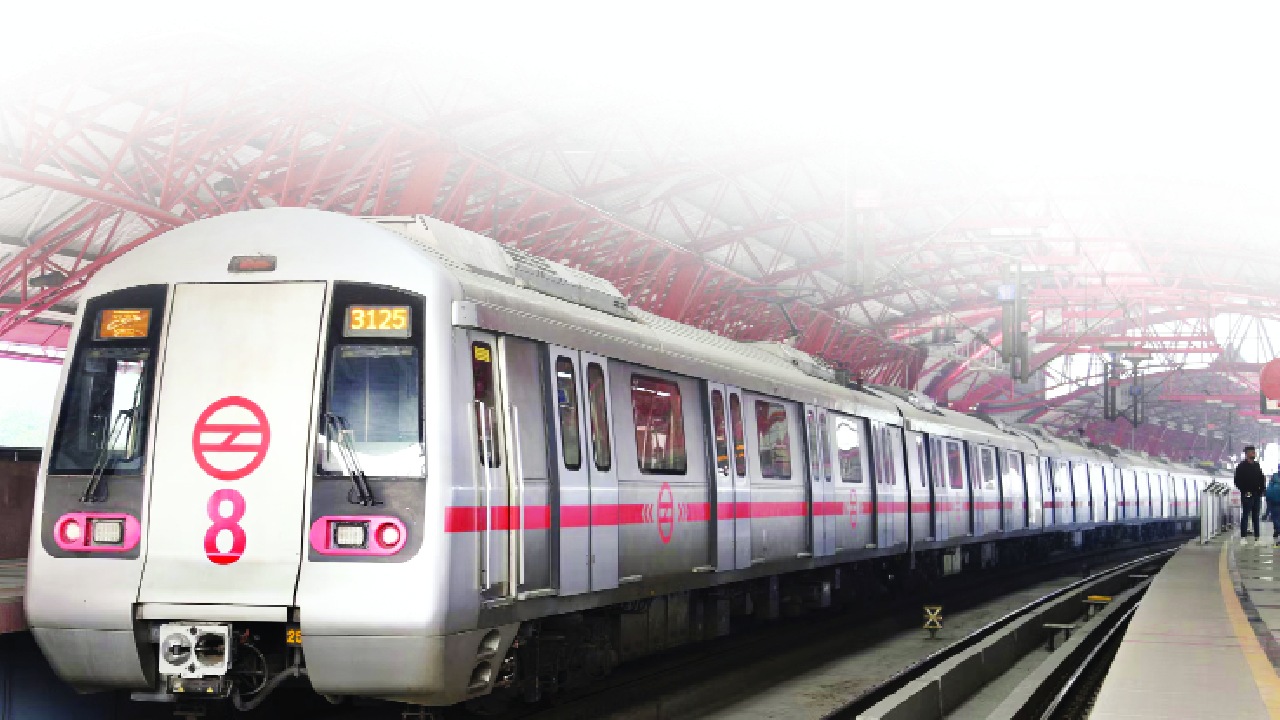
In a move to enhance connectivity, the Union Cabinet on Wednesday approved three new corridors — 1 RK Ashram Marg to Indraprastha (9.913 km), 2 Aerocity to Indira Gandhi Delhi Airport T-1 (2.263 km) and 3 Tughlakabad to Kalindi Kunj (3.9 km) as part of the expansion of Delhi Metro’s project 5-A at a cost of 12,015 crore. The phase will cover about 16.076 kilometre on three routes and will have 13 stations, including 10 underground. With this decision, the Capital’s rapid transit system is set to enter Phase 5-A of development.
Prime Minister Narendra Modi said Delhi’s infrastructure got a major boost. The newly approved corridors are aimed at improving
last-mile connectivity and easing congestion in high-density urban pockets, boosting public transport usage, reducing vehicular pollution and supporting sustainable urban mobility in the National Capital Region (NCR).
“There are 12 lines so far, and six new projects are already under construction to extend existing lines,” said Union Minister Ashwini Vaishnaw, briefing the media after the Cabinet meeting, adding that with phase 5-A, Delhi Metro will cross 400 kilometres and will be among the top five in the world, catering to over 65 lakh commuters every day.
The Delhi Metro phase V-A has been executed for last mile connectivity to the newly developed Central Vista corridor, which includes the Kartavya Bhawans, which, during the next one year, will house all the Central Government ministries and departments. In present conditions, the nearest metro to the new office complex is the Central Secretariat metro or Janpath metro station, and both are more than a kilometre walking distance, making it inconvenient for about 60,000 office goers, about two lakhs visitors and commuters to this part of Lutyens Zone.
The underground stations, which shall come up on the RK Ashram Marg - Indraprastha section, are, RK Ashram Marg, Shivaji Stadium, Central Secretariat, Kartavya Bhawan, India Gate, War Memorial — High Court, Baroda House, Bharat Mandapam, and Indraprastha.
The stations on the Tughlakabad — Kalindi Kunj section will be Sarita Vihar Depot, Madanpur Khadar, and Kalindi Kunj, while the Aerocity station will be connected further with the IGD T-1 station.
The RK Ashram Marg — Indraprastha section will be an extension of the Botanical Garden-R.K. Ashram Marg corridor. The Aerocity — IGD Airport Terminal 1 and Tughlakabad - Kalindi Kunj sections will be an extension of the Aerocity-Tughlakabad corridor and will boost connectivity of the airport with the southern parts of the national capital in areas such as Tughlakabad, Saket, Kalindi Kunj, etc. These extensions will comprise 13 stations. Out of these 10 stations will be underground and 3 stations will be elevated.
Metro turns 23: Lifeline of Delhi
New Delhi: Every day, lakhs of people travel by Delhi Metro, now the lifeline of the national Capital, but many may not know how it all began. Now traversing more than 390 km, the Delhi Metro started its journey with a small 8.2-kilometre stretch of the Red Line, running between Shahdara and Tis Hazari, which turns 23 years old on Wednesday.
The first train, named TS#01, was flagged off on December 24, 2002, by then Prime Minister Atal Bihari Vajpayee from Kashmere Gate, in the presence of then Delhi Chief Minister Sheila Dikshit, Deputy Prime Minister LK Advani, Union minister for urban development Ananth Kumar, Metro chairman Madan Lal Khurana and the Delhi Metro’s first chief, E Sreedharan.
TS#01, which commenced as a four-coach train, has evolved over the years to meet the growing demand for Metro services. The train has undergone multiple upgrades in keeping with the standards followed worldwide. The train was upgraded to six coaches in 2014 and further expanded to eight coaches in 2023. Delhi Metro’s first-ever train has been in revenue services since 2002 and has run over approximately 2.9 million kilometres and has carried over 60 million passengers safely with a mammoth 2.4 million door operations.
According to Delhi Metro, TS#01 was manufactured by MRM Consortium, South Korea and was then transferred to Kolkata in India by ship. From Kolkata, it was transferred to Delhi using the Indian railway network. The initial cost of the four-coach train was approximately `24 crore.
The advanced design of the propulsion system of the train has helped in reducing the carbon footprint by regenerating as much as 40 per cent (approx) of the total power consumed through regenerative braking. So far, TS#01 has been under two major overhauls by Delhi Metro’s maintenance team. Because of timely interventions and maintenance overhauls, TS#01 has been able to maintain MDBF (Train km per reliability failure) of 85,000 kilometres over the minimum contractual requirement of 40,000 kilometres.
In 2024, the TS#01 went through mid-life rehabilitation with the latest IP-Based Passenger announcement and passenger information system that included CCTV, Integrated Passenger Emergency Alarms and LCD-Based Dynamic Route Map & Public information boards. The doors of this train were also refurbished to improve the reliability of the door system.
“Today, when the Delhi Metro is proudly completing 23 years of operations, TS#01 continues its glorious journey of providing safe, reliable and comfortable travel to the commuters,” the Delhi Metro said.
Kashmere Gate is the largest metro station in Delhi, which connects three major lines - Red, Yellow, and Violet.