HC seeks cut in GST on air purifiers
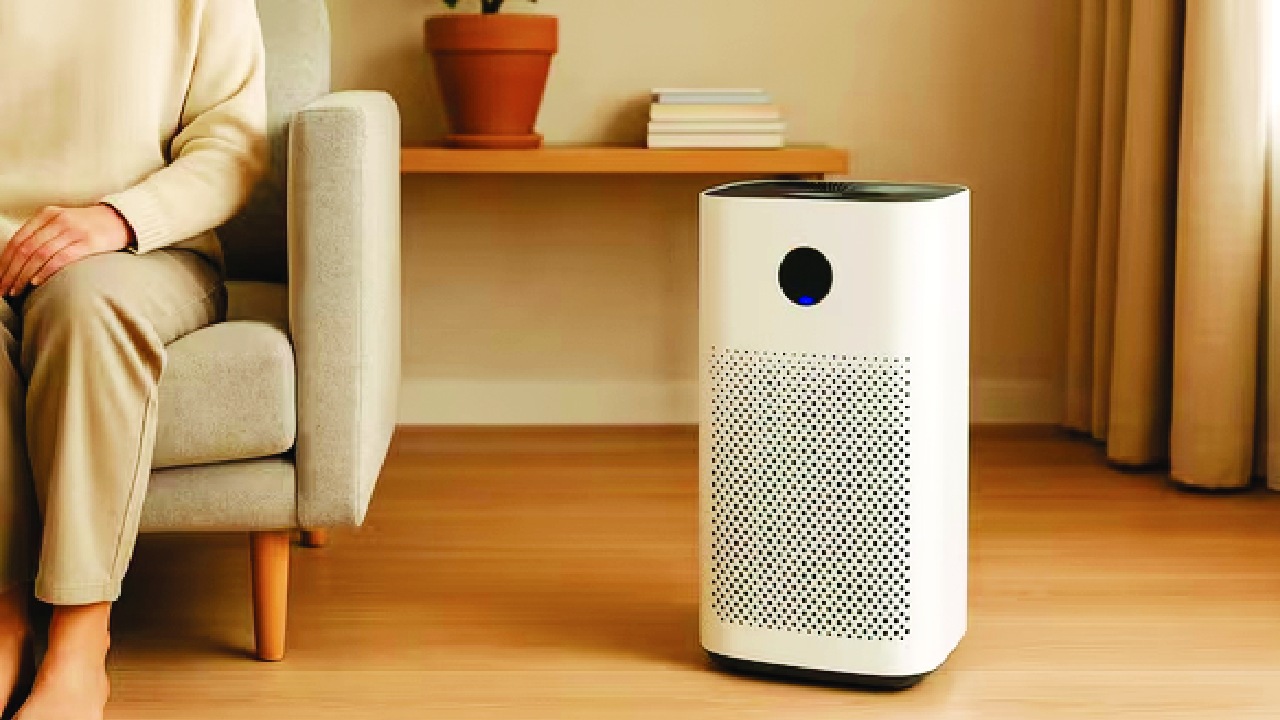
The Delhi High Court on Wednesday directed the GST Council to meet at the earliest and consider lowering or abolishing Goods and Services Tax (GST) on air purifiers in view of worsening air quality in the national Capital.A bench of Chief Justice Devendra Kumar Upadhyaya and Justice Tushar Rao Gedela listed the matter for December 26 before a vacation bench to enable the counsel for the central authorities to inform the court as to when the council meet and takes an appropriate decision on the issue.
The court said if the meeting of the council is not possible physically, it may be considered to convene the same through video conferencing.
As the counsel for the Centre informed the court that the GST council is a Pan-India body and convening the meeting for any such matter may take some time, the bench said, “We are conscious of the configuration or constitution of the GST council and also appreciate that convening the meeting may take time.”
“However, taking into consideration the air quality situation in Delhi and nearby areas, we find it appropriate to require the council to meet at the earliest,” the bench added and issued notice to the Centre on the petition.
The court was hearing a Public Interest Litigation (PIL) seeking directions to the Central Government to
classify air purifiers as “medical devices” and reduce the GST to the five per cent slab. Air purifiers are currently taxed at 18 per cent.
The petition by advocate Kapil Madan said that purifiers cannot be treated as luxury items in view of the “extreme emergency crisis” caused by severe air pollution in Delhi.
Earlier in the day, the high court expressed displeasure over the authorities doing nothing to grant an exemption from taxes on air purifiers in this “emergency situation” when the Air Quality Index (AQI) is ‘very poor’.
The court asked the Centre’s counsel to seek instructions from the authorities on whether a temporary exemption can be granted on air purifiers for some time.
It expressed displeasure that nothing had been done in the matter and said that every citizen requires fresh air, which the authorities were not able to provide.
“Let the purifiers be provided. That’s the minimum you can do. When will you come back? Even if it is for a temporary period, give an exemption for the next week or one month... Consider this an emergency, only temporarily. Take instructions and come back.
“We will place it before the vacation bench only for compliance. As we speak, we all breathe. You know how many times we breathe in a day, at least 21,000 times a day. Just calculate the harm you are doing to your lungs just by breathing 21,000 times a day, and that’s involuntary,” the bench said.
In the post-lunch session, the counsel submitted that “this is a policy decision to be taken by the GST council. It comprises members of all States and Union. The meeting has to be called by the union finance minister, who heads the council.”
To this, the bench said, “Having regard to the concerns raised in the writ petition as also to the report of the parliamentary committee (on climate change), we direct that the issue of lowering or abolishing the GST on air purifiers and HEPA filters shall be considered by the GST council at the earliest.”
The petitioner’s counsel submitted that the Central Government had issued a notification in February 2020 by which the regulatory framework governing drugs was expressly extended to all categories of medical devices.
The counsel said that for ease of breathing, the authorities can easily include air purifiers in this notification.
The court noted the petitioner’s contention that air purifiers qualify as a medical device in terms of the notification of February 2020, which has been issued under the Drugs and Cosmetics Act.
The petitioner further said that on medical devices, GST was being charged at five percent whereas it was 18 per cent for air purifiers. He sought a direction to the authorities to consider charging five per cent on air purifiers, as well as considering the ever-worsening air quality in Delhi and nearby areas.
The plea contended that access to clean indoor air has become indispensable for health and survival.
“Imposition of GST at the highest slab upon air purifiers, a device that has become indispensable for securing minimally safe indoor air, renders such equipment financially inaccessible to large segments of the population and thereby inflicts an arbitrary, unreasonable, and constitutionally impermissible burden,” the plea said.