Metaphorical fathers, G-Ram-G
It is funny. There are two metaphorical fathers in India who have generated controversies in recent times. They have a fanatical fan following, both literal and metaphorical, and even a perceived insult to them is perceived to be worse than sacrilege and blasphemy. One of them is the metaphorical father of the Constitution, BR Ambedkar, whose status is that of a deity among the followers. The eternal father is the metaphorical father of the nation, Mahatma Gandhi, who is on such a high pedestal that nobody can reach and touch.
This brings us to the latest brouhaha over the change in the nomenclature of the erstwhile Mahatma Gandhi National Employment Rural Guarantee Scheme. The new name is Viksit Bharat Guarantee for Rozgar and Ajeevika Mission (Grameen), or VB-G Ram G. I am least interested in the nomenclature, and politics behind ot, as well as the justifications and accusations by the various political parties. What is more important is the nature, rather than the name, of the scheme, what the mission aimed to achieve, what it has achieved, and what is its future in a new form.
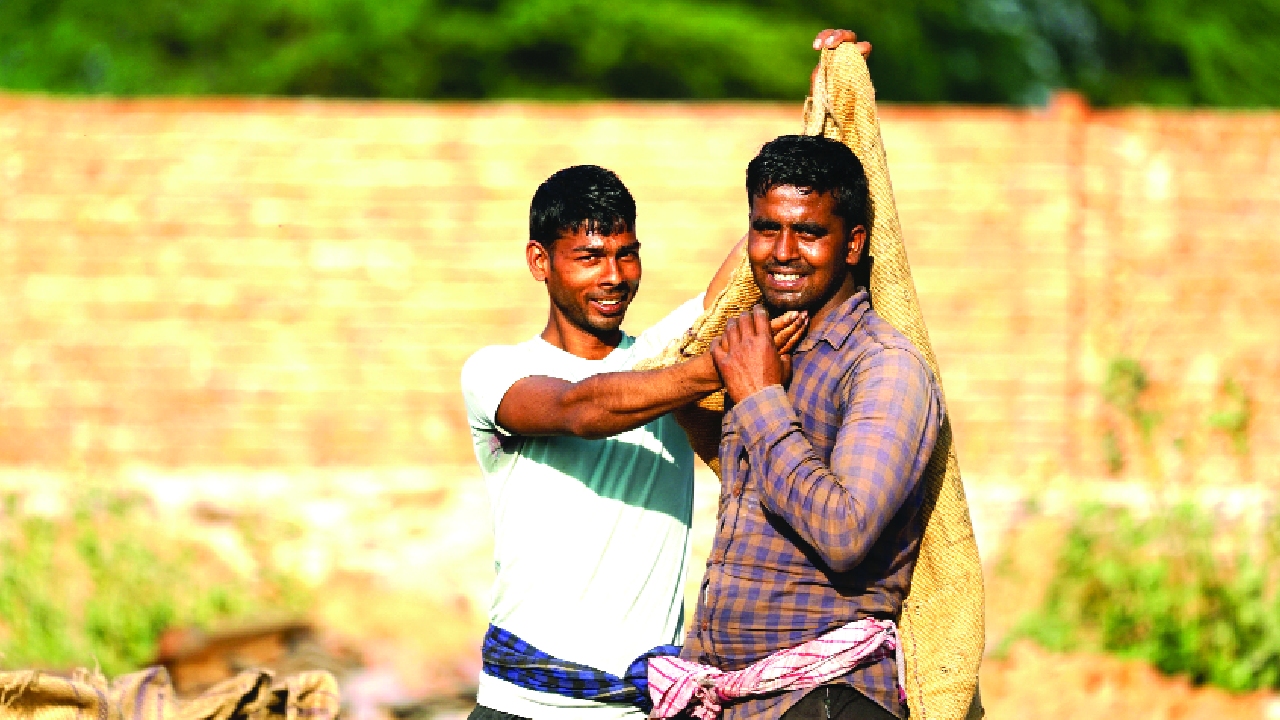
It is the intended beneficiaries who are more important. When the scheme was launched two decades ago, it was a straightforward welfare one. The objective was to guarantee 100 days of work in a year to the rural unemployed, who wished to work. The payments were fixed, and linked to the minimum wages. The caveat is extremely crucial. The scheme was meant for those who asked for or demanded work. In such cases, it was the duty of the Central government to provide a minimum 100 days of work in a year.
Most experts dubbed it as a landmark welfare move, and it generated praises from across the world, particularly from those who were concerned that the Indian state did not pay adequate attention to issues such as poverty, unemployment, and quality of life. Sadly, in the first few, most promises remained on paper. The intentions were noble, but the beneficiaries were deprived of what they were supposed to get. I traveled extensively in Bundelkhand a few years after the scheme was launched. In those days, and perhaps now, it was one of the poorest regions in the country.
There was water scarcity, there was an absolute lack of livelihood opportunities, and people were teetering on the edge of starvation. In the region, there was a huge demand under the scheme. But what happened was that the uneducated workers would put their thumb impressions on pieces of paper, and the contractors would invariably pay them half or so of the official guaranteed wages. But after the arrival of the Modi era in politics, policy, and governance, things changed. Since 2014, several welfare schemes were launched, and the ‘landmark’ employment guarantee remains one of them.
By linking the JAM trinity, i.e., Jan Dhan, Aadhaar and mobile, the Centre opened 550 million bank accounts for the poor. Beneficiaries now get the wages due to them directly into their bank accounts without intermediaries, contractors, and middlemen taking away the shares. In addition, the LPG distribution, free electricity meter supply, PM Awas Yojana, and cash transfers have helped the rural farmers. There is free healthcare, insurance of up to INR5,00,000 for 500 million Indians, and free food (five kg of cereals per head, per month for 800 million Indians across the country).
In effect, the welfare footprint has expanded, and one has not included the specific schemes launched by the various states, and employment guarantee is one of the many. The latter is no longer the be-all and end-all of welfare. Yet it remains critical, as was evident during the pandemic, and it does not matter how it is named, and what political, economic, and policy-oriented debates emanate about its division, direction, and intent. It is an important unemployment scheme for poor Indians. It serves as job insurance; when people are unable to find any job, in steps the scheme to help them.
Apart from an insurance cover, the scheme works as a free dole. Most governments have claimed, and alleged that the work, or projects under the scheme are either irrelevant, unproductive, or useless. Hence, the workers are paid for no-work, and the entire money, or most of it, is wasted. It is as good as the transfer of cash into the bank accounts of the poor. In the past, there was official intent on paper to include productive projects. The scheme under the new name and avatar talks about similar, and grander objectives. Since the new architecture expands the areas, and puts the onus on the states, there are chances that more unproductive work will happen.
In the past, there were allegations about implementation gaps, or the fact that many people with the relevant job cards could not find work, even if they wished to. There was high demand for rural work, but low delivery, especially in the poor states. The proposed changes, contend critics, will increase the challenges. As the scheme moves from a demand-driven one to project-linked employment, it will “potentially” reduce coverage, lead to lower budget allocations, or accrual expenditure, and harm the poor rather than help them. In effect, these will dilute the scope and expanse of the work.
A few years ago, an evaluation by a Parliamentary Committee concluded that the wages under the scheme fluctuated across the states, and were too low in some of them. The wage rates widely varied from less than Rs 200 a day to over INR300 across the states. Hence, there was a need to devise a uniform figure across the country. The committee observed that the “nominal wages… discourage beneficiaries, and propel them to either seek more remunerative wages, or migrate to urban areas.” Hence, the scheme achieved objectives which were diverse from its intentions. The rural poor rejected it.
Official social audits of the projects implemented under the scheme are not conducted regularly. The committee noted that a few years ago, just over 20,000 Gram Panchayats were audited at least once. Moreover, the audits reports were not available publicly. The committee recommended that every Gram Panchayat needed to be audited at least once a year, and the audit reports be made public so that the citizens can monitor and assess the completion of the projects, and their status. District-level ombudspersons, which was part of the law, were missing. The committee found just over 250 of them out of the requisite more than 700. This derailed the scheme.
The author has worked for leading media houses, authored two books, and is now Executive Director, C Voter Foundation; views are personal