Mere abuse not an offence under SC/ST Act: Supreme Court
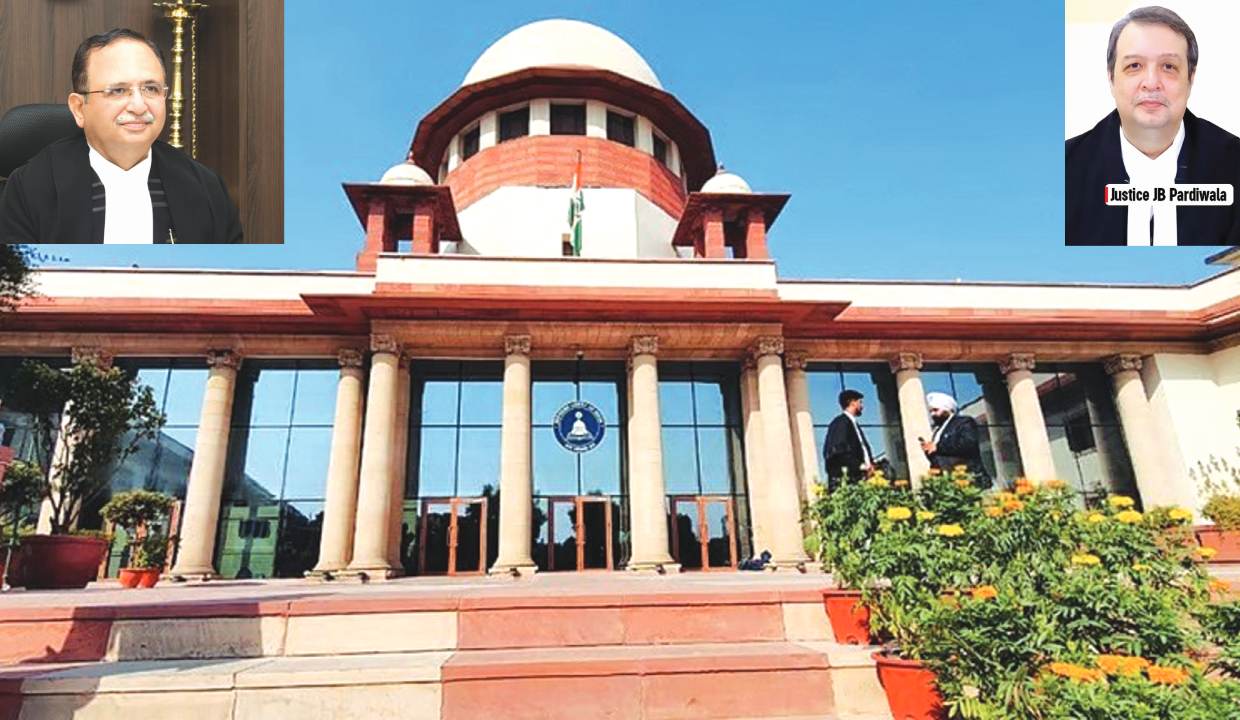
The Supreme Court has ruled that merely using abusive language against a person belonging to a Scheduled Caste or Scheduled Tribe does not automatically constitute an offence under the SC/ST Act unless there is a clear intent to humiliate the person based on caste. “For an offence to be made out, it must be shown that the accused intentionally insulted or intimidated the victim on the ground that the victim belonged to a Scheduled Caste or Scheduled Tribe,” said the bench of Justices JB Pardiwala and Alok Aradhe on Monday.
The significant ruling by the court came as it cancelled criminal proceedings against Keshav Mahato, who was accused of abusing a person from the Scheduled Caste at an Anganwadi centre in Bihar. The Supreme Court held that neither the FIR nor the chargesheet alleged that the abuse by Mahato was directed at the complainant due to his caste.
Citing Section 3(1)(r) of the SC/ST Act, the Supreme Court outlined that two specific conditions must be met to convict a person under the provision. First, the complainant must belong to a Scheduled Caste or a Scheduled Tribe.
Secondly, the abuse or insult must be specifically on account of the complainant’s caste. Mahato approached the Supreme Court challenging a February 2025 order of the Patna High Court that had refused to interfere with a trial court order summoning him in the case.
“Merely abusing a member of a Scheduled Caste or a Scheduled Tribe would not be enough. At the same time, saying caste name would also not constitute an offence,” said the Bench, clarifying that only when the abuse is “laced with the caste name” and intended to humiliate would it attract penal consequences. Examining the FIR and the chargesheet, the Supreme Court said that there was no allegation suggesting the appellant had uttered any caste-based words or acted with the intention to humiliate the complainant.
“Neither the FIR nor the chargesheet contains any whisper of an allegation of insult or intimidation by the appellant herein, let alone one made with the intention to humiliate the complainant,” said the Supreme Court.
The Supreme Court said both the trial court and the Patna High Court erred in allowing proceedings under the SC/ST Act to continue despite the absence of any allegation of caste-based insult or threat in the FIR.