ME DAM ME PHI, where ancestral voices cross time and borders
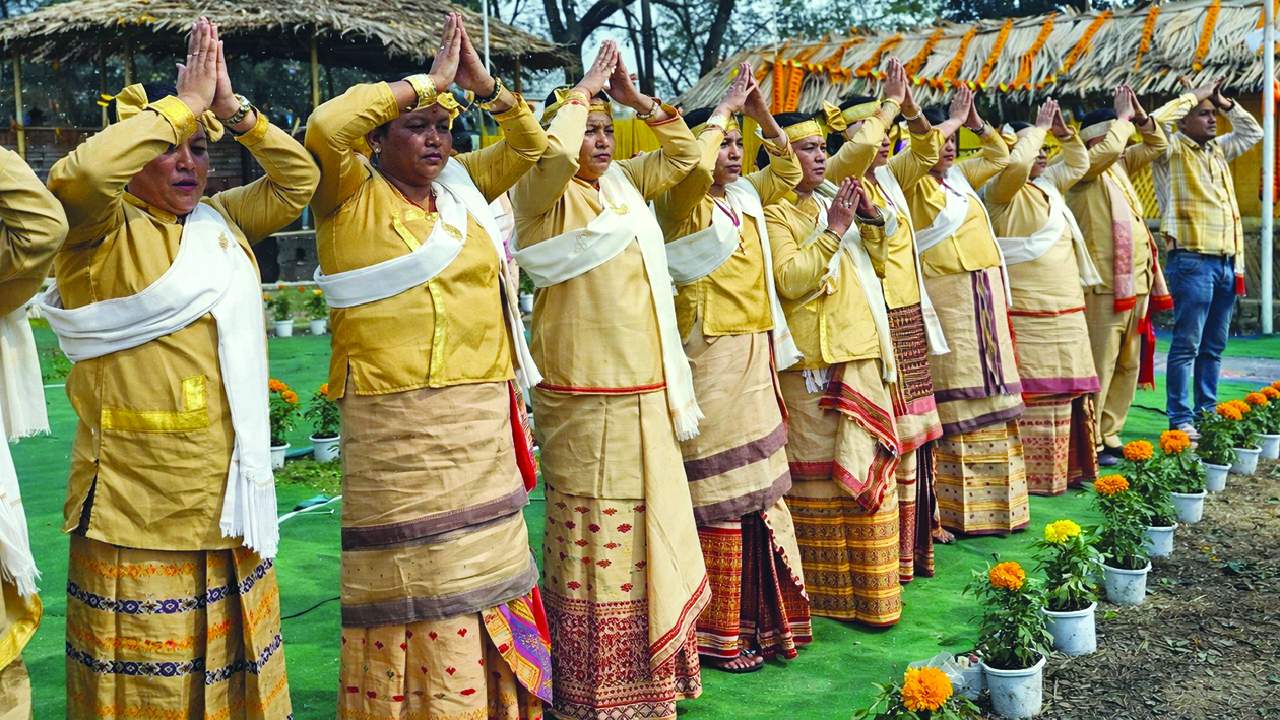
“Khao Kham, Aai Laeng Din, Jan Chai Hang, Laengdon...”
The chant is unhurried, almost meditative. As it rises from the lips of the Deodhai priest, time appears to fold in on itself. These ancient words, preserved in fragile bark manuscripts known as Phralung, carry memories of a long journey, from the hills of Yunnan, across the Patkai range, and into the fertile plains of Assam.Every year on January 31, during Me Dam Me Phi, the Tai Ahom community returns to these chants.
The festival of ancestor worship is not merely ritual observance. It is an act of remembrance, a reaffirmation of identity, and a quiet assertion that history lives not only in monuments, but in spoken words and shared practices. In an age where identity is often forced into rigid categories, traditional or modern, indigenous or assimilated, Me Dam Me Phi offers something more nuanced. It shows how a community can belong fully to Assam while continuing to honour its distinct cultural inheritance.
A belief system that found common ground
When Chaolung Sukaphaa crossed the Patkai Hills in 1228 with his followers, he did not arrive with the intent of imposing rigid beliefs. What he carried instead was a worldviewrooted in ancestor reverence, one that saw the living and the dead as part of the same moral universe.
The name Me Dam Me Phi itself reflects this idea. Me means offering, Dam the departed ancestors, and Phi the divine. What made this belief enduring was how naturally it resonated with the indigenous communities of the region, the Moran, Borahi, Chutiya, and Kachari peoples, who already practised their own forms of ancestor worship.
Rather than displacing local traditions, Sukaphaa recognised them. The Tai concept of Phi Dam, ancestral spirits who continue to guide the living, aligned seamlessly with existing beliefs. What emerged was not religious dominance but cultural synthesis. Me Dam Me Phi gradually became part of the larger Assamese civilisational fabric.
When a language became sacred
One of the most misunderstood aspects of Ahom history is the gradual shift from the Tai language to Assamese. This change is often described as cultural loss. In reality, it was deliberate and pragmatic. By the seventeenth century, the Ahom kingdom governed a linguistically diverse population. Assamese became the language of administration and daily communication.
Tai, however, was carefully preserved for rituals, manuscripts, and ceremonial use. This separation had an unintended but profound consequence. Tai ceased to evolve because it was no longer used in everyday life. The chants recited during Me Dam Me Phi today remain strikingly close to those spoken centuries ago. Had Tai continued as a spoken language, it would have changed with time. By confining it to sacred use, the Ahoms ensured its continuity. The language was not abandoned. It was elevated.
A thoughtful understanding of death
At the heart of Me Dam Me Phi lies a deeply reflective view of death. In Tai Ahom belief, death is not an abrupt end. After passing, a person exists as Dam, an ancestor, and over time becomes Phi, part of the divine order. This belief system is carefully structured. Recent ancestors, known as Grihadam, are honoured as family. Older ancestors gradually become part of a collective spiritual presence. Deities such as Lengdon represent not individuals, but enduring cosmic principles.
This layered understanding allowed newly integrated communities to honour their own ancestors while participating in a shared spiritual framework. Inclusion was achieved without erasure, a rare balance in the history of expanding kingdoms.
From household ritual to public observance
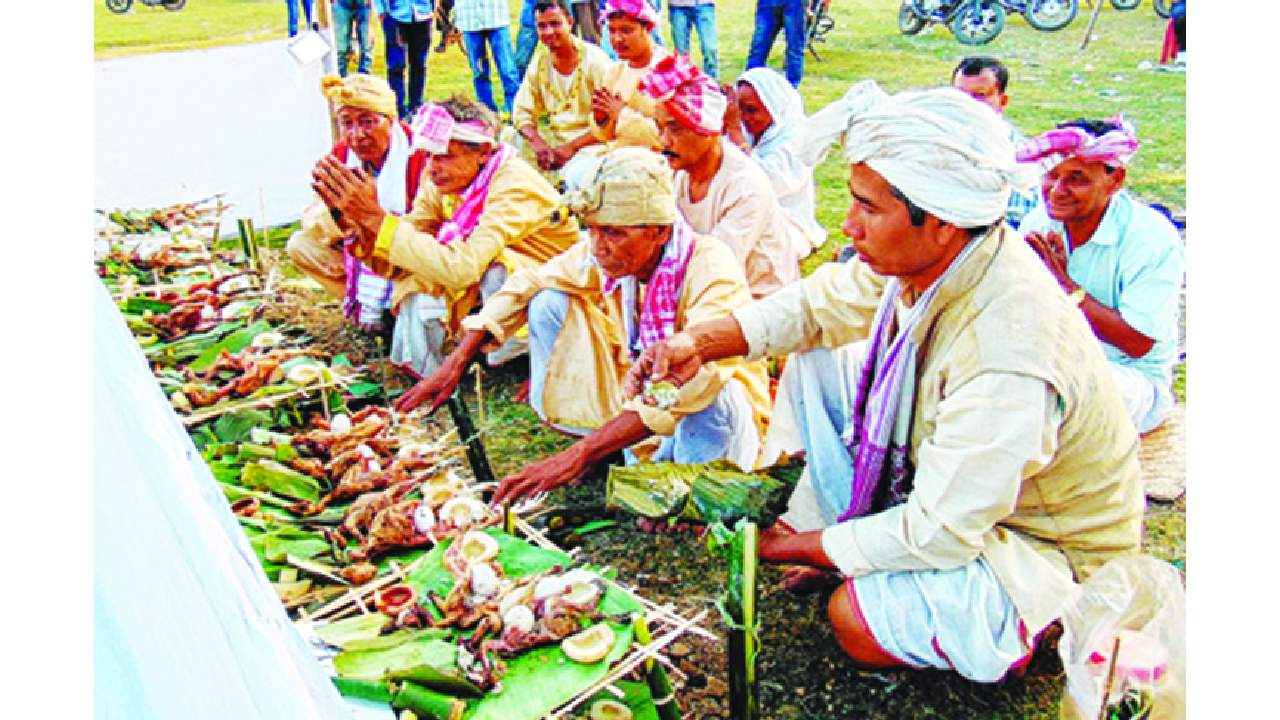
For centuries, Me Dam Me Phi was observed quietly within households. Families gathered around the Damkhuta, the sacred pillar opposite the kitchen, offering food and prayers to their ancestors. In recent decades, the festival has taken on a public dimension. The Assam government now recognises January 31 as a state holiday, reflecting how deeply the observance resonates beyond the Tai Ahom community.
In cities such as Guwahati, celebrations include cultural programmes conducted in Assamese alongside traditional Tai rituals. Participation now extends across communities. This expansion is not dilution. It signals confidence. The Tai Ahoms are asserting that their distinct heritage strengthens, rather than fragments, Assamese identity.
A tradition that has always evolved
Historical records challenge the idea that Me Dam Me Phi follows a single, unchanging script. Manuscripts digitised under the British Library's Endangered Archives Programme reveal variations in rituals across regions and clans, even in the eighteenth century. Change, it becomes clear, has always been woven into the tradition. What remains constant is intent, reverence, continuity. Contemporary adaptations, public celebrations, cultural performances, these are not departures from tradition. They are expressions of a living practice.
Food as historical memory
The offerings made during Me Dam Me Phi speak quietly but powerfully. Rice beer, rice with meat and fish, eggs, beans, these foods reflect both Tai culinary traditions and Assamese agrarian life. Pork is now an integral part of the ritual, symbolising the continuity of ancestral practices. Many families now incorporate local dishes alongside ceremonial foods, creating a menu that honours both ancestral memory and present reality.
Here, food becomes more than sustenance. It becomes memory. Charaideo and collective heritage Public celebrations at Charaideo, the first capital of the Ahom kingdom and the burial site of its kings, have given Me Dam Me Phi wider national and global visibility.
The recognition of the Charaideo Maidams as a UNESCO World Heritage Site has further elevated ancestor worship from a community ritual to a civilisational legacy. Yet the essence of the festival remains unchanged. The quiet prayer offered by an elderly woman in a village home carries the same weight as the grand ceremonies at Charaideo. Both are acts of remembrance. Both are equally sacred.
When the chants rise again
As dusk settles on January 31, Me Dam Me Phi leaves behind more than incense smoke and ceremonial offerings. It renews an old understanding, that communities can grow without forgetting their roots, that tradition survives through adaptation, and that memory gains strength when it binds rather than divides. The Tai Ahom community's contribution to India lies in this balance. Me Dam Me Phi reminds us that identity is not something frozen in time. It is something practised, negotiated, and renewed year after year.
"Khao Kham, Aai Laeng Din, Jan Chai Hang, Laengdon... & quot; The chant rises once more, over an Assam its first speakers could never have imagined, yet one that continues to carry their voices forward, not as echoes of a vanished past, but as part of a living, shared present.
Cultural writer and researcher on indigenous heritage and memory traditions of Northeast India. Political analyst.