Marvels of India - MILLETS
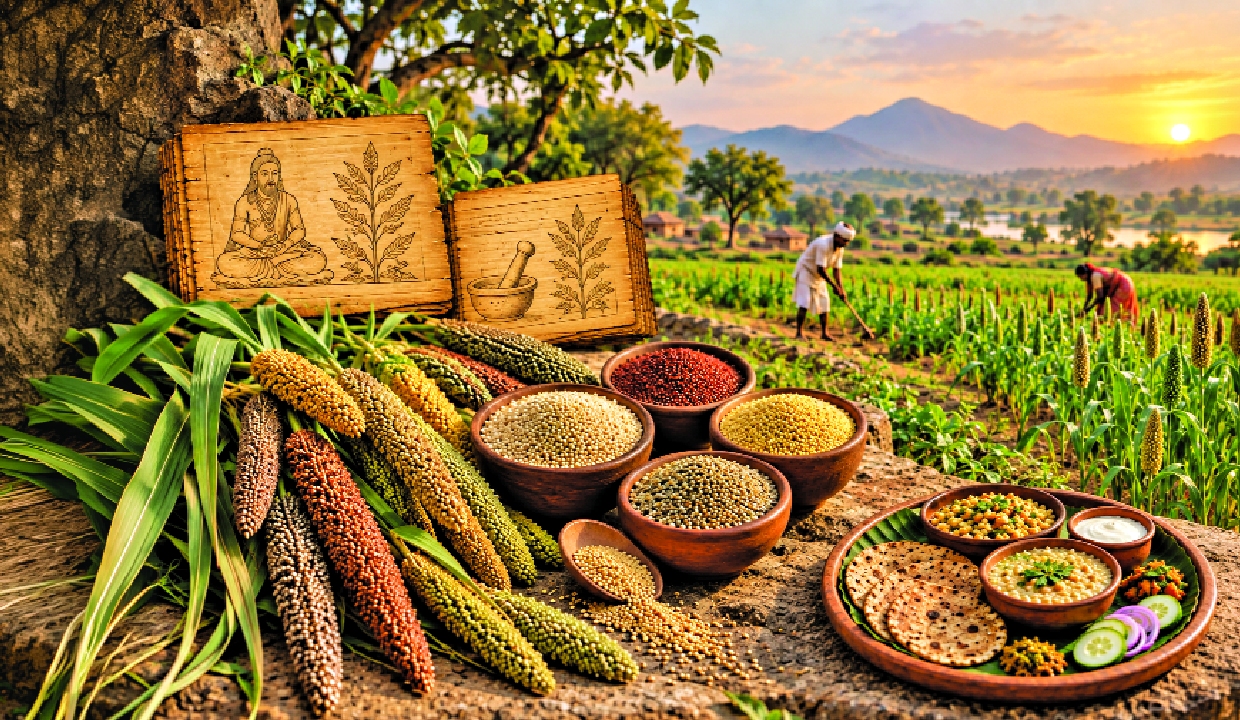
Millets are a remarkable expression of Bharat's agricultural heritage, combining ecological resilience, dietary value and civilisational continuity. Archaeobotanical evidence from Harappan and other early historical sites confirms the cultivation of sorghum, pearl millet, finger millet, foxtail millet and other millets. Textual sources, including the Yajurveda, Arthashastra, Ayurvedic treatises and later regional literature, record their cultivation, consumption and trade over long periods.
Strengthening Food Security
Millets are particularly valuable in rainfed and semi-arid regions. Their short growing cycles, drought and heat tolerance and ability to thrive on relatively poor soils enabled communities to secure food where water-intensive crops were less reliable. Their C4 photosynthesis also enhances water-use efficiency, while some varieties require substantially less rainfall than rice, making them a practical buffer against rainfall uncertainty and crop failure.
Nutrition and Sustainability
Millets contribute to nutritional security by providing carbohydrates, dietary fibre, protein, iron, calcium and zinc. Their traditional cultivation and consumption also connected food security with local knowledge and sustainable agriculture.