Karnataka Congress urges high command to end deadlock
Congress's tallest leader, Rahul Gandhi’s halt at Mysuru airport on January 13, 2026, was meant to be routine, a brief transit between Tamil Nadu and Delhi. Instead, it reopened a question the Congress leadership avoided answering for over a year.
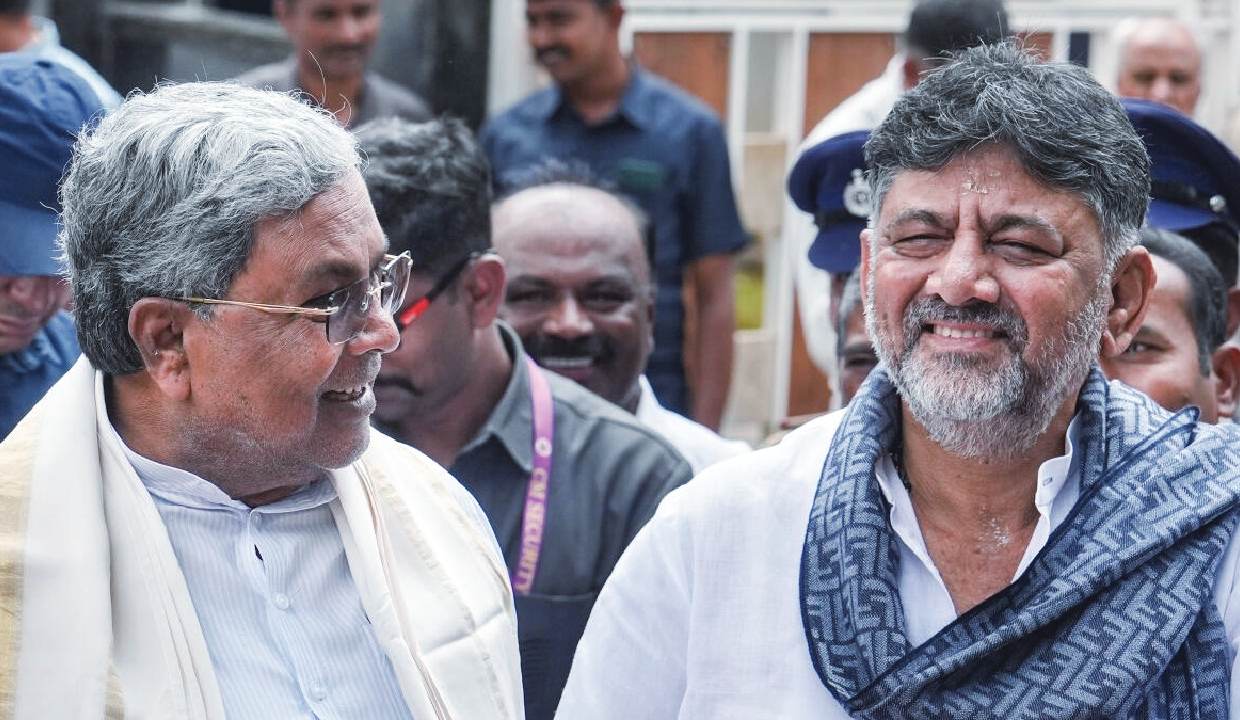
Rahul Gandhi spoke separately to Karnataka Chief Minister K Siddaramaiah and Deputy Chief Minister DK Shivakumar on the tarmac and within hours, Karnataka’s leadership fault line was back in public view.
Sources said while Siddaramaiah wanted clarity, his deputy Shivakumar followed up with a cryptic social media post. “Even if efforts fail, prayer does not fail,” the lattyer wrote on X. Both leaders, however, maintained the conversation revolved around the party’s Save MGNREGA campaign. The duo with their supporters had washed dirty lines in public a month ago, only to be placated by the high command, for which the Cm and Dy CM shuttled Bengaluru and New Delhi a few times, while Congress president Mallikarjun Kharge himself conveying all was well in the Government.
The Government crossed its halfway mark on November 20, 2025. The timing was the message and Shivakumar’s fresh couple of days ago to Delhi, which added more fuel to the speculations. This moment reflects a deeper problem within the Grand Old Party. The party wins power but hesitates when it comes to managing competing claims of authority.
The 2023 assembly election in Karnataka was not a narrow escape. Congress won 135 seats with a 43.2 per cent vote share, ending BJP rule and securing one of the rare states where it governs without coalition pressure.
Yet the arrangement that followed, intended to balance Siddaramaiah’s mass base with Shivakumar’s organisational control, has remained deliberately unresolved. At the time, there was widespread talk of an understanding under which Siddaramaiah would lead initially, with a transition to follow.
Siddaramaiah has since rejected any fixed term, maintaining that he was elected for five years and continues to enjoy the confidence of the high command. Shivakumar, for his part, has repeatedly referred to an agreement brokered by the leadership and the need to honour it.
Kharge has described the matter as something to be settled locally. That distance has not reduced speculation as the opposition gains space it did not earn.
With crucial elections due in 2026, including in Assam, Congress cannot afford uncertainty in the one state it projects as proof of revival. The leadership must decide whether keeping faith with earlier commitments reinforces discipline, or whether continuity best serves
stability. What it cannot do is pretend that delay is neutral. In politics, delay shapes outcomes. Any serious conversation on Karnataka inevitably turns to DK Shivakumar’s record. As KPCC president from March 2020, he oversaw the party’s turnaround from 80 seats in 2018 to a clear majority in 2023.
He was central to the Karnataka leg of the Bharat Jodo Yatra, which ran over 500 kilometres and helped revive booth-level structures that had withered after successive defeats. His reputation as a crisis manager was built long before this, whether during the 2017 Gujarat MLA episode or in holding the party together after the collapse of the 2019 coalition Government.
Now, the choice before the Congress high command is not administrative but political, as Karnataka is meant to be the party’s counterpoint to BJP rule. Rahul Gandhi’s airport conversations has created space for a clear signal.