Jharkhand exam row, explained: How the 14th JPSC crisis became a movement
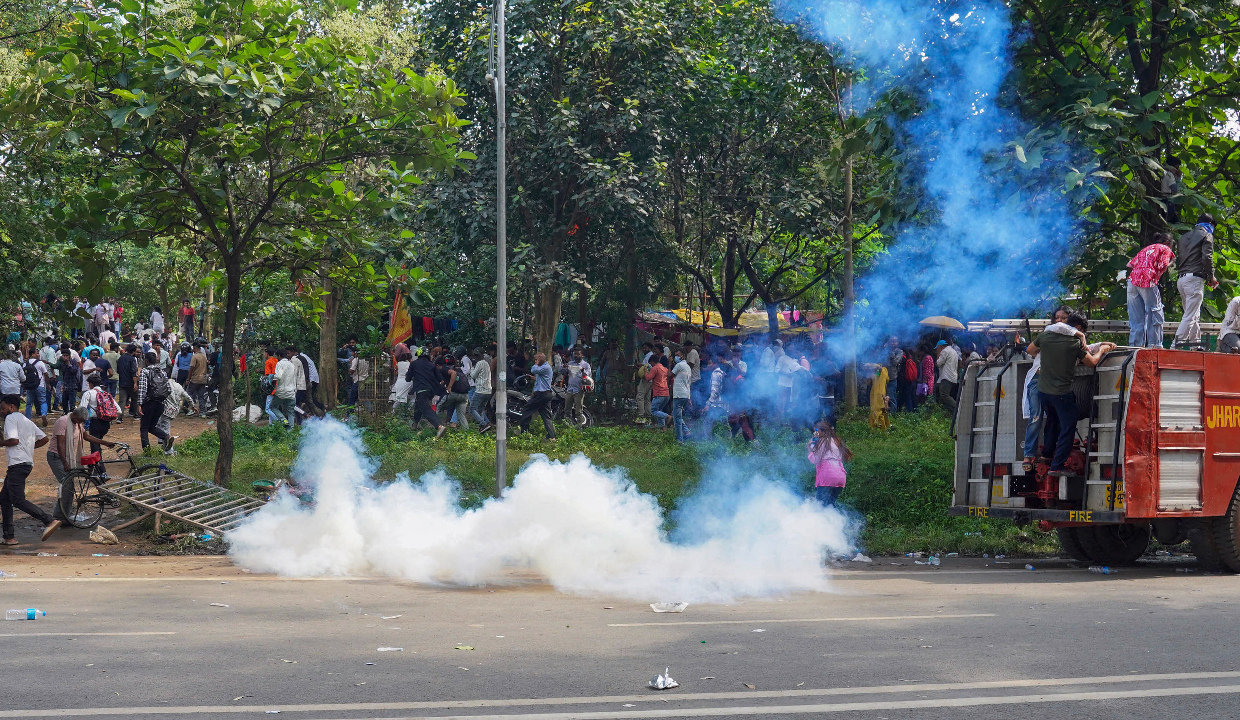
Government-job aspirants have been staging protests in Ranchi for almost three weeks, alleging irregularities in recruitment examinations in Jharkhand. The student-led agitation is going on at Bapu Vatika, Morabadi, Ranchi, where the aspirants have been protesting since July 25. What started as anger over the 14th Jharkhand Public Service Commission (JPSC) Civil Services preliminary examination has now transformed into a wider movement involving the Jharkhand Staff Selection Commission (JSSC), allegations against private examination agencies, earlier recruitment controversies and a demand for a Central Bureau of Investigation (CBI) probe.
As the protest continued, hunger strikes began: student leader Devendra Nath Mahto started an indefinite fast on August 2, two other students were hospitalised by August 9, and Mahto himself was admitted on August 10 after nine days of fasting. The movement also outgrew the sit-in, with students marching toward the Jharkhand Assembly on August 10, where they clashed with police after breaching barricades. Former JPSC Chairman L Khiangte was also arrested by Jharkhand CID on the same day.
Amid the continuing protests, Jharkhand Chief Minister Hemant Soren on Tuesday announced in the state Assembly that the 14th JPSC Civil Services preliminary examination would be cancelled. He also promised that the remaining two backlog JPSC examinations, for 2023 and 2025, would be scrapped. But the protesters have refused to call off the agitation mainly because the government has not agreed to their demand for a CBI investigation into the alleged irregularities relating to the JSSC Combined Graduate Level (JSSC-CGL) examination. The government offered only a judicial inquiry led by a retired judge with ED involvement if financial irregularities emerge, an alternative they've rejected. They are also demanding action on other irregularities related to recruitment.
To understand why the issue has grown this large, it helps to trace its roots much further back than the current protest.
What are JPSC and JSSC
Jharkhand was carved out of Bihar and became a separate state on November 15, 2000. The Jharkhand Public Service Commission (JPSC) is a constitutional public service commission constituted under Article 315 of the Constitution after the state's creation. It conducts written competitive examinations and interviews for recruitment to various state government posts in Jharkhand.
The Jharkhand Staff Selection Commission (JSSC) is a separate recruitment body created under the Jharkhand Staff Selection Commission Act, 2008. The Act was enacted on December 6, 2008, after the state government concluded that the growing number of candidates and recruitment responsibilities had increased the workload of the JPSC. JSSC was created primarily to handle recruitment to Group C posts under the state government and its corporations, boards, authorities and other agencies.
JPSC controversy
According to reports based on CID interrogations, roughly Rs 12 lakh each was collected from about 15 candidates in Bokaro in exchange for the question paper and answers before the exam, with around 65 questions and their answers allegedly memorised by select candidates in advance. Questions have also been raised over the role of TSR Data Processing Private Limited (TDPL), the agency that conducted the examination despite being blacklisted and de-listed by JSSC on May 20, 2025, the company reportedly went on to secure work with the JPSC through nomination rather than an open tender, a process now under scrutiny.
Jharkhand's recruitment issues did not begin with the 14th JPSC examination though.
The commission's earlier examinations have also been embroiled in controversy, most consequentially the second JPSC Civil Services examination, conducted in 2005. That recruitment process was accused of manipulating marks in the written examination and interviews to illegally declare ineligible candidates successful. The Jharkhand High Court ordered a CBI probe into the matter in 2012, and after a 12-year investigation, the agency filed a chargesheet against 60 people in 2024. In March 2025, a special CBI court took cognisance of the chargesheet and summoned all 60 accused to appear before it on April 15, 2025.
Beyond allegations of cheating and manipulation, a longer-standing problem has been delay. The state government is supposed to hold the exam every year but had only held six tests in around 20 years till 2021. Recruitment vacancies from several years are often clubbed into a single combined JPSC examination, so a vacancy from one year may not translate into an exam and appointment for years afterward. The 7th-10th Combined Civil Services Examination illustrates this, four recruitment cycles merged into one, referred to in Jharkhand High Court records as the "Combined Civil Services Competitive Examination, 2021," with its preliminary exam held that year and the mains following only in January 2022.
JSSC-CGL controversy
JPSC was not the only body under scrutiny, the JSSC's Combined Graduate Level (JSSC-CGL) examination had its own controversy. When the exam was held on January 28, 2024, allegations surfaced that questions from the General Knowledge paper had leaked beforehand. JSSC cancelled that paper and later conducted a re-examination, but the matter didn't end there: it reached the Jharkhand High Court, where, in December 2025, the court rejected a petition seeking a CBI probe into the alleged leak and cleared the way for the recruitment process to proceed. The government now cites this ruling, and the completion of recruitment process, to reject the protesters' renewed demands for a CBI investigation and cancellation of the JSSC-CGL exam.
As the protest enters its 21st day, demonstrators plan a "Tiranga Yatra" on Independence Day, August 15, warning the Ranchi administration against acting on the FIR filed over the August 10 clashes and vowing the march will further strengthen their movement.