Israel voices concerns over Hamas disarmament deal
Israel has conveyed "serious security concerns" to the White House over a proposed disarmament deal with Hamas, an Israeli official told The Associated Press on Sunday, in some of the first public comments since U.S. President Donald Trump announced the agreement earlier in the week.
Doron Spielman, spokesperson for the Israeli prime minister's office, told the AP that Israel's intelligence assessment indicates Hamas remains committed to rebuilding its military rather than genuinely demilitarising. He said the Israeli military would not withdraw from Gaza — where it currently controls more than 60 per cent of the territory — before Hamas disarms.
"Our assessment is that if we redeploy before Hamas is truly disarmed, it will quickly expand its presence throughout Gaza, rebuild its terrorist infrastructure, once again threaten Israeli communities, and seek to carry out another Oct 7-style attack," Spielman said, referring to the 2023 attack that triggered Israel's war in Gaza. "Disarming means physically giving up the weapons. Nothing less," he added.
His remarks came days after Hamas said it would begin disarming as part of the US-brokered ceasefire signed nine months ago to end the nearly three-year conflict — a development that marks a potential breakthrough but leaves many hurdles, conditions and long timelines unresolved.
Trump's 20-point ceasefire plan calls on Hamas to surrender its weapons and dismantle its extensive tunnel network. It also envisions an Israeli withdrawal from Gaza, the installation of a new technocratic Palestinian government, deployment of an international security force, and reconstruction of the Palestinian enclave. Hamas's disarmament has been a persistent sticking point that has stalled negotiations for months. Announcing the deal on social media, Trump said it would be implemented in "carefully structured phases."
A copy of the agreement obtained and verified by the AP states that weapons held by the Hamas-run police will be handed over to the US-backed Palestinian technocratic committee, known as the National Committee for the Administration of Gaza, once it arrives in the territory — though the timing remains unclear, as it depends on other steps. A process to decommission and store heavy weapons, and to dismantle military production sites and tunnels, will begin after the Palestinian committee's arrival and the deployment of international forces, with the process tied to a phased Israeli withdrawal, according to the agreement.
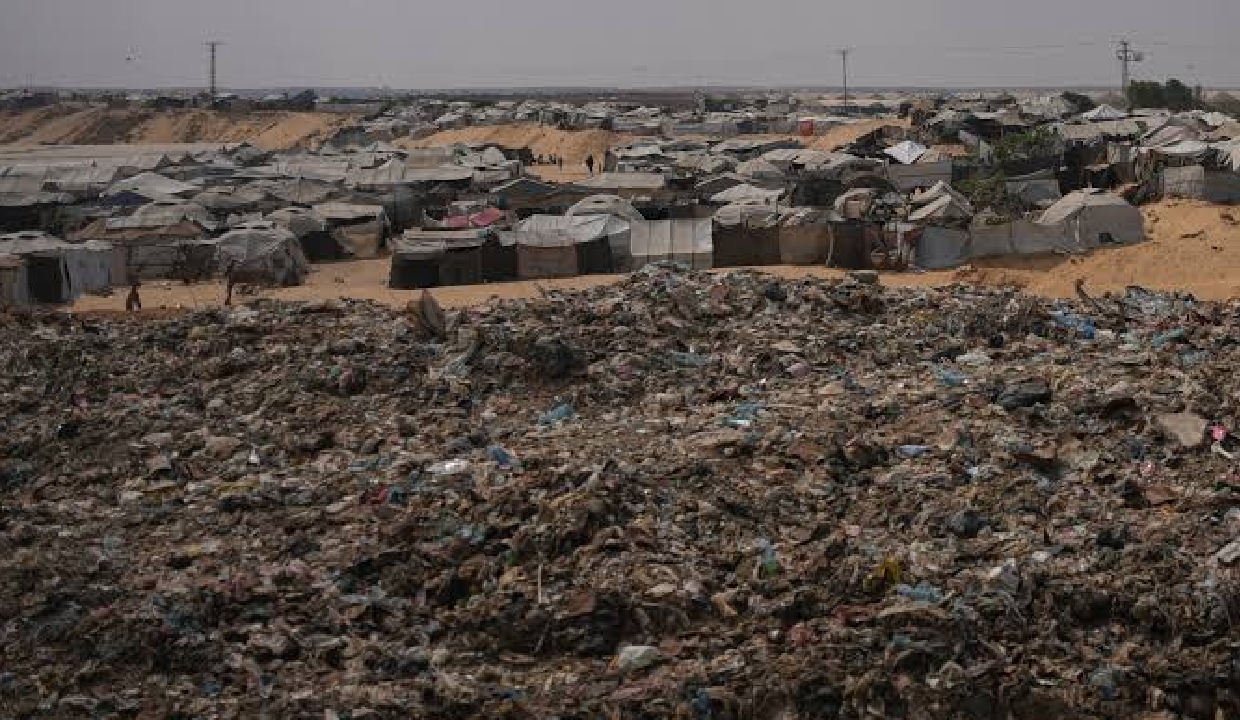
The areas of Gaza currently under Israeli control have been largely destroyed and depopulated. Most of the territory's roughly 2 million Palestinians live in the remaining area, where hundreds of thousands are housed in squalid tent camps amid destroyed neighbourhoods.
Israel appears unlikely to pull back significant forces or make other concessions ahead of its October elections. Prime Minister Benjamin Netanyahu faces a difficult reelection contest, with opponents accusing him of failing to prevent the October 7, 2023, attack, while his far-right coalition partners are pressing him to maintain pressure on Hamas and keep forces in Gaza.
Spielman said Israel appreciates Trump's commitment to its security and to reaching a durable resolution, but said the government's stance on disarmament is grounded in detailed intelligence indicating Hamas continues to rearm, recruit fighters and rebuild its military capabilities. It remains unclear precisely what Israel communicated to the White House. Two people with knowledge of the deal told the AP that Israel had raised its concerns with former British Prime Minister Tony Blair, who is part of the Trump-led Board of Peace; one of them said Israel sought, among other things, continued freedom to conduct military operations in Gaza. Both spoke on condition of anonymity as they were not authorised to speak to the media.
Since the ceasefire was signed last October, Israel has continued striking Gaza, saying it is targeting Hamas and its infrastructure. Overnight Saturday into Sunday, Israeli strikes killed at least 10 people, including children, health officials said. A strike on a residential apartment in southern Gaza killed three family members, including a 4-year-old child, according to Nasser hospital, where the bodies were taken. The Israeli military said the overnight strikes had targeted Hamas military operatives, without providing further details.
(Sourced thought PTI)