Is it time to rip the trade deals?
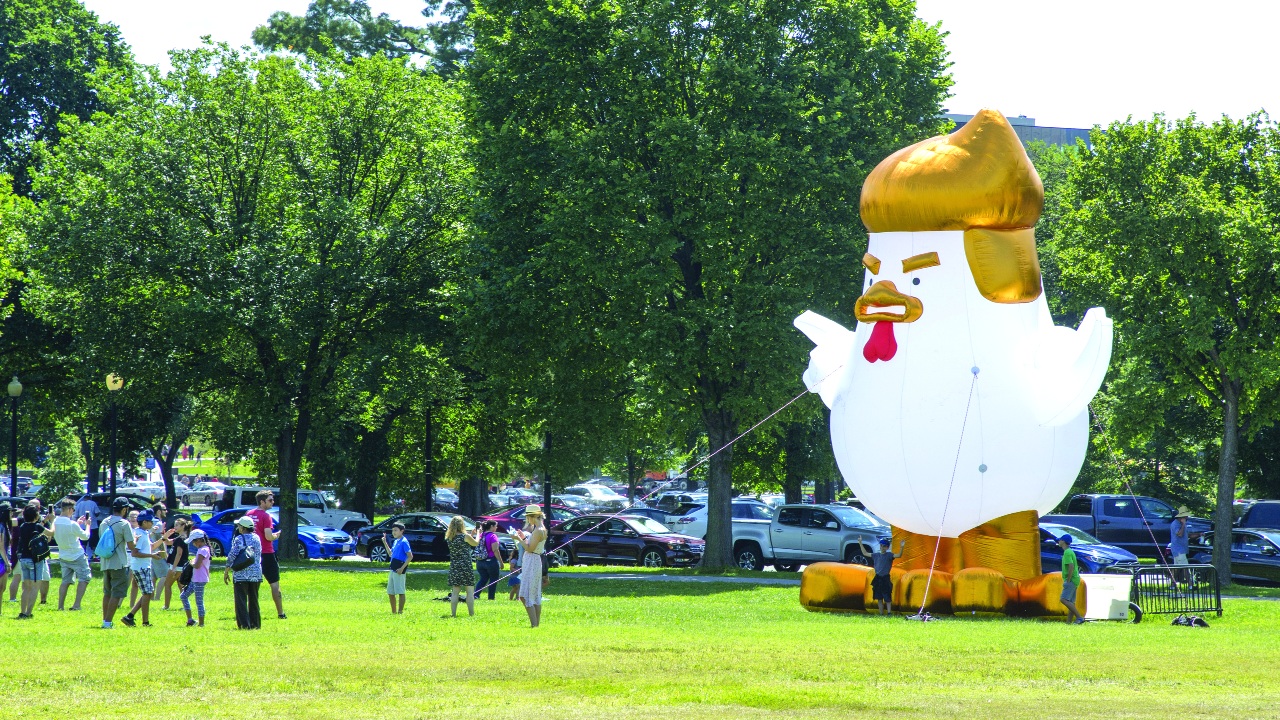
Across the globe, critics have charged their respective Governments of ‘surrendering’ to the dictates and demands of the US president, Donald Trump. Now the ‘Don’ lies ‘trumped’ by the American Supreme Court, as one newspaper headline claimed, thanks to the order that ruled his unilateral tariffs illegal. Hence, the same and other opponents urge the policy-makers to renegotiate the bilateral trade deals that they inked with the US. Since the earlier tariffs were unconstitutional, the deals signed under their fears and dangers are irrelevant. It is time to start a new tango with the American dealmakers and negotiators.
“Rip up the deal. There is no point to it anymore. Trump did not have the authority to threaten India. He did not have the authority to impose tariffs on India. He did not have the authority to put penalties on India. All of it was unconstitutional, in violation of (American) law,” advises renowned economist, Jeffrey Sachs, to the Indian policy-makers. He urges them not to be in a hurry to sign a pact, and delay the travel plans to the US to “review the legal framework.” As he explains, “Take a break. Read the opinion, study it, think about all of this, listen to the rest of the world, and then take a trip (to America).”
In Bangladesh, which signed a bilateral deal with the US days after India announced a draft framework, there are loud noises to renegotiate what is dubbed as a one-sided deal. The neighbour has a valid excuse, apart from the US Supreme Court order. The deal was signed by an interim regime, days before the national elections, which elected a new Government. Hence, it is the duty and authority of the new regime to sign an agreement of national importance. There will be pressure on the new prime minister to listen to the all-round demands.
One can imagine similar sentiments being re-voiced in Europe, Japan, even South Korea. Or Pakistan, for example, which feels that it bent over backwards to appease Trump, and India, which stood its ground, got a better deal in the form of a lower tariff on its exports. In Jan, there is a silent, but strong, opposition against the deal with the US which, in some ways, extracts huge investments. While the Japanese may not be averse to pumping money in the US, they are afraid of the American products that can enter their markets, and disrupt them.
Several nations in Europe are queasy about the agreement with the US. In fact, the European Union had paused the ratification process of the trade agreement in July 2025, as each member-nation needed to okay it, after America’s threats to take over Greenland. One is not sure if the vote on the deal, which is scheduled tomorrow, will take place. “The era of unlimited, arbitrary tariffs… might now be coming to an end. We must now carefully evaluate the ruling, and its consequences,” wrote Bernd Lange, chairman, EU trade committee, on X.
The fact remains that some nations seem to evaluate the American Supreme Court rulings behind closed doors, and others seem enthused to interact with the American negotiators to understand the impact. In a few cases, the policy-makers pursue both the options. “The UK Government is working with the US to understand how the (tariff) overturning… will affect the UK,” said a spokesperson for Downing Street. A trade spokesperson for the EU said that the 27-nation bloc was in “close contact” with the US administration. Nations want to seek clarity on what are the next few steps on the bilateral deals.
At the same time, Trump and his loyalists are keen to indicate that nothing has changed. Hence, hours after the Supreme Court ruling, the US president used another law, rarely used, and not mentioned by the Court, to declare a 10 per cent tariff on most goods. The day after, he hiked the figure to 15 per cent. This was a hint that there is no stoppage to tariff. However, many experts feel that this, and other tricks too, may find their way to the Supreme Court and, in all probability, be shot down like the earlier ones.
Second, Trump tries to convey that the state of bilateral deals stands intact, and has global, legal, and moral binding on the US. When asked about the India-US pact, he said that nothing has changed, and things will move accordingly. US trade representative, Jamieson Greer, said that the Government would honour the deals with the EU and others. “For a year I have been telling them that regardless of the direction of this (tariff) litigation, we will impose tariffs at levels that they agree to,” he said in a TV interview. However, this is not how others see it.
One needs to understand that despite tariffs coming down under the bilateral deals, they are mostly one-sided. While imports into America, whether from the EU, India, or Bangladesh will attract lower duties, most of the American exports to the same nations will enjoy zero per cent tariff. The aim, as Trump has publicly reiterated, is to change and reverse the trade equation into a surplus for the US. The US will sell more to these nations and blocs than what it will buy from them. This is because Trump believes that the earlier trade dynamics was a rip-off.
Circle back to July 2025, when the EU deal was signed. “It is a dark day when an alliance of free peoples, united to affirm their values, and defend their interests, resolves to submission,” wrote Francois Bayrou, the French prime minister, on X. A British expert maintained then that many European leaders were frustrated and flustered because the deal left the EU “worse off” than before the higher tariff regime. He added that in several sectors local European businesses would lose out considerably to the American competitors, like the German carmakers.
One can expect the opposition to raise its angry head again to push policy-makers in their nations to undo what they did earlier. This will be the case where the deals are not finalised, as with India and EU, or where they were signed by an interim regime, as with Bangladesh. In a sense, there is more uncertainty due to the American Supreme Court order. Earlier, at least one was sure about the tariff regime. Now, there is no clarity on whether to believe the tariffs or not.