Inside White House for a year
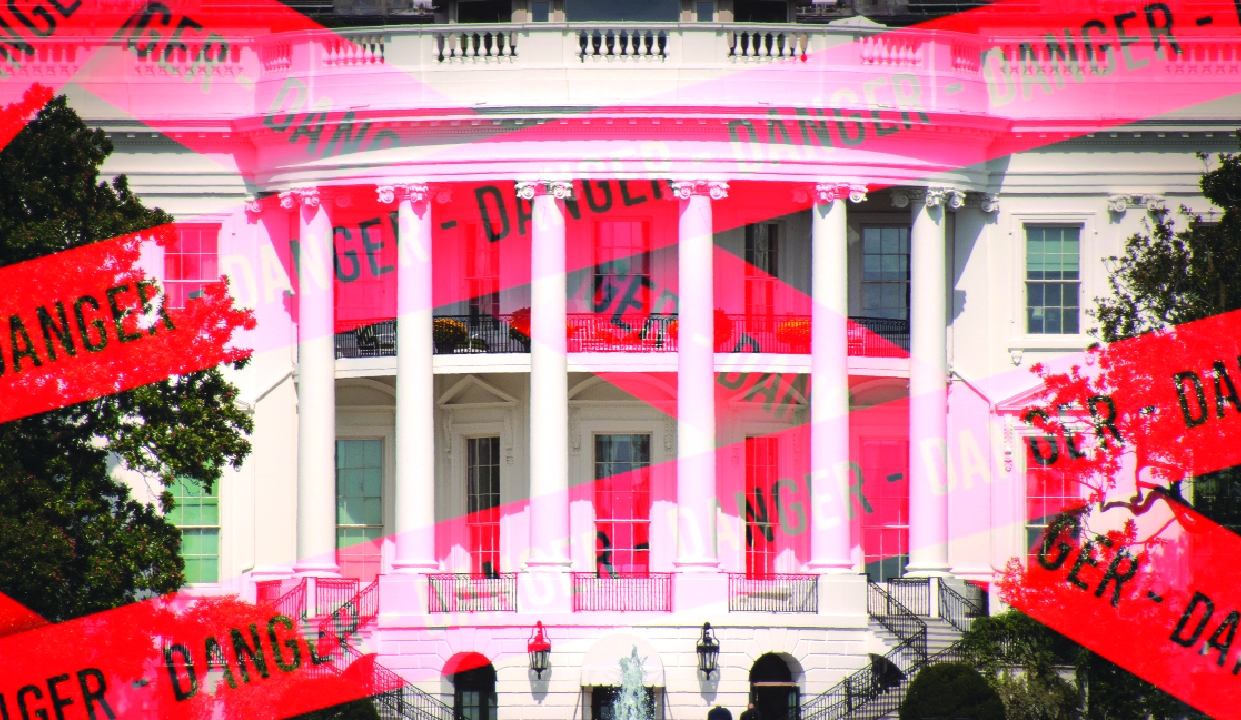
Did officials start insider trading on Trump’s policy a year ago?
Recent reports indicate that the charges of insider trading from inside the White House started this year, and related to the kidnapping of the Venezuelan president, and his wife, and the Iran war. However, new investigations by the bbc.com reveal that the malpractices were on for more than a year, just over three months after Donald Trump assumed the presidency for the second time. The news report lists five incidents, the first of which dates back to a decision on April 9, 2025. Hence, playing the prediction markets was a pastime, or possibly the main work of some of the officials for more than 12 months.
It began before April 2, 2025, a date that the president called ‘Liberation Day,’ and imposed “sweeping tariffs” on most nations. A week later, on April 9, he backtracked, and gave a 90-day reprieve to everyone except China. Of course, after the first decision, the US stock market, and many others, collapsed.
But the S&P 500 index jumped almost 10 per cent on April 9, “one of its largest single-day gains since the Second World War.”
Eighteen minutes before the tariff pause, traders made big bets on stock indices going up. The so-called “historic surge” in the markets began a minute after the official announcement.
According to the bbc.com, “The number of contracts traded jumped to over 10,000 per minute just after 18.00 BST (or 18 minutes before the announcement). Earlier in the day the number had been in the hundreds. Some traders bet over $2 million on the stock market increasing that day, even though it had gone through seven days (since April 2) in a row of losses. The huge surge could have generated them a profit of almost $20 million.” People knew something was wrong. A few senior Democrats asked the market regulator to investigate whether the events “enriched administration insiders and friends.”
Of course, the second event is well-known. Before he was kidnapped on January 3, 2026, the Venezuelan president, Nicholas Maduro, seemed on top of his game. However, a new account was created in one of the prediction markets in December 2025, which bet $32,500 on the ouster of the president by the end of January 2026. The wagers were placed between December 30, 2025, and January 2, 2026, the day before the kidnapping. Finally, the account won $4,36,000. The mysterious account hibernated. “Shortly afterwards,” states the bbc.com report, “the account changed its username, and has not placed any bets since.”
In February 2026, six accounts were created on Polymarket, a prominent prediction market platform, and they placed various bets on the possibility of a US strike on Iran by February 28, 2026. When the war was confirmed by Trump in the early hours of that day, the accounts won a combined $1.2 million. “Five of those six users have placed no more bets since, but one of the account’s recent activities showed it has subsequently made $1,63,000 by correctly betting on a US-Iran ceasefire by April 7, 2026, which was announced by Washington and Teheran on that day,” adds the report.
Let us roll back a month. Nine days after the war started, on March 9, 2026, Trump told a TV news channel that the conflict was “very complete, pretty much.” In effect, he maintained that the war was over. Less than an hour before the TV channel released the comment, the number of future contracts on oil betting on lower prices spiked by more than four times, fell again, and rose again minutes after the official announcement. Between the two spikes, oil prices slumped from $100 a barrel to $85, before they recovered to $90. “The traders who placed those bets will have made millions of dollars,” states the report.
Yet again, on March 23, 2026, “just two days after threatening to ‘obliterate’ Iran’s power plants, Trump posted… that Washington had held ‘very good and productive conversations’ with Teheran over a ‘complete and total resolution’ to hostilities.” In this case too, the number of futures contracts betting on lower-priced oil jumped several times minutes before the actual post, fell, and rose even more after the official post was uploaded. The futures price dropped from under $113 to below $100, before rising to $104. According to an analyst, who spoke to bbc.com, the trades appeared “abnormal for sure.”
Now comes the real sting in the tail. “President Trump’s son, Donald Trump Jr, is an investor in Polymarket (one of the prediction market platforms used for some of these trades), and sits on its advisory board. He also acts as a strategic advisor to Kalshi (another renowned platform for these trades),” states the news report. To cite an example, the six accounts that correctly bet on the war in Iran by February 28, 2026, were created on Polymarket. Publicly, Polymarket stated that it “sets, maintains, and enforces the highest standards of market integrity,” and “proactively works with regulators.”
Yet another problem area relates to prosecution. Ever since the 1980s, as financial, stocks, and derivative markets became complex, it is difficult, if not impossible to prove insider-trading charges. In most cases of conviction, evidence from insiders, whistle-blowers, and some collected through surveillance helped. In many cases, out-of-court settlement is the preferred choice. As an expert told the bbc.com, “You can have massive trades… that clearly show that someone was privy to what Donald Trump was about to declare. Yet there is a strong chance that no one will be prosecuted” for the crimes. In the US, for example, while there is a set of people that believes that these are cases of insider trading, others contend that some traders have possibly become more “adept at anticipating the president’s interventions.”
This explains why some senators have introduced bipartisan bills to specifically target the abuses on prediction market platforms. In addition, they wish to implicate the elected members, their families, and employees to dissuade insider-trading from within the White House, or the administration. One is not sure about the fate of these bills. However, the concrete and immediate steps taken by the US, apart from verbal and textual warnings via memos, will determine how the other nations may tackle the menace of prediction markets. In India, although they are illegal, the users easily bypass the bans. The same is true in other nations. Hopefully, the lead may be taken by Europe, which is generally forthcoming to tackle financial excesses.