IndiGo’s dominance hiked risks
India has never lacked ambition in aviation. Passenger numbers multiplied, airports expanded, and flying became a routine part of middle-class life. Still, the sector keeps producing spectacular collapses, and failures. Kingfisher, Jet, East West, Air Sahara, ModiLuft, and others took off quickly, commanded loyalty and market share, and crashed with remarkable finality. Even IndiGo, long treated as the great exception to this pattern, has faced serious operational turmoil. This repeated cycle forces a difficult question: Do airlines fail everywhere, or is there something distinct about the Indian aviation market that makes failure almost inevitable?
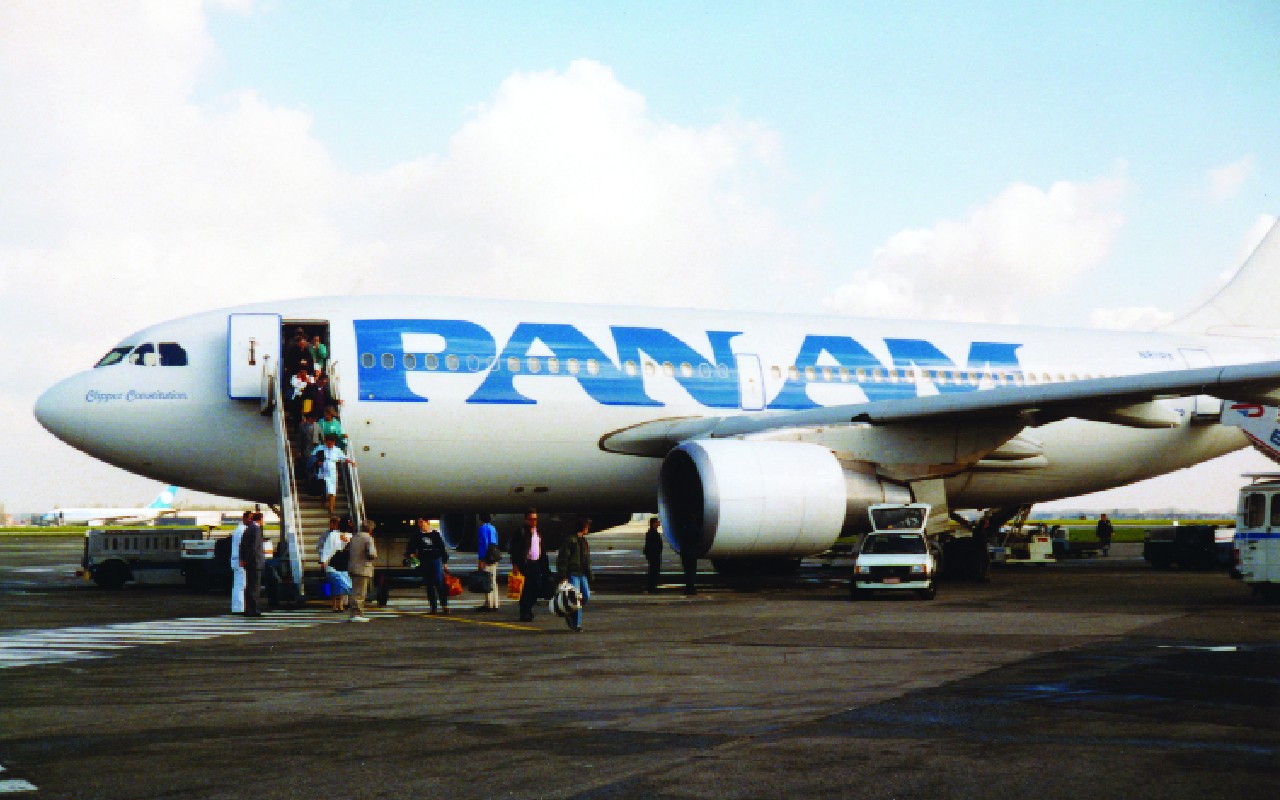
Airline collapse is not unique to India. Globally, aviation is among the most unforgiving businesses. It operates on thin margins, has high fixed costs, and is exposed to shocks. Fuel prices fluctuate, currencies move, aircraft and engines are leased in dollars, and demand swings sharply with economic cycles. Many global airlines have disappeared, including Pan Am and TWA in the United States, and Swissair and Alitalia in Europe. What distinguishes India is not that airlines fail, but how. In most large aviation markets, failures precede restructuring. In India, failures are usually terminal.
The collapse of Kingfisher remains the most visible illustration. It entered the market with a premium brand strategy that sat uneasily with a price-sensitive consumer base. Rapid expansion, heavy borrowings, and a deteriorating balance sheet eventually pushed it into crisis. But focusing only on mismanagement misses the deeper point. Kingfisher operated in an environment where aviation turbine fuel faced some of the highest taxes in the world, airport charges rose sharply, and a weakening rupee inflated lease and maintenance costs. When revenues faltered, there was no institutional mechanism to restructure operations, and keep the planes in the air. Once cash dried up, the airline collapsed, taking jobs, and routes with it.
Jet tells an even more troubling story. Unlike Kingfisher, Jet was widely regarded as professionally managed. It had operational credibility, a strong domestic and international network, and loyal customer base. Its failure in 2019 was not due to flamboyance but due to debt, cost pressures, and an inability to withstand prolonged shocks. Fuel prices rose, the rupee depreciated, and interest obligations mounted. When distress became apparent, lenders and regulators lacked a framework to allow the airline to continue operations while resolving the liabilities. The result was abrupt grounding. Jet did not shrink or restructure. It vanished.
Earlier cases, like East West Airlines in the 1990s, show that this pattern predates a slew of recent reforms in the sector. Weak oversight, governance issues, and financial fragility mattered, but the broader ecosystem offered little protection against collapses. Airlines that stumbled were not stabilised. They were allowed to fall. This is the first lesson from India’s aviation history. The market is structured in a way that converts stress into extinction. Airlines elsewhere may go bankrupt, but they do not disappear overnight.
In the US, Chapter 11 bankruptcy allows them to renegotiate contracts, rationalise fleets, and return to profitability. In Europe, the governments and regulators treat aviation as essential infrastructure, stepping in to preserve connectivity even as they enforce competition rules. India has no equivalent shock absorbers. Against this backdrop, IndiGo appeared to rewrite the script. For nearly two decades, it followed a disciplined, low-cost model, focused on a single aircraft type, fast turnarounds, and tight cost control. It avoided the prestige battles that ruined the earlier airlines, and steadily expanded the market share while rivals faltered.
The result was unprecedented dominance. IndiGo today controls more than 60 per cent of the domestic market, a level of concentration rare in large aviation markets. For years, this dominance was read as proof that execution could overcome India’s structural disadvantages. Recent events suggest a more uncomfortable interpretation. When IndiGo faced severe disruptions due to a combination of aircraft groundings, crew shortages, and regulatory changes to duty-time norms, the consequences rippled across the system. Thousands of flights were cancelled over several weeks. Airports were overwhelmed, passengers stranded, and regulators forced into emergency interventions.
The crisis did not arise from reckless expansion or financial indiscipline. It arose because even the most efficient airline in India operates without meaningful buffers. IndiGo’s experience reveals the second lesson of India’s aviation story. Dominance is not resilience. In fact, extreme concentration magnifies risks. When one airline carries the bulk of the country’s traffic, its operational problems become national disruptions. There are few alternative carriers with the spare capacity to absorb the shocks. The market looks competitive on paper, but behaves like a fragile monopoly in practice.
Globally, engine supply issues, and crew shortages affect airlines. What differs in India is the lack of slack. Congested airports, limited slots, and rigid infrastructure mean that disruptions cascade quickly. Regulatory responses are often reactive rather than anticipatory. Instead of a system that spreads risk across multiple strong carriers, India has drifted toward dependence on a single carrier. This raises an uncomfortable but necessary conclusion. IndiGo’s crisis is not an aberration. It is a symptom of the structural weaknesses that destroyed its predecessors. The difference is in timing and scale.
If India wants to break this cycle, solutions must go beyond management, and address the ecosystem. The first requirement is fuel taxation. Aviation turbine fuel cannot remain a quasi-luxury commodity, heavily taxed by states, if airlines are expected to survive shocks. A more uniform and predictable tax regime will reduce volatility, and improve planning. Second, India needs a sector-specific restructuring framework for aviation. Airlines are not ordinary firms. Their value collapses when operations stop. Insolvency mechanisms must allow them to keep flying while debts are resolved, preserving routes, jobs, and competition.
Third, the competition policy must focus on sustainability rather than symbolic entry. Encouraging new airlines to launch without addressing slot access, airport charges, and financing constraints only creates churn. A healthy market requires several carriers capable of operating at scale over the long term. Fourth, the regulators must plan for concentration risk. When an airline becomes systemically important, oversight must extend beyond safety compliances to operational resilience. Contingency planning, capacity redundancy, and coordination across airports are essential. India’s aviation sector has grown impressively in numbers, but not in depth. It has expanded while neglecting resilience.
Kingfisher and Jet failed in different ways, but for the same underlying reasons. IndiGo’s recent turmoil further shows that even success or dominance does not confer immunity. Airlines will face turbulence. What distinguishes mature aviation markets is the ability to manage it without grounding the system. Until India builds this capacity, its skies will remain crowded, but unstable.
The writer is assistant professor and director, Center of Economics, National Law University, Jodhpur; views are personal
Leave a Comment
Comments (1)
seekde.us