India’s thin state: Too few, too well paid
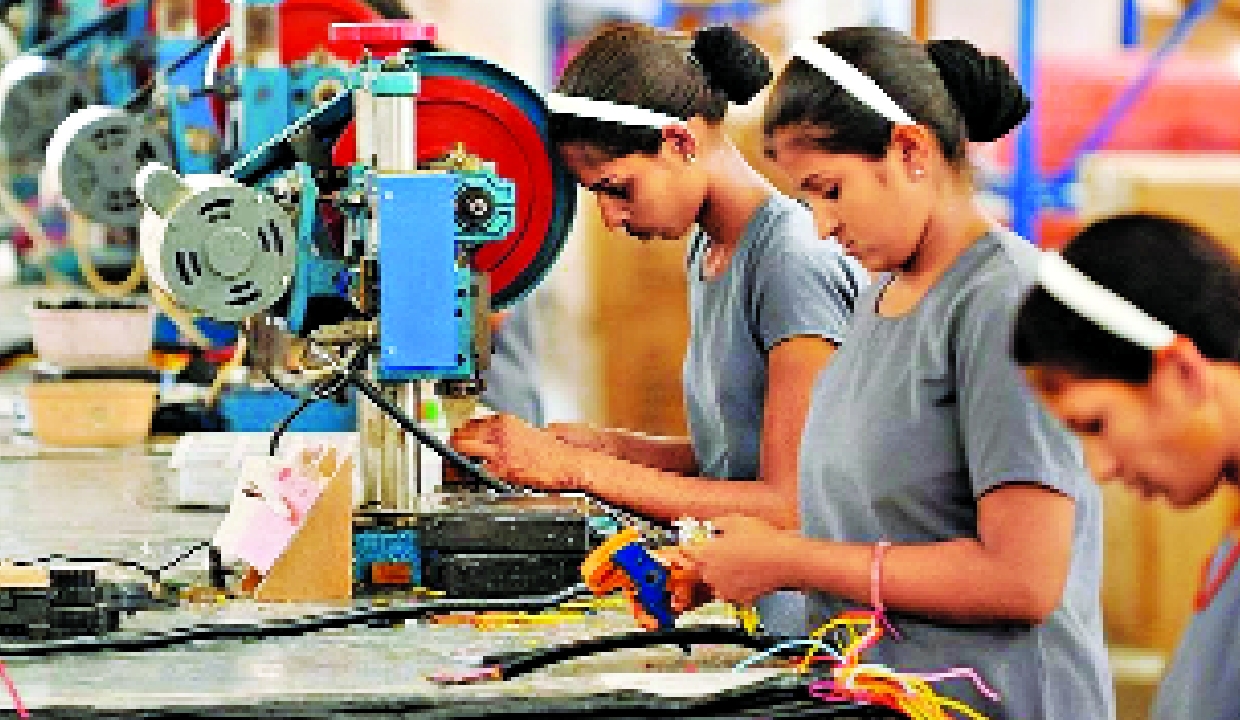
For more than three decades, India’s economic reform debate has revolved around a familiar belief: the government is too large, the bureaucracy is bloated, and the public sector is a burden on taxpayers. The prescription has therefore been equally familiar - privatise, downsize and outsource. The evidence, however, tells a remarkably different story. Far from being overstaffed, India has one of the smallest public sectors in the world relative to the size of its workforce. The real challenge is not an oversized state but an understaffed one that pays a relatively small number of employees exceptionally well, leaving too little fiscal space to recruit the teachers, nurses, police officers, judges and technical specialists the country desperately needs.
This combination has created a chronic deficit in state capacity that increasingly limits India’s economic ambitions. India’s public sector employs only about 3.3 per cent of the country’s workforce, even after including central and state governments, local bodies and public sector undertakings. In absolute numbers, this amounts to around 17-18 million employees, making it the second-largest public workforce in Asia after China. Yet, relative to the country’s workforce of more than 550 million people, India has the thinnest state among major Asian economies. The contrast is striking.
Around 23 per cent of China’s workforce is employed by the public sector. South Korea employs roughly 10.7 per cent, Indonesia about 8.9 per cent, while both Japan and Vietnam are close to 8 per cent. Contrary to popular perception, the stereotypical “bloated sarkari system” simply does not exist when viewed through an international lens. This shortage becomes most visible at the point where government actually meets the citizen. India has only around 150 police personnel per 100,000 population, well below the United Nations benchmark of 222. The judiciary has barely 21 judges per million people, compared with 50 to well over 100 in most developed countries. Vacancies in government schools, primary health centres and rural development departments remain a persistent feature across states. Policies are ultimately implemented not by cabinet ministers or senior civil servants but by frontline workers. A district collector cannot compensate for an absent nurse, an unfilled teaching post or a missing agricultural extension officer. Administrative excellence at the top cannot substitute for the absence of people on the ground.
India’s implementation deficit is as much a staffing problem as a governance problem. Yet this shortage exists alongside another anomaly: India pays its public employees extraordinarily well relative to the rest of the economy. World Bank studies show that public-sector wages exceed those in the formal private sector by 62 to 102 per cent, while the premium over India’s informal workforce ranges from 164 to 259 per cent. Development economist Karthik Muralidharan estimates that nearly 95 per cent of government jobs pay around five times the median Indian wage.
India spends roughly 8 per cent of GDP on public-sector wages, comparable to many OECD countries. But while advanced economies use similar expenditure to support a much larger workforce, India spends it on far fewer employees. The result is fewer teachers, doctors, police personnel and technical experts. East Asia offers a contrast. Japan, South Korea, Taiwan and China built capable states that coordinated investment, developed infrastructure, nurtured human capital and supported strategic industries. India’s post-1991 reforms dismantled many controls associated with the licence-permit raj but did not build an equally capable developmental state.
China has a deeply layered administrative system supported by specialised planning agencies and technical institutions. India increasingly relies on contracting out services while maintaining a relatively thin administrative backbone. The weakness extends to foreign policy. India’s diplomatic cadre comprises only around 950 Indian Foreign Service officers across nearly 200 missions worldwide, while China employs several thousand career diplomats. For a country seeking global leadership and a larger strategic role, such limited capacity creates unavoidable constraints.
The Ministry of External Affairs inevitably concentrates its attention on a handful of relationships - primarily China, Pakistan and the United States - because it simply lacks the manpower to devote sustained attention elsewhere. Training officers in specialised areas such as climate negotiations, technology governance or artificial intelligence often leaves desks understaffed. India’s global ambitions are therefore increasingly running ahead of its institutional capacity to support them. Ultimately, this is also an employment issue.
Expanding public-sector recruitment will not solve India’s entire jobs challenge, but filling existing shortages in education, healthcare, policing, justice and agricultural extension would create productive employment while significantly improving public service delivery. These are not artificial jobs; they are positions that government norms already recognise as necessary but remain vacant. The long-standing assumption that India’s public sector is too large has become increasingly detached from empirical reality.
The country does not need a smaller state. It needs a more capable one. The next phase of India’s development will depend as much on strengthening institutions as on expanding markets. Economic growth, industrial policy, infrastructure development and effective governance all require a state with adequate numbers of skilled professionals at every level — from policy specialists in New Delhi to teachers in village schools and nurses in primary health centres.
The lesson from East Asia is therefore straightforward. Prosperity was built not by abandoning the state but by building one that was competent, specialised and capable of working alongside markets. India’s challenge today is not to shrink government further, but to expand its capacity intelligently. That means addressing both sides of the equation simultaneously: strengthening expertise at the top while rebuilding the frontline workforce that delivers public services. Without that balance, India risks remaining a country with ambitious policies but insufficient administrative muscle to turn them into reality.
The writer is the President and CEO of the Forum of Federations, Ottawa, Ontario, Canada; Views presented are personal.