India's linguistic diversity strengthens dialogue: Vijender
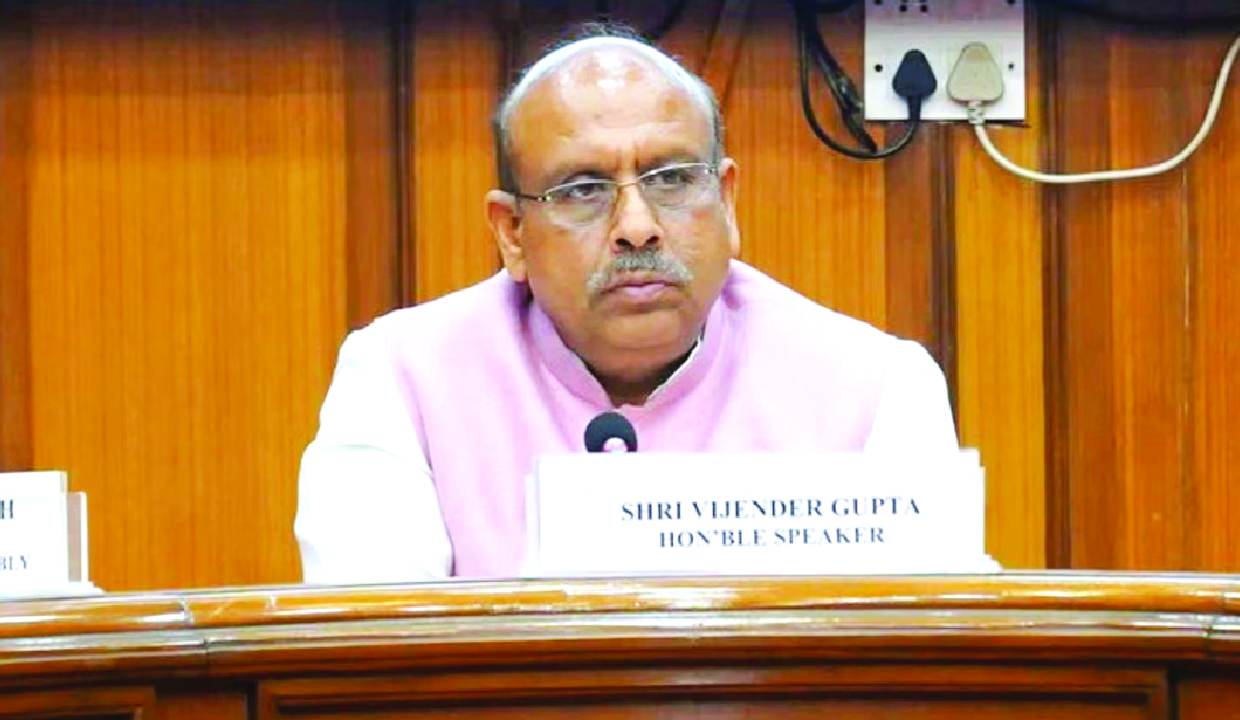
Delhi Assembly Speaker Vijender Gupta on Saturday said India's linguistic diversity has historically strengthened dialogue rather than deepened divisions.
He asserted that the country's multilingual character is a core marker of its civilisational and democratic strength. Addressing the valedictory session of the Third International Indian Language Conference in the Capital, Gupta underlined the role of languages as living links between India's past and its democratic future. “Language is not merely a medium of communication; it is the bridge between our civilisational past and democratic future,” he said, calling for sustained efforts to protect and deepen India's linguistic heritage in an age shaped by technology and rapid social change. The three-day conference, organised on the theme “Languages, Literature, Youth and Technology”, brought together scholars, writers, linguists and cultural thinkers from India and abroad. LokSabha Speaker Om Birla attended the valedictory session as the chief guest and delivered the keynote address, while the programme was presided over by Ram BahadurRai, President of the Indira Gandhi National Centre for the Arts (IGNCA).
Gupta said the evolution of Indian languages reflected continuity through diversity, shaped by centuries of interaction among communities, faiths and knowledge traditions. Even languages that are no longer spoken, he noted, have left behind intellectual and cultural legacies that continue to influence living languages. “Our linguistic inheritance is layered. It is not a story of disappearance but of enduring memory,” he said. The Speaker said most Indians grow up using different languages in different contexts, a practice that fosters listening, accommodation and mutual respect. This, he argued, has allowed linguistic families such as Indo-European, Dravidian, Austro-Asiatic and Tibeto-Burman to coexist within a shared cultural space. “In India, linguistic diversity has never meant division; it has always meant dialogue,” Gupta said.
He also highlighted the importance of both written and oral traditions in sustaining knowledge systems. Referring to ancient scripts, classical literature and oral tribal traditions, Gupta said languages have preserved collective memory through stories, songs, rituals and performance. The worth of a language, he added, should not be measured only by its written canon but by its lived presence in communities.