Indian ships given priority pass in Strait of Hormuz: Iran deputy FM
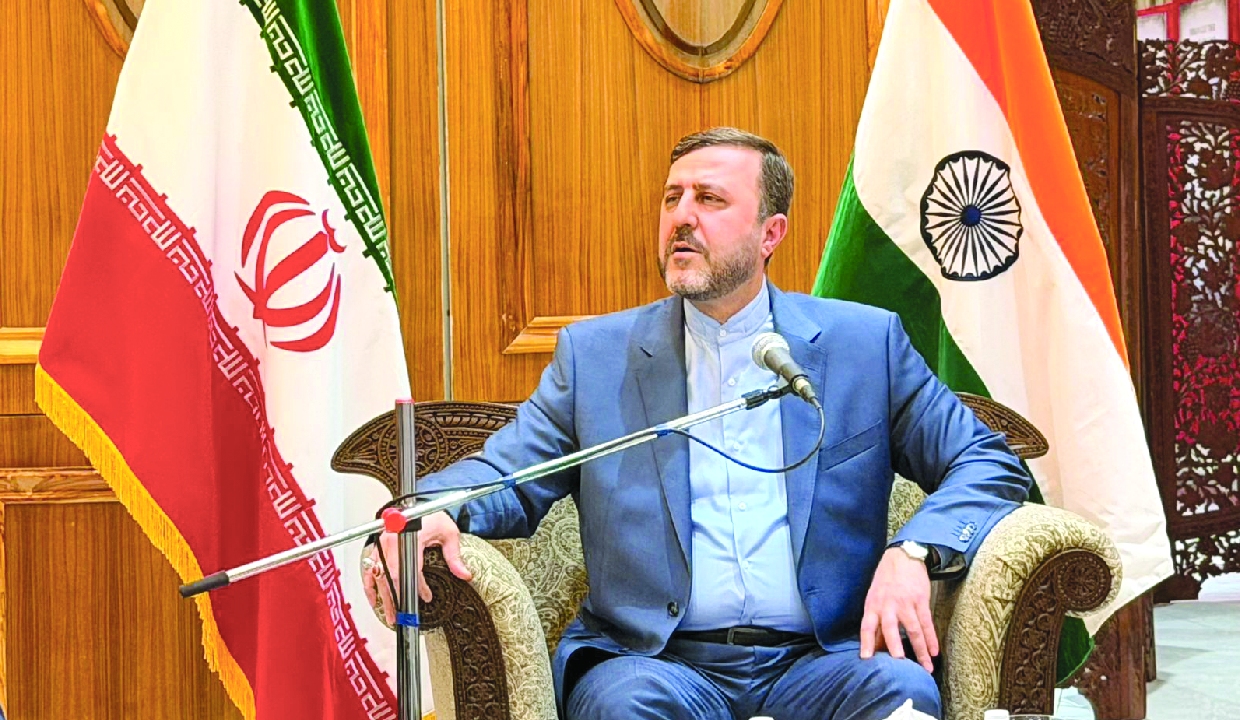
Iran’s Deputy Foreign Minister Kazem Gharibabadi on Wednesday strongly defended Tehran’s proposed service fee mechanism for vessels transiting the Strait of Hormuz, while confirming that Indian ships are being given preferential passage amid heightened regional tensions.
Speaking exclusively to The Pioneer on the sidelines of the India-chaired BRICS meeting, Gharibabadi dismissed suggestions that Iran was imposing transit tolls on international shipping and said the proposed charges were linked only to maritime services provided by Iran and Oman in the strategically critical waterway.
“We are providing maritime services — navigation assistance, safety and rescue operations and other safety-related services,” Gharibabadi said. “There will be charges for those services, but the framework will be based on three principles: transparency, non-discrimination and compliance with international standards.”
Rejecting criticism from Western governments and shipping stakeholders, the Iranian diplomat asserted that Tehran had no intention of violating international maritime law.
“Transit fees are not accepted under international maritime law. We are not going to impose transit fees,” he clarified. “We are working on a protocol arrangement regarding what services Iran and Oman will provide in the Strait of Hormuz. Discussions are still at the expert level and the mechanism has not yet been finalised. Every country and company will be informed once the framework is complete.”
In a significant revelation, Gharibabadi confirmed that Iran had facilitated the movement of Indian commercial vessels through the strait despite tighter monitoring measures.
“For friendly countries like India, we have adopted a different approach,” he said. “Several vessels have already been allowed through. Out of 13 Indian vessels waiting for passage, 11 have passed.”
He underlined that Tehran was prioritising cooperation with New Delhi. “We cooperate with friendly countries like India to facilitate the passage of ships. This is not the case for many other countries,” he added.
Later, he clarified that “the Strait of Hormuz will not be allowed to be used by enemy countries to launch attacks against us.”
Linking the broader reopening and stabilisation of maritime transit in the region to geopolitical developments, Gharibabadi accused the United States of escalating tensions and undermining diplomatic efforts.
“The US is not serious about negotiations and diplomacy,” he said, arguing that any long-term de-escalation would require the removal of what he described as a US naval blockade, an end to hostilities and the release of frozen Iranian assets.
The Iranian deputy foreign minister also expressed disappointment over divisions within BRICS regarding the situation in West Asia.
“BRICS has not been able to arrive at a joint statement,” he said, alleging that one neighbouring Arab country had pushed for language condemning Iran while avoiding criticism of the United States and Israel.
On stalled negotiations with Washington over Tehran’s nuclear programme, Gharibabadi said discussions had made “significant progress” before collapsing.
“We asked the United States to lift sanctions,” he said, adding that Iran had shown flexibility by offering a “balanced package” and remained prepared to discuss aspects of its nuclear programme.
However, he sharply rejected reported US demands that Iranian uranium stockpiles be transferred abroad.
“This is not negotiation; this is dictation,” Gharibabadi said. “Why should we do this?”
Warning that Tehran remained prepared for any renewed military confrontation, he stressed that Iran’s position was unequivocal.
“Our policy and decision are very clear,” he said. “We will defend the country with all our capacities.”