Indian economy is story of rising credibility: Shaktikanta Das
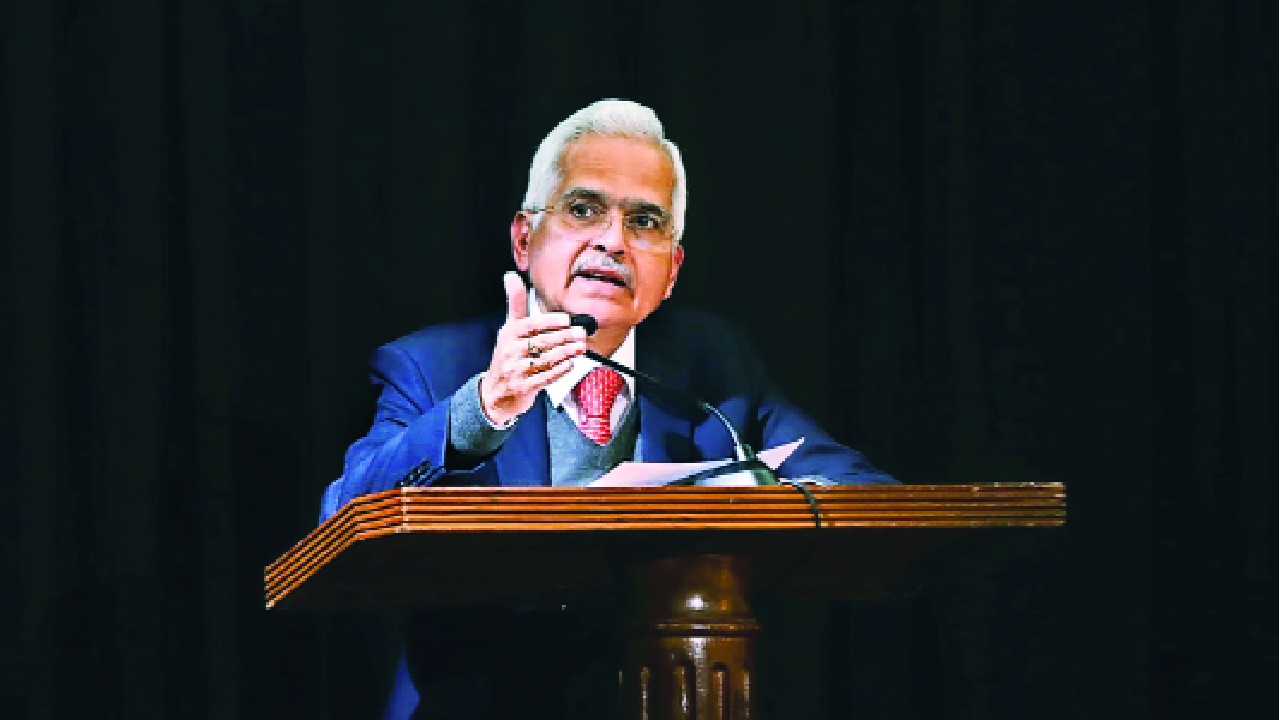
Principal Secretary to the Prime Minister, Shaktikanta Das, has said that despite of several hiccups on every front globally, India continues to stand for a cooperative, rules-based global system while pragmatically forging partnerships to safeguard its national interests.
Placing India’s journey in a global context, Das highlighted that the world economy is at an inflection point. “Traditional multilateralism is under strain, weakened by geopolitical rivalries, protectionism and fragmentation. Trade and supply chains are no longer neutral engines of globalisation but instruments of strategic influence. Reshoring, friend-shoring and restrictions on technology, labour and critical resources have slowed global trade growth and reduced opportunities for convergence, particularly for emerging economies and the global South,” Das said at the inaugural Bibek Debroy Memorial Lecture at the India International Centre in the national capital last Friday.
Choosing the theme “Indian Economy: A Story of Rising Credibility,” Das noted that it resonated deeply with Dr Debroy’s lifelong faith in reforms and India’s long- term economic potential. Das began by paying a warm and personal tribute to Dr Bibek Debroy, describing him as a polymath, reformer and bridge between academia and policymaking. Having interacted closely with Dr Debroy over the years, he recalled his intellectual clarity, literary brilliance and human warmth, likening him to Vidur from the Mahabharata — wise, candid and grounded.
“It is in this environment that India’s embrace of Atmanirbharta, or self-reliance, assumes strategic significance. Das underscored that Atmanirbharta is not isolationism but resilience-building — developing domestic capabilities in critical goods and technologies while remaining globally engaged. Conceived well before the recent wave of global fragmentation, this approach combines economic self-reliance with geopolitical autonomy,” the former RBI Governor said.
He further argued that a strong domestic economy empowers India to pursue an independent foreign policy and contribute to global growth as a credible and reliable partner. Central to this vision is macroeconomic stability, the first pillar of what Das described as the Atmanirbharta “tripod.”
“Over the past decade, India has demonstrated a consistent commitment to stability despite multiple global shocks, including the COVID-19 pandemic, geopolitical conflicts and worldwide monetary tightening. The Indian economy rebounded strongly, recording average growth of over 8 per cent in the post-pandemic years, and is projected to remain the fastest-growing major economy. Inflation, once a persistent concern, has been decisively contained through prudent monetary policy and supply-side interventions, falling well below the target band in late 2025,” he mentioned to the august gathering adding fiscal consolidation has reinforced this stability.
Das pointed to the sharp reduction in fiscal deficits and the steady decline in the debt-to-GDP ratio, restoring policy space for the future. “Equally significant has been the turnaround of the financial sector. Indian banks and financial institutions are now among the healthiest in years, with non-performing assets at historically low levels and improved governance inspiring renewed investor confidence—even as banking systems in some advanced economies faced stress,” he said.
The second pillar supporting India’s rising credibility is the continuity of structural reforms, Das said emphasising that reform momentum has been sustained over a decade, addressing long-standing bottlenecks. “The GST unified India into a single market, enhanced compliance and boosted consumption, while recent reforms have made it simpler and more consumer-friendly. The Insolvency and Bankruptcy Code transformed credit culture by enabling time-bound resolution of stressed assets, and RERA brought transparency and trust to the real estate sector,” he stated.
Das spoke with particular conviction about the adoption of the flexible inflation-targeting framework in 2016, calling it a cornerstone of policy
credibility. Labour reforms, consolidated into four Labour Codes, aim to balance flexibility with worker
protection, encouraging formalisation, investment and higher participation, especially of women.
The third pillar comprises targeted government interventions to address structural gaps. Production-Linked Incentive schemes across key sectors, massive investments in infrastructure through initiatives like Gati Shakti, the digital transformation under Digital India, and the rapid expansion of startups have strengthened domestic capabilities. Complementary reforms to improve ease of doing business — such as scrapping thousands of obsolete compliances and the Jan Vishwas reforms — signal a shift from regulatory policing to facilitation, Das who has held several important positions in his illustrious career as bureaucrat said.
Looking ahead, Das highlighted India’s “multiplicative strengths.” A young and aspirational population offers a demographic dividend, supported by investments in skills and education. World-class digital public infrastructure — India Stack — has revolutionised governance, financial inclusion and innovation, becoming a source of global soft power. Technological capabilities in AI, space, biotechnology and clean energy are positioning India at the forefront of the next wave of innovation. In conclusion, Das observed that India is transitioning from being merely “incredible” to being truly “credible.”