India-US trade deal: Indian agriculture derisked
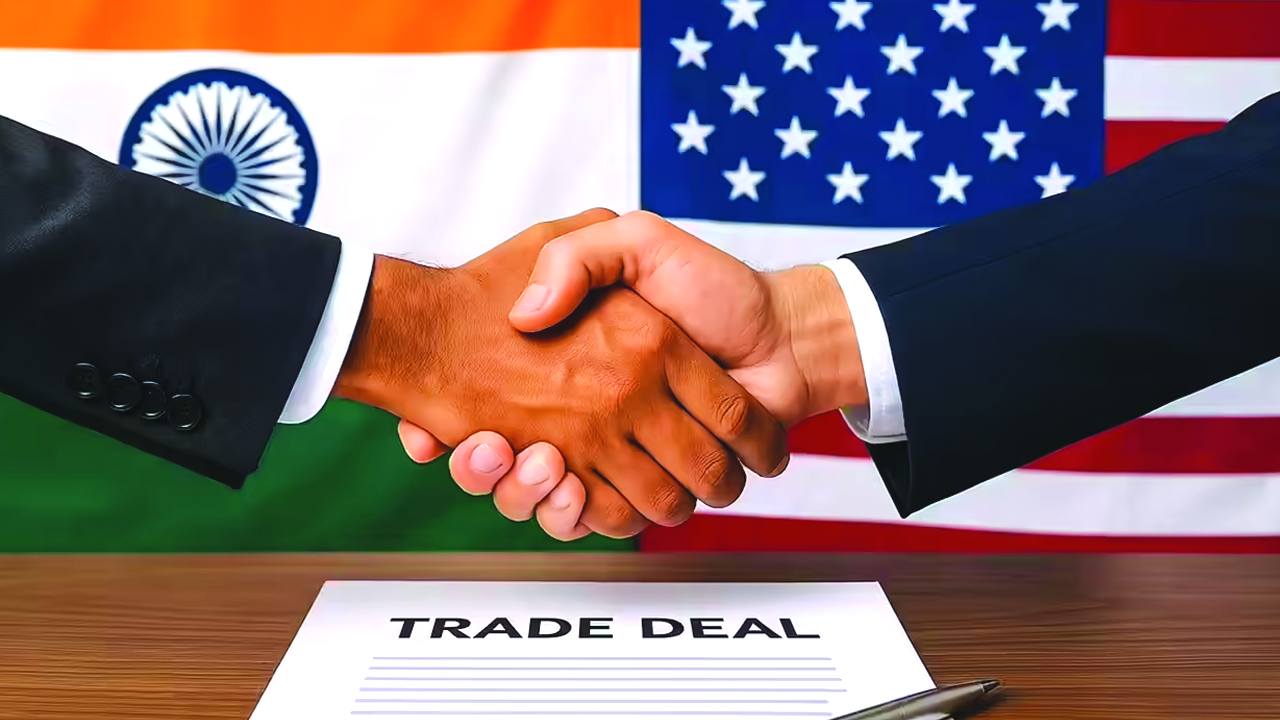
The debate surrounding the India-US trade deal has been predictably intense. For some, it represents strategic maturity; for others, it signals vulnerability, particularly in agriculture. Concerns about farmer exposure, subsidy asymmetry, tariff imbalance and sovereignty have all been voiced with urgency.
Yet trade policy is best judged not by rhetoric but by first principles. In agriculture, three tests matter above all: Does the agreement protect consumers from instability? Does it safeguard farmer livelihoods? And does it preserve national food security? Measured against these criteria, the agreement appears less a leap into liberalisation than a calibrated exercise in risk management.
The consumer test: Price stability above all
In a country where food inflation directly affects political and social stability, consumer welfare is not a peripheral concern. India’s agricultural system is deeply intertwined with its public distribution architecture, buffer stocks and minimum support price (MSP) framework. Sudden exposure of staple crops to global price swings would transmit volatility quickly to households.
The agreement, however, does not liberalise the core staples that anchor domestic food consumption. Wheat and non-basmati rice-central to food security and the Public Distribution System-remain insulated. Dairy, another politically sensitive and livelihood-intensive sector, is not opened to unfettered import competition.
Poultry and pulses are similarly shielded. This matters. By ring-fencing staples, the agreement avoids importing global volatility into domestic food prices. In that sense, consumer risk is contained rather than amplified. Where limited openings exist-such as in certain feed-related inputs or niche segments-they do not structurally alter the pricing architecture of mass-consumption food grains. If anything, selective import flexibility in deficit or input categories can help smooth supply bottlenecks without destabilising the core.
The livelihood test: Avoiding sudden exposure
The second concern relates to producers. Indian agriculture is not homogenous; it is dominated by small and marginal farmers operating under thin margins. Critics argue that exposure to highly mechanised and subsidised American agriculture would create an uneven playing field.
That criticism would carry force if the agreement had opened India’s staple grain markets or dismantled MSP-linked procurement. It has not.
By keeping wheat, rice and dairy insulated, the deal avoids what might be termed “policy shock risk”-the abrupt displacement of domestic producers through tariff elimination. India’s experience with global trade negotiations, including its decision to stay out of the Regional Comprehensive Economic Partnership (RCEP), reflects sensitivity to such risks. The present agreement appears to follow that cautious template: controlled engagement, not wholesale exposure.
It is also worth distinguishing between theoretical vulnerability and actual exposure. In commodities where India is structurally deficit-such as edible oils-imports are already a large and managed component of domestic supply. Trade agreements do not create that dependency; they operate within it. Food security, in this context, does not require autarky in every crop. It requires sovereign control over staples, diversified sourcing in deficit commodities, and the policy space to intervene when necessary. By preserving this policy space, the agreement reduces the risk of forced liberalisation in politically sensitive sectors.
The food security test: Sovereignty in staples
National food security rests on three pillars: domestic production of essential staples, buffer stock capacity, and the autonomy to regulate trade flows in times of stress. Any agreement that undermines these pillars would merit concern. Yet the available contours of the deal suggest that these foundations remain intact. There is no dismantling of procurement architecture, no erosion of buffer stock policy, and no indication of ceding control over core food grains. The sovereign capacity to intervene in markets appears preserved. This is significant in a world marked by supply-chain disruptions, geopolitical tensions and climate shocks. Food security is not merely about calories; it is about resilience. A calibrated trade framework that protects staples while allowing selective integration elsewhere strengthens, rather than weakens, resilience.
From protection to positioning
If the agreement is defensive in its protection of staples, it is selective in its openings. That is where opportunity lies. Indian agriculture has long been criticised for overdependence on a narrow basket of MSP-supported crops. Diversification, value addition and integration into high-value export markets have remained policy goals but unevenly realised outcomes.
By improving access conditions for premium segments-such as basmati rice and processed agricultural products-the deal nudges Indian agriculture toward value rather than volume. The future of farm income growth lies less in expanding acreage of staple cereals and more in moving up the value chain: branded exports, processed foods, specialised crops and agri-based manufacturing.
This is not a call for reckless liberalisation. It is an argument for strategic repositioning. Protection of the core creates stability; selective export openings create incentive. In that sense, the deal aligns with a broader evolution in India’s trade doctrine: protect the sensitive base, engage competitively at the margins.
Reform imperative: Derisking is not complacency
To say that Indian agriculture is derisked by the agreement is not to suggest that it is without structural challenges. On the contrary, the more significant risks are internal: productivity stagnation, groundwater depletion, fragmented landholdings, inadequate storage and logistics, and insufficient value addition. Trade agreements cannot solve these problems; they can only create enabling conditions. If India continues to rely excessively on procurement-backed cereals without diversifying into oilseeds, pulses, horticulture and processing, vulnerability will persist irrespective of external trade.
In oilseeds, for instance, India’s large import dependence reflects domestic productivity gaps rather than trade concession. Strategic import management must be complemented by technological improvement, better extension services and incentive alignment. True derisking requires competitiveness, not insulation alone. Similarly, dairy’s insulation from import competition provides stability, but long-term sustainability depends on efficiency gains, quality upgrading and export orientation in value-added segments. The agreement, therefore, should be read not as an endpoint but as a policy environment within which reform becomes both possible and necessary.
A calibrated balance
The most useful way to view the India-US trade deal is not through ideological lenses of surrender or triumph, but through the logic of balance. It attempts to reconcile three imperatives: consumer stability, producer protection and strategic engagement.
Absolute self-sufficiency across all commodities is neither feasible nor economically rational. Equally, indiscriminate liberalisation would be socially destabilising. Between these extremes lies calibrated integration. By shielding staples, managing deficits pragmatically and opening limited export avenues, the agreement reduces the probability of abrupt shocks while expanding the scope for competitive positioning. That is what derisking looks like in practice. In trade policy, perfection is elusive. What matters is whether vulnerability is amplified or moderated. On the evidence available, the India-US trade deal appears to moderate rather than magnify risk. The real challenge now lies not in defending or denouncing the agreement, but in leveraging its stability to accelerate long-delayed reforms. If India uses this moment to strengthen productivity, diversify crops, expand processing and integrate intelligently with global markets, agriculture will not merely be derisked-it will be repositioned. That, ultimately, is the deeper opportunity embedded within the agreement.
Author is a retired IAS Officer; views are personal