India’s AI summit must deliver more than dialogue, it must deliver direction
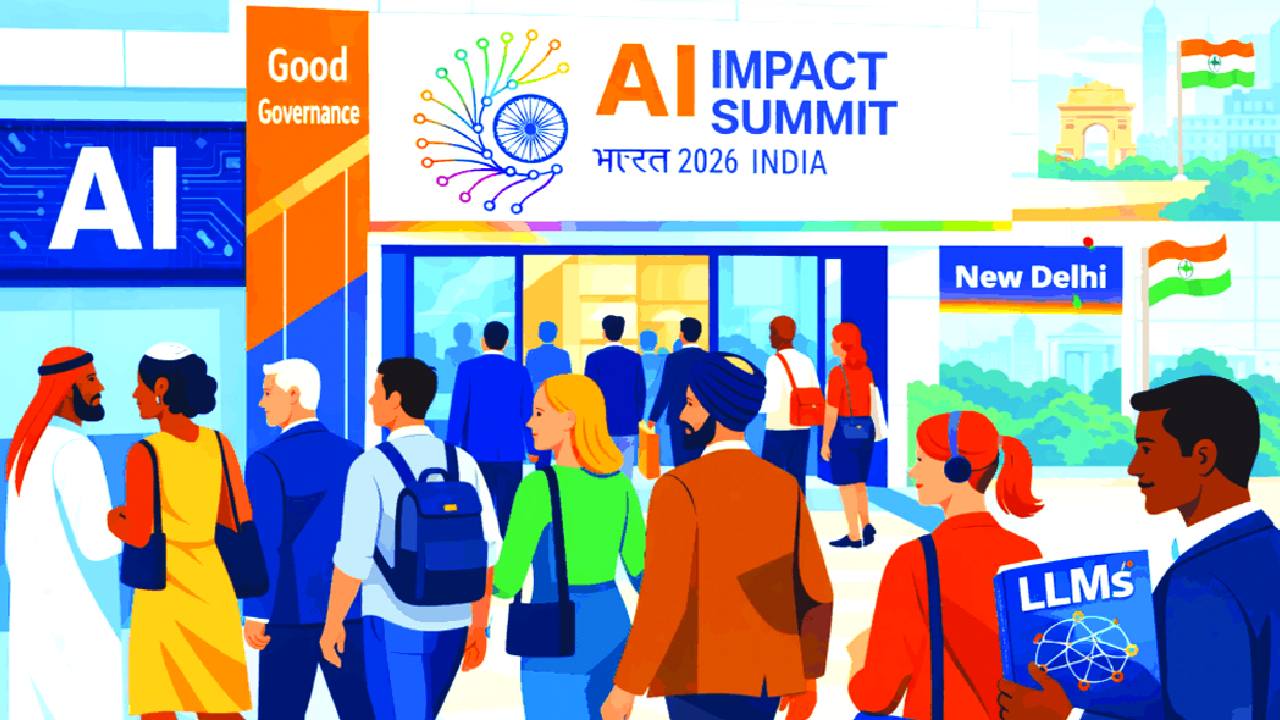
The countdown to India’s forthcoming AI Summit has begun, but the real clock is not measuring time. It is measuring expectation. Not just national expectation, but global anticipation. Because when India convenes the world today, it is no longer to observe or adapt. It is to architect.
This summit cannot be another gathering of impressive speeches, overlapping panels, and aspirational declarations that fade into conference archives. It must be a turning point, one that establishes India not merely as a participant in the global AI discourse, but as a systems designer of the future itself. For that to happen, the summit must be unapologetically outcome-driven.
AI summits across the world have often excelled at framing the future but faltered in structuring it. They generate momentum but rarely institutionalise it. They produce language, not mechanisms. India has the opportunity, and responsibility, to change that pattern. An outcome-driven summit means that every deliberation must answer three non-negotiable questions:What will change because this conversation happened?Who will implement that change?By when will the world see the result?
Clarity must replace generality. Measurable frameworks must replace thematic overlaps. Instead of parallel discussions on ethics, governance, innovation, infrastructure, and inclusion, all valuable but often fragmented, the summit must weave these into integrated implementation pathways. This requires disciplined design.
Each thematic track should culminate in tangible deliverables: regulatory templates, interoperable technical standards, capacity-building frameworks, cross-border research protocols, finaning models for AI public goods, and structured partnerships. The summit’s legacy must not be a communiqué alone, but a blueprint. The world does not need more dialogue about AI’s potential. It needs architecture for AI’s deployment, responsibly, equitably, and at scale.
This summit will bring together an extraordinary diversity of stakeholders: Governments, researchers, industry leaders, startups, civil society, development institutions, and multilateral organisations.
Such diversity is a strength, but only if it is orchestrated, not merely assembled. Without intentional design, diversity can produce conceptual congestion. Similar ideas circulate across panels, priorities blur, and consensus becomes performative rather than operational.
India must demonstrate that convening power is not simply about bringing voices together, it is about aligning them toward shared execution. This means structured thematic boundaries, clear role definition for each stakeholder group, and synthesis mechanisms that prevent duplication.
Deliberations should function like coordinated systems engineering, not parallel commentary. The summit must feel less like a conference, and more like a strategic design lab for humanity’s technological future.
Perhaps the most important question is not what the summit discusses, but what identity it expresses. Global audiences must not leave with the impression that India is replicating existing AI governance models with local adaptation. They must recognise that India is offering a distinctive philosophical and operational framework, one shaped by its civilisational worldview, developmental experience, and technological pragmatism. This is where the summit’s vision, anchored in the symbolic architecture of chakras and the guiding triad of People, Progress, and Planet, becomes transformative rather than ornamental. The chakra is not merely a cultural motif. It represents motion with balance. Power with responsibility. Expansion with alignment. It is a profound metaphor for AI itself, a force that must remain dynamic yet centred, transformative yet anchored in ethical equilibrium.
By structuring the summit around seven chakras: Human Capital, Inclusion for Social Empowerment, Safe and Trusted AI, Resilience, Innovation, and Efficiency, Science, Democratising AI Resources and AI for Economic Growth and Social Good; India is not invoking symbolism for aesthetic appeal. It is designing a governance architecture, one that treats technological development as an integrated system of human capability, institutional responsibility, economic dynamism, and societal wellbeing.
Each chakra functions as a stabilising force in the AI ecosystem. Together, they create a model of technological evolution that is balanced, regenerative, and future-ready. By organising the summit around People, Progress, and Planet, India signals a foundational proposition: technological advancement cannot be separated from human dignity, developmental equity, and ecological stability. This is not an imported framework. It is an indigenous systems philosophy, one that integrates economic growth, social welfare, and environmental stewardship as interdependent rather than competing objectives. If articulated clearly, this becomes India’s intellectual signature on global AI governance. For decades, the global technology narrative placed India in the role of scale provider, talent contributor, or market adopter. That era is closing. This summit must communicate, unmistakably, that India now operates across the full strategic value chain of technological transformation:
India strategises: shaping governance principles, regulatory models, and global cooperation frameworks. India designs: building digital public infrastructure, interoperable platforms, and inclusive technological ecosystems. India innovates: advancing research, entrepreneurship, and applied solutions across sectors from healthcare and agriculture to education and climate resilience.
India disseminates: scaling solutions across the Global South and beyond, transforming innovation into shared global capability.
This fourfold identity must become the summit’s central message. Not declared rhetorically, but demonstrated structurally, through partnerships launched, frameworks adopted, and mechanisms institutionalised.
The world should leave recognising that India is not reacting to the future of AI. It is engineering pathways toward it. Perhaps the most profound shift underway is psychological. For the first time in the technological age, large parts of the world, especially the Global South, are not merely observing innovation hubs in the West or East. They are looking toward India as a model of how scale, inclusion, and sovereignty can coexist in digital transformation. This summit must consciously embrace that aspirational dimension.
To be an aspiration is to carry responsibility. It means demonstrating that technological leadership can be democratic, development-oriented, and globally cooperative rather than extractive or exclusionary. India’s voice must therefore be confident but constructive. Ambitious but accountable. Visionary but implementable. The message must be clear: the future is not being negotiated elsewhere. It is being co-created here.
A summit achieves real success not when delegates applaud its closing session, but when its ideas permeate global discourse afterward. The vision of People, Progress, and Planet, symbolised through the chakra, must travel beyond policy circles into academic frameworks, corporate strategy, international development agendas, and public imagination. It must become a reference model.
This requires intentional dissemination: publications, open frameworks, international collaborations, training networks, digital knowledge platforms, and continuous multilateral engag ment. The summit must be the beginning of a global narrative cycle, not a single event. India must ensure that what is conceptualised here becomes operational everywhere. History rarely announces turning points. It simply presents moments that later generations recognise as decisive. This summit is one such moment.
If designed with precision, executed with clarity, and followed with commitment, it can mark the transition from a fragmented global AI conversation to a structured global AI order, one shaped significantly by Indian thinking. The world is watching not just what India will say, but what India will build. When participants depart, they should not merely remember insightful discussions. They should carry frameworks, partnerships, and implementation mandates. They should leave with the unmistakable impression that India does not simply convene conversations about the future. India constructs the systems that make the future possible. The countdown has begun. Now the world will see what India delivers.
The writer is a former civil servant, who writes on cinema and strategic communication. With inputs rom Zoya Ahmad and Vaishnavie Srinivasan; views are personal