India’s AI revolution on display
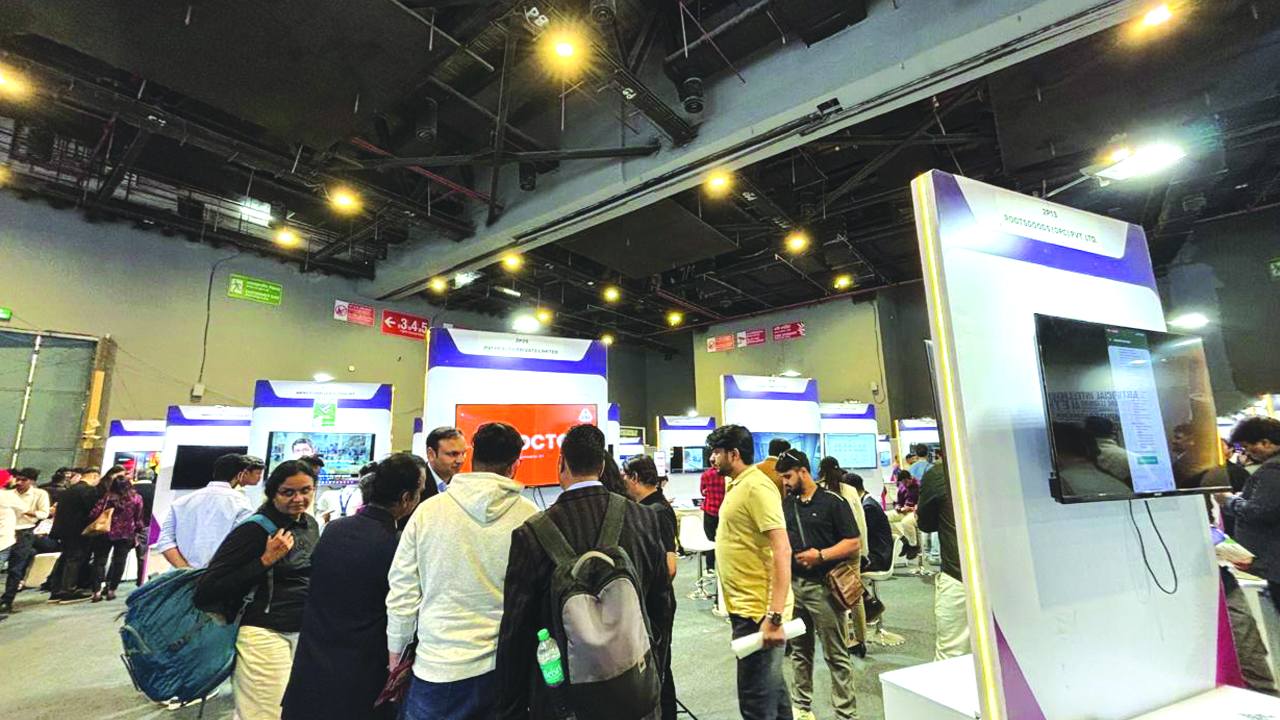
The Ministry of Electronics and Information Technology unveiled a sprawling exhibition pavilion that drew dense crowds of students, entrepreneurs, officials and defence personnel at the AI Impact Summit.
All eager to glimpse the technologies the Government believes will define India’s digital future. The atmosphere was less that of a conventional conference and more of a working laboratory of the state’s AI ambitions.
Among the most striking showcases was AEROARC, AI-powered robotics designed to strengthen India’s defence capabilities. Built for hazardous terrains, high altitudes and conflict zones, the system features unmanned aerial vehicles such as the Trishul-X and agile robotic mules equipped with computer vision, thermal imaging, encrypted communication and autonomous navigation.
Designed to function even in GPS-denied environments, the platform aims to reduce risks to soldiers during surveillance, intelligence and explosive ordnance disposal operations.
With over 70 per cent indigenous content, the initiative underscores India’s push for defence self-reliance while enhancing operational safety.
Security and governance were equally prominent themes. JARVIS, deployed across 75 prisons in Uttar Pradesh, demonstrated a 24x7 AI-powered video analytics system capable of detecting violence, contraband and suspicious activity in real time, reducing human fatigue and response delays.
The National Informatics Centre’s AI Suite showcased population-scale applications already active in the judiciary and Parliament, including AI-driven translation, transcription and legal research tools processing millions of requests each month. Meanwhile, the India Energy Stack proposed AI-enabled peer-to-peer energy trading to give households greater control over solar power earnings and consumption.
High-performance computing and cultural preservation completed the picture. The Centre for Development of Advanced Computing presented the liquid-cooled Rudra-SPX server powered by next-generation Intel Xeon processors, built for dense, large-scale data workloads.
In contrast, Gyanbharatam highlighted how specialised AI-based OCR can transform ancient manuscripts in scripts such as old Devanagari into searchable digital repositories.
Together, the exhibits painted a clear message: from defence and prisons to power grids and palm-leaf texts, AI is no longer a concept under discussion, it is infrastructure in the making.