India joins Pax Silica to secure supply chains
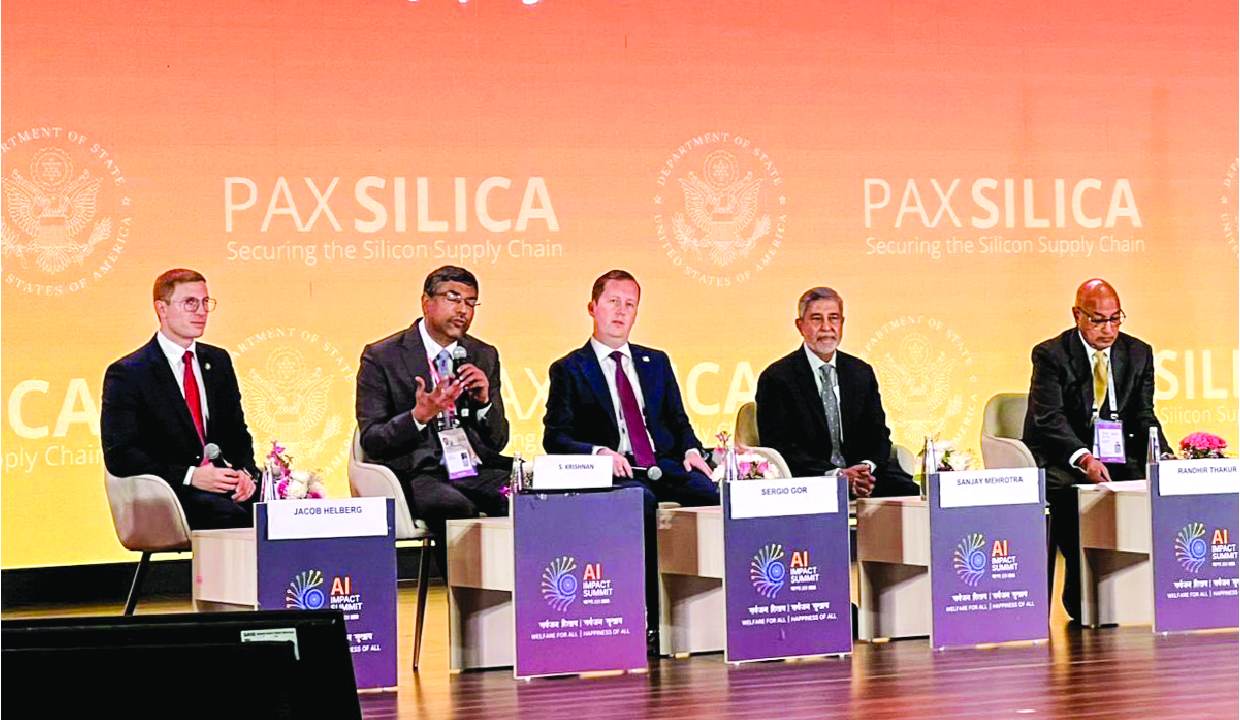
In a significant strategic shift, India on Friday joined the US-led “Pax Silica” initiative, a technology partnership aimed at building secure and resilient supply chains for semiconductors and other critical technologies amid intensifying global competition.
The move brings India into closer alignment with Washington’s efforts to reduce reliance on China-centric manufacturing ecosystems and promote trusted production networks among democratic partners. The decision also reflects improving ties between New Delhi and Washington after recent tensions over India’s continued purchase of discounted Russian crude.
The Pax Silica framework seeks to deepen collaboration in semiconductor design, fabrication, research, and advanced manufacturing. Other participating nations include Japan, South Korea, the United Kingdom and Israel, forming a bloc focused on safeguarding supply chains in high-tech sectors.
Announcing India’s entry ahead of the formal signing, US Ambassador to India Sergio Gor described the partnership as both strategic and necessary. “Pax Silica will be a group of nations that believe technology should empower free people and free markets. India’s entry isn’t just symbolic — it is strategic and essential,” he said.
India’s participation comes weeks after New Delhi and Washington concluded an interim trade arrangement aimed at easing tariff disputes and restoring economic momentum.
Earlier this month, US President Donald Trump announced a reduction in reciprocal import tariffs on Indian goods from 25 per cent to 18 per cent. The US also removed an additional 25 per cent levy that had been imposed in response to India’s continued imports of Russian oil.
Prime Minister Narendra Modi had faced mounting pressure from Western partners over energy purchases from Moscow following Russia’s invasion of Ukraine in 2022. India, however, defended the imports as necessary to manage domestic inflation and protect consumers.
The easing of tariff tensions, coupled with India’s decision to join Pax Silica, signals a broader reset in bilateral ties - one that extends beyond trade into long-term technology and security cooperation.
Pax Silica is designed to strengthen collaboration among member nations on semiconductor innovation and supply chain resilience. The initiative aims to diversify production hubs, encourage research partnerships, and reduce vulnerabilities linked to concentrated manufacturing bases.
For India, the move dovetails with its domestic push to expand semiconductor manufacturing and position itself as a reliable node in global technology value chains. For the United States, India’s inclusion reinforces its strategy of building a trusted network of partners in the Indo-Pacific to counterbalance China’s dominance in critical sectors.
Analysts view the development as part of a larger strategic convergence between the two democracies. “From the trade deal to Pax Silica to defence cooperation, the potential for our two nations to work together is truly significant,” Ambassador Gor said.
As geopolitical competition sharpens and technology becomes central to national security, India’s entry into Pax Silica marks a notable step in deepening its partnership with Washington and other like-minded nations - reshaping the architecture of global tech supply chains in the process.