India develops cross-breed cattle boosting milk production
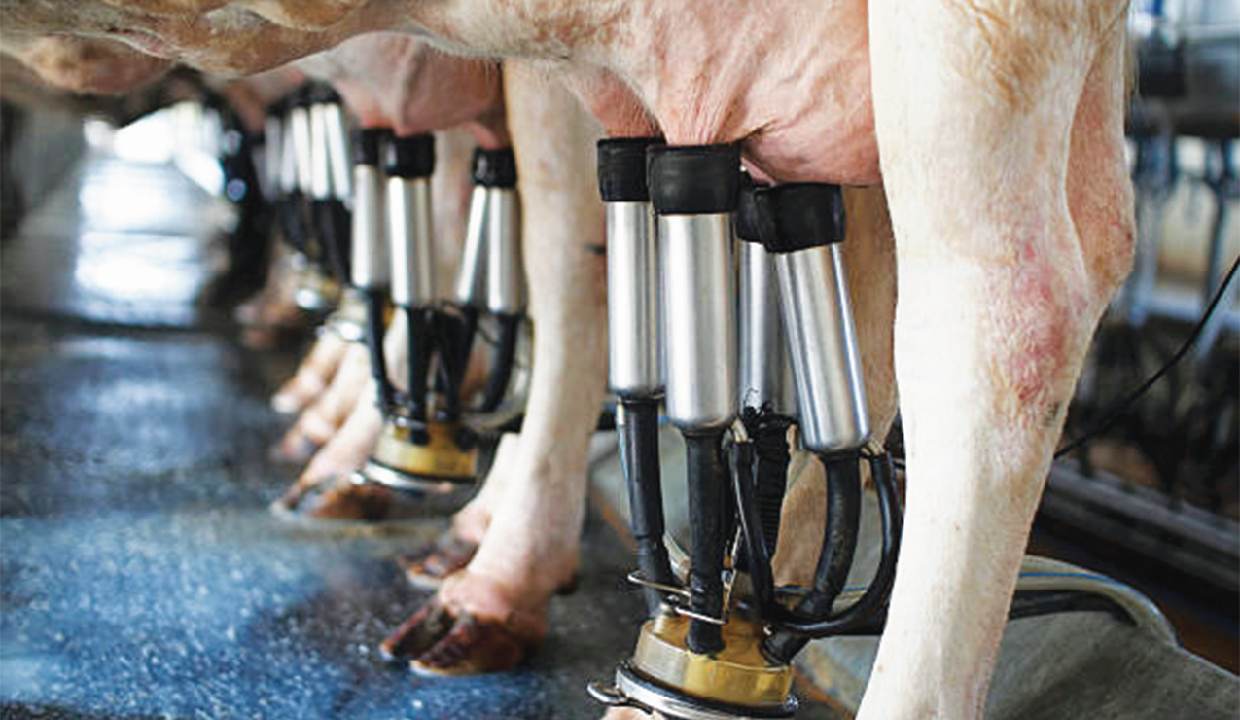
Marking a major milestone in milk production, India has developed two high-yielding cross-breed cattle breeds, each capable of delivering milk over 3,500 kgs in a 10-month lactation cycle, taking the country’s total registered livestock and poultry breeds to 246. They surpass indigenous breeds that yield 1,000-2,000 kg of milk per cycle.
Karan Fries and Vrindavani, two high-yielding cross-breed cattle are developed by the National Dairy Research Institute (NDRI) in Karnal and ICAR-Indian Veterinary Research Institute (IVRI) in Bareilly, each capable of producing over 3,500 kg of milk in a 10-month lactation period. The cows yield an average of 3,550 kg of milk per lactation, with top performers producing 5,851 kg in 305 days and a peak yield of 46.5 kg per day.
Union Agriculture Minister Shivraj Singh Chouhan on Wednesday presented registration certificates for 16 new livestock and poultry breeds at an event organised by the Indian Council of Agricultural Research-National Bureau of Animal Genetic Resources (ICAR-NBAGR).
Among the 16 newly registered breeds, 14 are indigenous and include Medini and Rohikhandi cattle from Jharkhand and Uttar Pradesh, Melghati buffalo from Maharashtra, goats such as Palamu (Jharkhand) and Udaipuri (Uttarakhand), and Mithun like Nagami from Nagaland.
The list also features poultry and waterfowl varieties: Mala Chicken (Jharkhand), Kodo Duck (Jharkhand), Kudu Duck (Odisha), Kuttanad Duck (Kerala), Manipuri Duck (Manipur), Nagi Duck (Assam), and Rajdigheli Geese (Assam). A cross-breed sheep, Avishaan from Rajasthan, was also registered. With these additions, India now has 242 indigenous and four synthetic registered breeds. “India is focusing on both developing new crop varieties and livestock breeds as well as conservation and preservation of indigenous breeds. The livestock and poultry sector will play an important role in Viksit Bharat,” Chouhan said.
ICAR Director General M L Jat emphasised the importance of conserving indigenous breeds amid climate change challenges. “In view of climate change, there is a need to conserve the genetic resources that we have so that we can use it for the future,” he said.
ICAR Assistant Director General (Animal Production and Breeding) Gyanendra Kumar Gaur said the synthetic breeds have high milk production potential, making them valuable for India’s dairy sector.
Since 2008, ICAR has been registering breeds to provide legal protection, facilitate breed and region-specific development programmes, and enable implementation of Government schemes. The registration process, undertaken annually, typically takes 2-5 years to complete. The minister also presented ICAR conservation awards to individuals and institutions for their work in preserving indigenous breeds.