India denies security breach at Bangladesh Mission
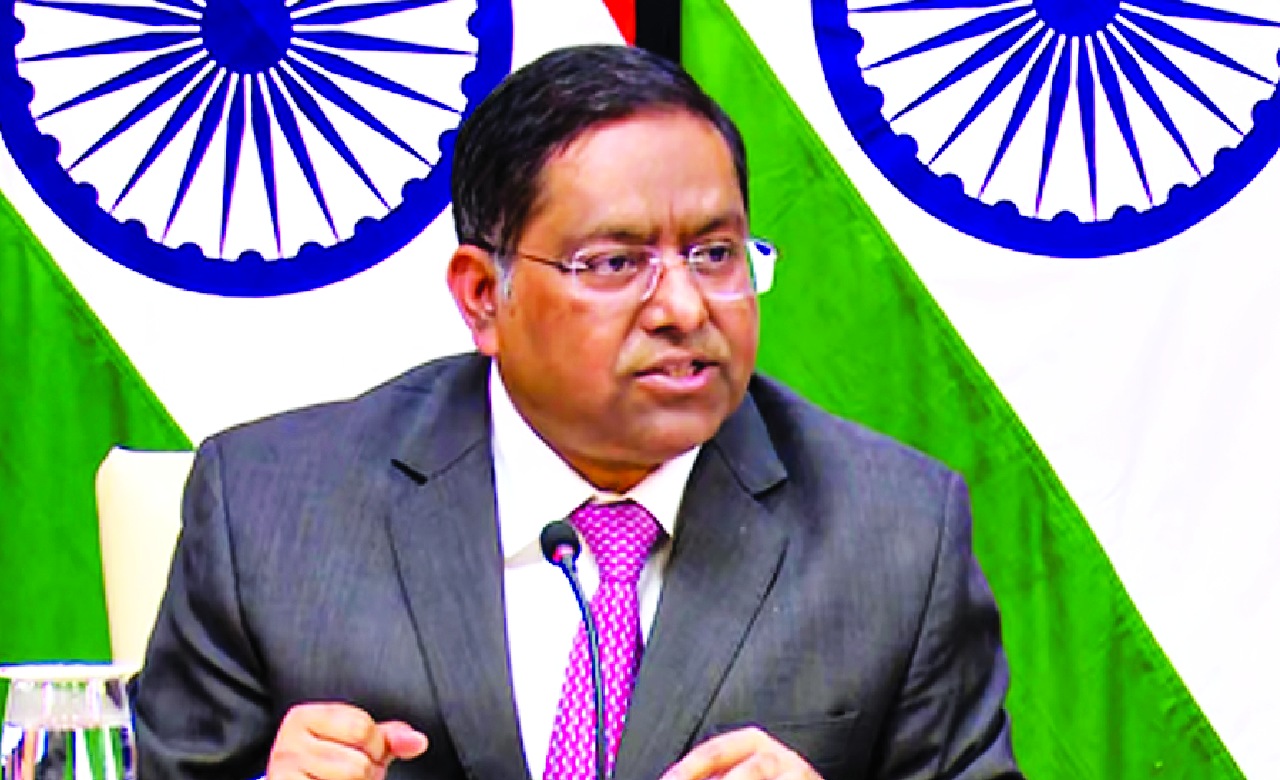
The Ministry of External Affairs (MEA) on Sunday unequivocally dismissed allegations of a security breach at the Bangladesh High Commission in New Delhi, calling such claims “misleading propaganda” and asserting that the protest outside the diplomatic mission was brief, peaceful, and fully under control.
Reacting to reports published in sections of the Bangladeshi media, MEA spokesperson Randhir Jaiswal said a small group of protesters had gathered outside the High Commission on December 20 to condemn the killing of Dipu Chandra Das in Bangladesh and to demand greater protection for minority communities.
“Approximately 20-25 youth assembled outside the Bangladesh High Commission and raised slogans condemning the brutal killing of Dipu Chandra Das in Mymensingh, while also urging safeguards for minority communities in Bangladesh,” Jaiswal said in a formal statement.
Rejecting any suggestion of a diplomatic security lapse, the MEA stressed that the protest never posed a threat to the mission. “At no point was there any attempt to cross the perimetre fence or disrupt security. The local police acted swiftly and
dispersed the demonstrators within minutes,” the spokesperson said, adding that publicly available video footage clearly contradicts claims of a breach.
Reiterating India’s adherence to international law, the MEA underlined that the safety of foreign diplomatic missions is ensured in strict compliance with the Vienna Convention on Diplomatic Relations. “India remains fully committed to its international obligations, and the security of diplomatic premises is accorded the highest priority,” the statement said.
The clarification comes at a time of heightened political and social unrest in Bangladesh, triggered by a series of violent incidents. Tensions escalated following the death of student leader Sharif Osman Hadi, a spokesperson for Inqilab Mancha, who succumbed to injuries sustained during an assassination attempt in Dhaka on December 12. He was later taken to Singapore for advanced medical
treatment but died earlier this week, according to an official statement from Singapore’s Ministry of Foreign Affairs.
His death sparked widespread protests across Dhaka and nearby regions, with interim chief Muhammad Yunus vowing stern action against those responsible and assuring that there would be “no leniency” for the perpetrators.
Against this volatile backdrop, the killing of Dipu Chandra Das, a 27-year-old Hindu youth allegedly lynched by a mob over accusations of blasphemy, further inflamed public sentiment. Reports that his body was set ablaze drew strong condemnation in India and prompted protests outside the Bangladesh High Commission in the national Capital.
However, Bangladesh on Sunday (December 21, 2025) “entirely” rejected India’s remarks, with the interim Government’s foreign affairs adviser M. Touhid Hossain questioning how what he described as a “Hindu extremist” demonstration was allowed to take place so close to the High Commission in a secured diplomatic zone. His comments came hours after India dismissed as baseless reports suggesting that the protest had created a security situation at the Bangladeshi mission.