India-Arab strengthen ties for regional stability
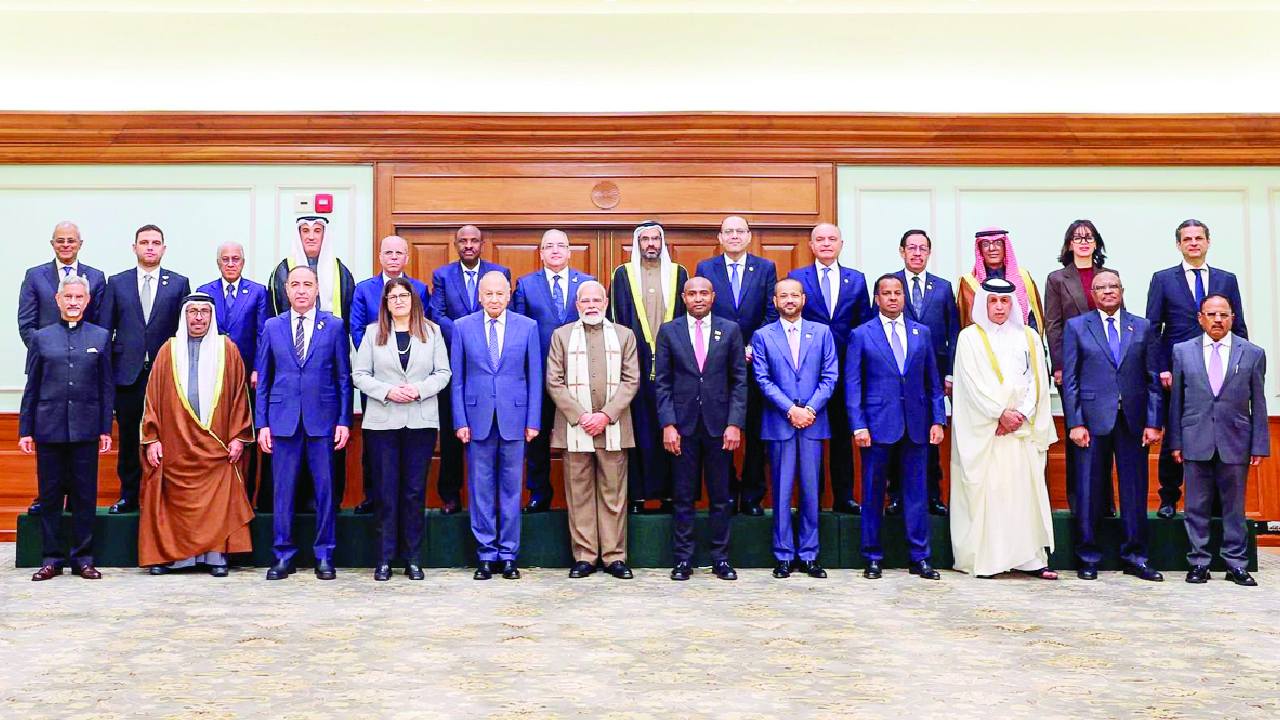
Against the backdrop of intensifying global economic uncertainty and widening geopolitical divides, the 2nd India-Arab Foreign Ministers’ Meeting held in New Delhi has acquired fresh strategic relevance, reflecting India’s push to reinforce partnerships at a time of trade frictions with the United States and the continuing conflict in Gaza.
Hosted by External Affairs Minister S Jaishankar and co-chaired with the United Arab Emirates, the meeting brought together foreign ministers from all 22 member states of the Arab League along with its Secretary General. The discussions signalled more than routine diplomacy, pointing to a shared recognition among India and Arab nations that shifting global power equations require deeper coordination among emerging and middle powers on trade, security and regional stability.
The meeting comes at a sensitive moment in India-US economic relations, following Washington’s decision to impose higher tariffs on certain Indian exports. The move has unsettled businesses and introduced new strains into an otherwise wide-ranging partnership. While dialogue between New Delhi and Washington continues across sectors such as defence, energy and supply chains, international assessments suggest that tariff pressures are encouraging India to diversify its economic engagements and reduce over-dependence on a limited set of markets.
In this context, closer engagement with the Arab world is increasingly viewed as a strategic economic hedge. The region remains central to India’s energy security and is emerging as a key partner in infrastructure, technology collaboration and supply chain resilience. Analysts note that expanding trade and investment ties with Arab countries could help India offset external trade shocks while opening new avenues for growth.
The Gaza conflict also loomed large over the meeting. With Arab states directly affected by developments in West Asia and India taking on a more visible diplomatic role in the region, the forum provided space for exchanging views on peace initiatives and humanitarian concerns. Jaishankar, in his opening remarks, described the situation in Gaza as a matter of global concern and stressed the importance of collective international efforts to restore stability and advance peace.
Observers say India’s engagement with Arab partners on Gaza reflects a calibrated diplomatic posture that balances humanitarian concerns and conflict resolution with the need to maintain relations across the region. Multilateral platforms such as the India-Arab Foreign Ministers’ Meeting, they argue, enable broader convergence on shared priorities beyond bilateral diplomacy.
Beyond geopolitics, the meeting underlined the growing economic logic driving India-Arab ties. Trade between India and Arab League countries remains substantial, particularly in energy, while cooperation is expanding into digital infrastructure, healthcare, food security, innovation and start-ups. Diplomats stressed that deeper collaboration in these areas would be mutually beneficial amid global economic volatility.
The political weight of the meeting was reinforced when Prime Minister Narendra Modi received the visiting foreign ministers, the Secretary General of the League of Arab States and heads of Arab delegations. Modi highlighted the deep-rooted people-to-people ties between India and the Arab world and outlined his vision for expanding cooperation in trade, investment, energy, technology and healthcare. He reiterated India’s support for the Palestinian people and welcomed ongoing peace efforts, including initiatives related to Gaza, while appreciating the Arab League’s role in promoting regional stability.
Industry representatives from the Arab world echoed optimism about the future trajectory of India-Arab relations. Speaking on behalf of the Arab industry, a senior representative said cooperation between India and the Arab world is expected to grow steadily, driven by historic ties and expanding agreements in areas such as energy, renewable energy, agriculture, education, healthcare and technology. The recent integration of the India-Arab Chamber of Commerce, Industry and Agriculture, he said, would further strengthen engagement by bringing together business communities from both regions and translating political goodwill into commercial outcomes.
Addressing questions on whether closer India-Arab economic cooperation could help cushion the impact of tariff pressures, the industry representative pointed to the potential of Arab countries such as Oman, which maintain free trade agreements with the United States. He noted that Indian investors operating from such markets could gain easier access to the US market, creating new pathways for trade and investment despite global tariff tensions.
For international audiences, the message from New Delhi was unambiguous: as tariff disputes, regional conflicts and a shifting global order reshape international relations, India sees its partnership with the Arab world as a cornerstone of its foreign policy and a key element in navigating economic and geopolitical uncertainty.
Modi reiterated India’s continued support for the people of Palestine and welcomed ongoing peace efforts, including the Gaza peace plan, while expressing appreciation for the Arab League’s role in promoting regional peace and stability.
For international audiences, the message from New Delhi was clear, amid tariff tensions, regional conflicts and a shifting global order, India views its engagement with the Arab world as an essential pillar of its foreign policy and a key component of its search for stability, growth and diplomatic balance.