ICC, ICC India and Chintan Research Foundation convene dialogue on WTO reform amid changing global trade realities
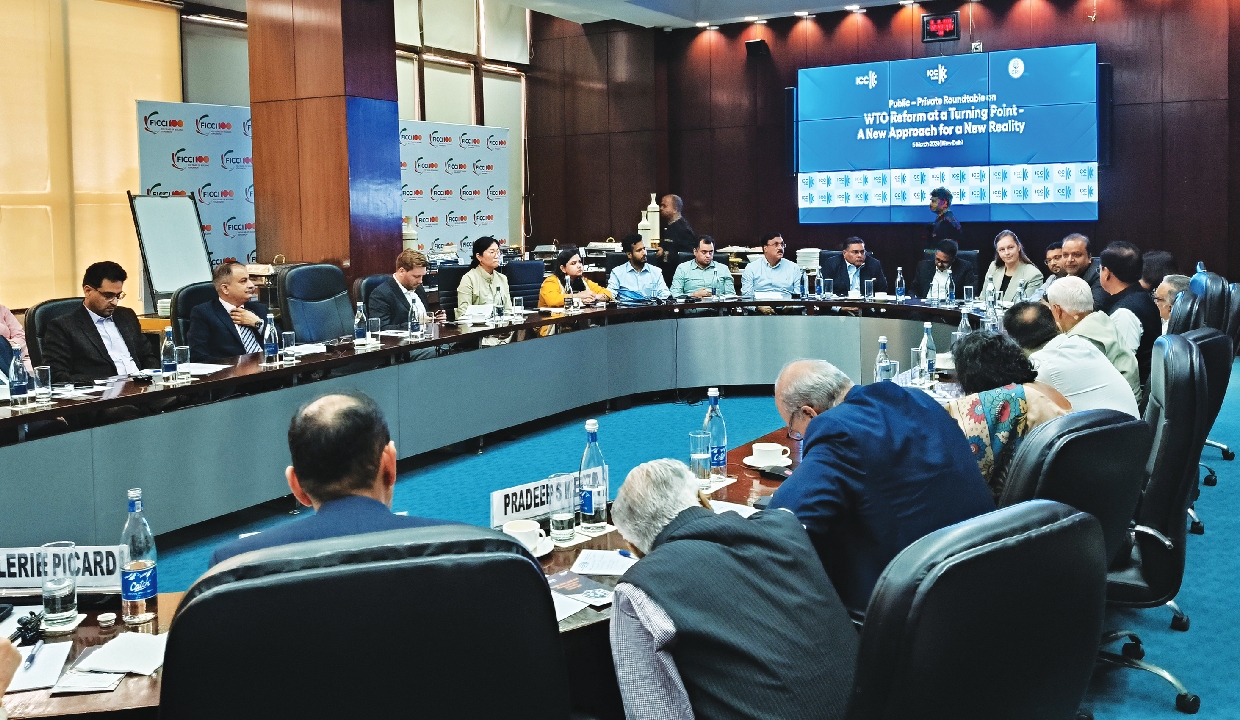
The International Chamber of Commerce (ICC), ICC India, and the Chintan Research Foundation (CRF) convened a high-level dialogue on “WTO Reform at a Turning Point: A New Approach for a New Reality” to examine the evolving role of the World Trade Organisation (WTO) in a rapidly changing global trade landscape. The event brought together business leaders, policy experts, and trade practitioners to discuss how the multilateral trading system can be strengthened to remain effective, inclusive, and responsive to contemporary challenges.
The dialogue highlighted that the global trading environment has changed significantly since the WTO was established in the 1990s. While earlier decades were characterised by shorter supply chains and relatively stable economic conditions, today’s global economy is shaped by geopolitical tensions, complex global value chains, and rapid digital transformation. In this context, participants emphasised the growing importance of strengthening the WTO to ensure stability, predictability, and a rules-based framework for global trade.
From a developing country perspective, discussions underscored the need to address issues related to responsibilities, exemptions, and exceptions within the WTO framework, going beyond the traditional debate on Special and Differential Treatment (S&DT). Participants also stressed the importance of maintaining fairness and inclusiveness in WTO governance while preserving core institutional principles such as consensus-based decision-making. Another key theme was the need to integrate private sector perspectives more meaningfully into WTO processes, recognising that businesses are the primary actors driving international trade.
The dialogue also emphasised the increasing complexity of global value chains and the need for deeper integration between international supply chains and domestic economies, particularly in sectors such as electronics and manufacturing. Participants highlighted that closer engagement between policymakers and industry will be essential to identify practical solutions to emerging trade challenges.
The importance of WTO reform was discussed in the context of rising geopolitical tensions, increasing tariffs, and the growing uncertainty facing global businesses, particularly micro, small and medium enterprises (MSMEs). Participants emphasised the need for a structured and time-bound process for WTO reform, with clearly defined milestones and targets rather than broad commitments.
Several areas were identified where progress could be made, including advancing discussions on digital trade and e-commerce frameworks, strengthening trade facilitation and digitalisation, and exploring mechanisms to enhance private sector engagement within the WTO system. Participants also highlighted that WTO reform presents an opportunity for countries such as India to play a constructive leadership role in shaping a pragmatic and forward-looking agenda for the multilateral trading system.
Discussions further highlighted the importance of stability and predictability for businesses operating in global markets.
Companies emphasised the need for greater awareness and understanding of trade rules and dispute settlement mechanisms, particularly as firms from emerging economies increasingly compete in international markets.
Participants also raised concerns regarding the growing impact of non-tariff barriers, sustainability regulations, and environmental standards on global trade flows. While acknowledging the importance of climate and environmental objectives, it was emphasised that such measures should not become disguised barriers to trade. The WTO was seen as a potential platform for facilitating technology transfer and cooperation, particularly to support developing countries and MSMEs in adapting to new regulatory requirements.
The WTO dispute settlement system was identified as a critical pillar of the multilateral trading system. Participants stressed that restoring an effective and time-bound dispute resolution mechanism is essential for maintaining confidence in global trade and providing businesses with the certainty needed for investment and long-term planning.
Businesses across sectors also highlighted practical operational challenges affecting international trade, including logistics costs, regulatory complexities, and the proliferation of non-tariff measures. While regional and bilateral free trade agreements (FTAs) are playing an increasingly important role in shaping trade flows, participants noted that the WTO continues to provide the foundational framework governing global commerce. Approximately 72 percent of global trade still takes place under WTO Most-Favoured Nation (MFN) terms, underscoring the continued relevance of the multilateral trading system.
The discussion also reflected concerns about the increasing fragmentation of global trade governance and the growing influence of geopolitical dynamics on global value chains.
In this environment, participants stressed the importance of preserving the core principles of the WTO, including non-discrimination, Most-Favoured Nation (MFN) treatment, inclusiveness, and consensus-based decision-making.
At the same time, participants acknowledged that new approaches may be required to address emerging trade issues. While plurilateral initiatives may offer opportunities to advance discussions on specific areas such as digital trade, it was emphasised that such efforts should complement rather than replace the broader multilateral framework.
The dialogue concluded with a strong consensus that the WTO remains indispensable for ensuring predictability, fairness, and stability in global trade. Strengthening the organisation through pragmatic, inclusive, and forward-looking reforms will be critical to ensuring that the multilateral trading system continues to support economic growth, investment, and employment in an increasingly complex global economy.