Hungary’s Orban stakes his re-election on anti-Ukraine message
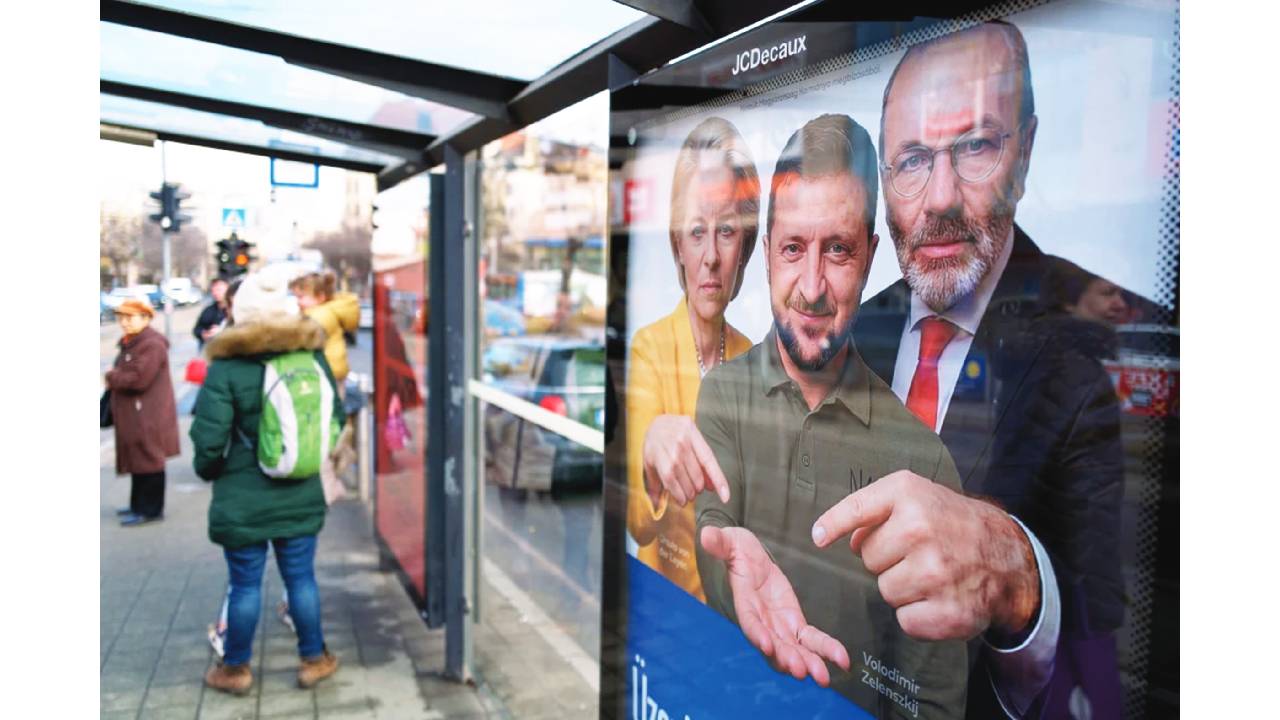
Facing tough odds in an upcoming election, Hungary’s pro-Russian prime minister is trying to convince voters that the greatest threat to the country is not economic stagnation — the focus of his top opponent — but neighbouring Ukraine. Viktor Orban is running an aggressive media campaign replete with disinformation whose central message is that Hungarians should refuse to align with the rest of Europe in supporting Ukraine against Russia’s invasion. That path, he argues, risks bankrupting the country and getting its youth killed on the front lines.
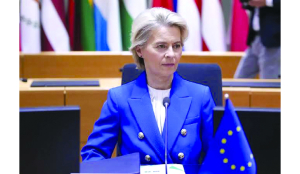
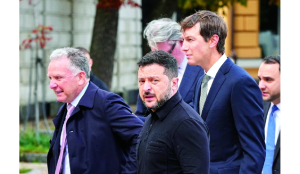
Billboards erected across the country show AI-generated images of Ukrainian President Volodymyr Zelenskyy flanked by European officials, holding out his hand as if demanding money. It’s a not-so-subtle reference to the European Union’s efforts to help Ukraine financially and bolster its defences as the war enters its fifth year. “Our message to Brussels: We won’t pay!” the publicly funded billboards read.
If there had been any doubt, it became clear on Monday why the outcome of Hungary’s upcoming election will reverberate beyond its borders. Hungary blocked a new package of EU sanctions on Russia in response to interruptions in Russian oil supplies that pass through Ukraine, and vowed to veto any further pro-Ukraine policies until oil flows resume.
Orban is widely seen as the Kremlin’s strongest ally in the EU. While almost all of the bloc’s other 26 nations have distanced themselves from Russia since it launched the war on Feb. 24, 2022, Hungary has deepened cooperation.
The prime minister has cast his relationship with Russian President Vladimir Putin as pragmatic, stemming from Hungary’s access to reliable supplies of Russian oil and gas. But Orban’s anti-LGBTQ+ policies, crackdowns on the media and nonGovernmental organisations, and his labelling of critics as “foreign agents” have led to accusations that he’s reading from Putin’s authoritarian playbook.
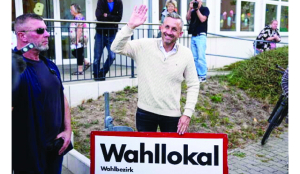
Campaign of fear Orban, who retook office in 2010, faces the strongest challenge to his power in an election set for April 12. The EU’s longest-serving leader and his right-wing Fidesz party are trailing in most independent polls to an upstart centre-right challenger, Peter Magyar. (AP )