How India’s new CPI will measure inflation in a changing economy
What affects us daily is not India’s foreign policy or its defence preparedness; it is the price of everyday goods that one needs to carry home to survive and lead a happy, healthy life. The way the rise in the market affects all of us is measured by the Consumer Price Index, or CPI, which measures the price rise and fall — inflation, to be technical.
It is one index that decides the performance of the Government and its prospects in the coming elections. That is why the importance of CPI cannot be overstated. It normally gets a new base year every ten years, but this time it is around 12 years, as it could not be done due to the Corona pandemic.
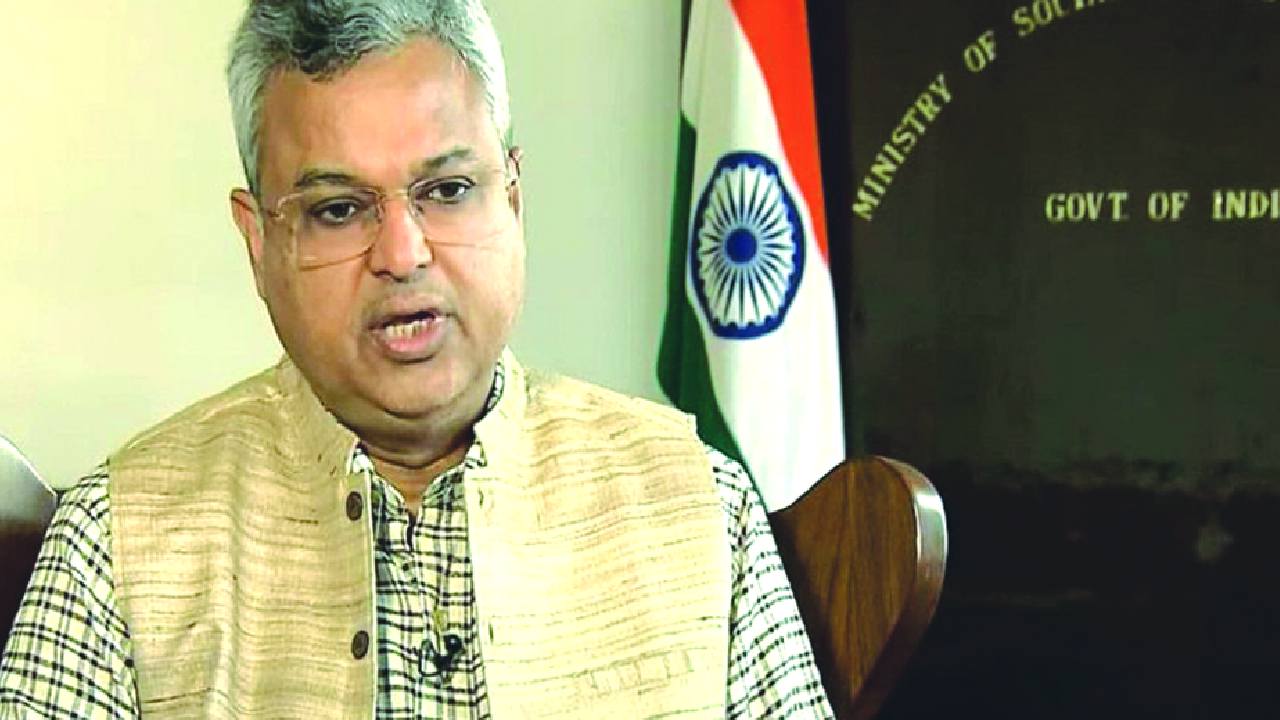
The Ministry of Statistics and Programme Implementation (MoSPI) is all geared up to shift the base year from 2012 to 2024. This revision will redefine how inflation is captured in a rapidly digitising, services-heavy, and urbanising economy. As Saurabh Garg, Secretary, Ministry of Statistics and Programme Implementation, has underlined, the objective is simple yet ambitious: to make the CPI a more accurate mirror of how Indians actually spend today.
The single most important change in the new CPI series is the updating of the item basket and weights using the latest Household Consumption Expenditure Survey (HCES) 2023–24. Over the past decade, the consuming patterns of Indian households have changed. Now apart from food, housing, transport, health, and education, services also figure prominently in his budget. The 2012 basket, designed for a far more food-dominated consumption structure, was increasingly losing relevance. According to Saurabh Garg, Secretary, Ministry of Statistics and Programme Implementation (MoSPI), the new CPI will therefore “materially alter how inflation is measured” by anchoring it in today’s consumption reality rather than yesterday’s habits.But the changes go well beyond just weights. The coverage of markets — both rural and
urban — has expanded by about 25 per cent, improving geographical and price representativeness. Housing has also been given a methodological upgrade: for the first time, rural housing is included, employer-provided accommodation is excluded to avoid distortions, and the rent index is now far more holistic. These refinements matter because housing is emerging as a key driver of urban inflation. Perhaps the most striking feature is the integration of digital India into inflation measurement.
E-commerce prices will now be directly captured for large cities, treating online platforms as an additional “market” alongside physical shops. Prices of airline tickets, OTT subscriptions, mobile and landline charges will also draw from online sources. In a world of flash sales and algorithmic pricing, CPI will continue to capture transaction prices at a fixed time and date, ensuring consistency between offline and online markets.
The new CPI has expanded the number of consumption divisions from six to twelve. The food and beverages weight appears to fall sharply to about 36.75 per cent. In reality, much of this decline is due to the reclassification of items such as restaurant meals into services rather than food. When viewed on a comparable basis, the food share has declined far more modestly — reflecting genuine shifts in household spending rather than statistical sleight of hand.
Critics worry that lower food weights could mute inflation during food price spikes. MoSPI’s response is that CPI must reflect what people actually spend, not what they used to. If food’s share in the household budget has fallen, then its influence on inflation must fall too. At the same time, higher weights for housing and services will ensure that persistent cost pressures in urban India are better captured.
To preserve continuity, MoSPI will release a back-series and an official linking factor between the 2012 and 2024 series. This will allow policy makers, researchers, and markets to track inflation trends without disruption. For the RBI, a more representative CPI will mean a sharper tool for monetary policy; for wage and pension revisions, a fairer index; and for welfare schemes, a more credible inflation yardstick.
In essence, the CPI rebasing is not about lowering or raising inflation numbers — it is about measuring reality more faithfully. As Saurabh Garg, Secretary of MoSPI, has repeatedly emphasised, the new series is a refinement of a robust framework, designed to keep India’s inflation compass aligned with how its people actually live, spend, and consume in 2024 and beyond.