How firms will shape tech in 2026
For the hype about Artificial Intelligence (AI) and digital transformation over the last few years, 2025 was the year when firms began to confront issues related to the economics of scaled-up technology. While analysts tried to ascertain whether AI was another bubble, firms turned AI into infrastructure, and were forced to ask harder questions about costs, returns, and risks. In 2026, decisions around infra, platforms, talent, and differentiation will be tied to economics, national priorities, and the ability to sustain margins in slower-growth markets. What will emerge will not be a defining technology but a set of deliberate bets that firms will place in response to shifting costs, constraints, and competitive pressures. Here are a few trends to watch out for.
Display Technology: In consumer electronics, display technology has re-emerged as one of the few levers that manufacturers can pull to protect pricing power. The global TV market remained largely flat in unit terms in 2025, and research firms like Omdia and Counterpoint repeatedly flagged low single-digit growth, and ongoing price erosion in mainstream segments. Against this backdrop, manufacturers are doubling down on premium display engineering. While Mini-LED was the talking point in 2025, RGB backlighting systems, and micro-LED architectures will grab headlines in 2026. Both have moved from experimental showcases to near-term commercial priorities. Samsung and LG have committed engineering and marketing resources to RGB-based display stacks that promise higher brightness, improved colour accuracy, better power efficiency, and longer panel lifespan compared with the conventional Mini-LED systems. The logic is straightforward. These technologies are expensive to develop, harder to commoditise, and allow brands to justify higher average selling prices without relying on screen size inflation. This retreat from cost-only competition is not limited to TVs. Similar dynamics are visible in premium monitors, automotive displays, and large-format commercial signage where buyers pay for longevity, power efficiency, and visual performance.
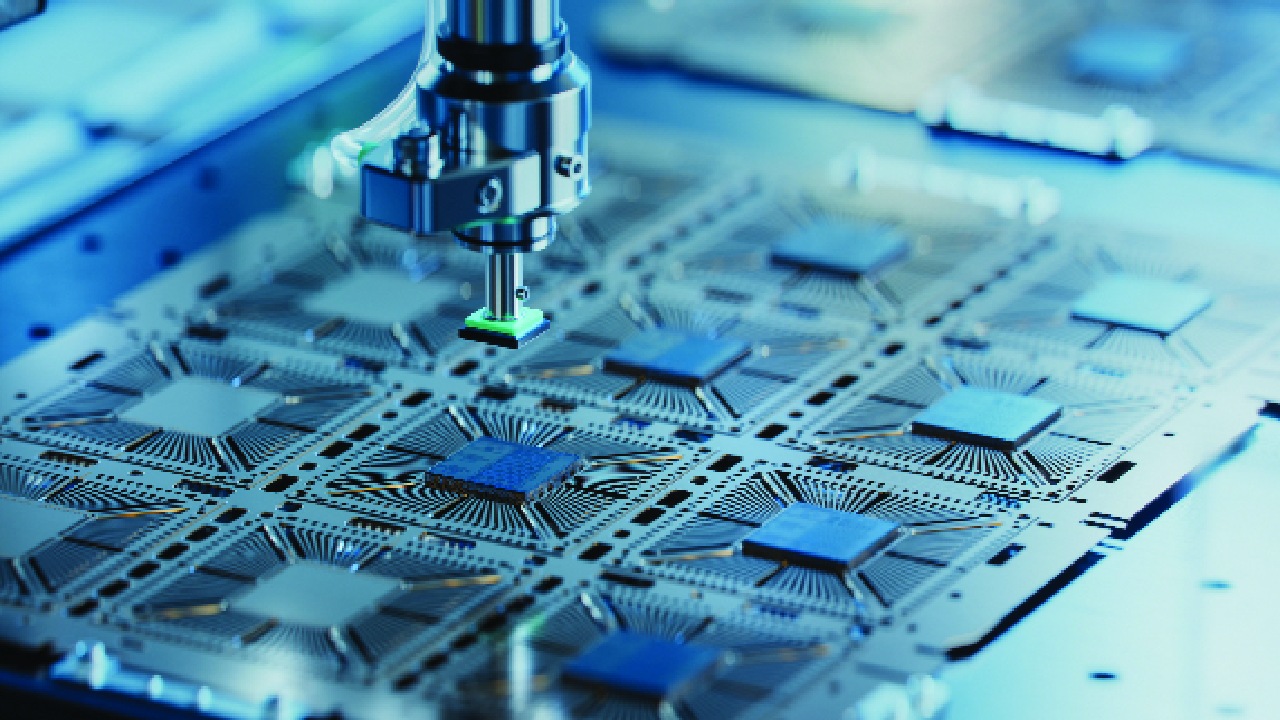
Semiconductors: Running parallel is a renewed focus on semiconductors as a product differentiator. After years in which silicon innovation was invisible to consumers, 2026 will be the year when custom and semi-custom chips play a larger role across both consumer and enterprise products. Annual global semiconductor revenues stood at $650 billion in 2024, and estimates from PwC project that they will approach the $1 trillion mark before the end of this decade, driven largely by data centres, and AI-related demand. What is notable is how investments are spilling into consumer-facing categories. TV makers, appliance brands, and device manufacturers are highlighting in-house processors, and custom SoCs designed to optimise power consumption, image processing, and AI workloads. From a business standpoint, this shift offers two advantages. First, it reduces reliance on merchant silicon suppliers when supply chains remain tight, and geopolitically sensitive. Second, it allows tighter integration between hardware and software, as differentiation shifts from raw specifications to experience quality and efficiency.
Consumer Technology: The bets are unfolding against a backdrop of slower consumer growth. Smartphone shipments, according to Counterpoint data showed modest recovery in 2025, with the growth driven largely by premium models rather than volume expansion. Replacement cycles for smartphones, TVs, and large appliances routinely stretch beyond three-and-a-half years in many markets. For businesses, this has sharpened the focus on premiumisation. Rather than chasing mass-market volumes, they will focus on narrower, higher-margin segments where engineering depth, ecosystem integration, and longevity can justify price. The result is a more polarised landscape, with incremental innovation at the low end, and more concentrated investments at the top.
AI Spending: On the enterprise side, AI remains central but the emphasis has shifted decisively toward infra. According to Gartner, global AI spending is on track to approach $1.5 trillion, with a growing share allocated to AI-optimised infrastructure rather than applications. Data centre systems are among the fastest-growing segments of IT budgets worldwide. This brings with it a power problem. The International Energy Agency estimates that data centres accounted for about 1.5 per cent of global electricity consumption in 2024, and warns that demand may double by the end of the decade as AI workloads scale. This has begun to influence strategy. Alphabet’s $4.75 billion acquisition of energy and data centre developer, Intersect Power, is one of the clearest signals that access to power is becoming as strategic as access to compute. Cloud providers and large firms are signing long-term power purchase agreements, and prioritising locations based on grid stability and energy availability. In 2026, cloud economics will be shaped by electricity pricing, cooling constraints, and software innovation.
Regional Spending: Technology bets for 2026 are being shaped by geography. Gartner forecasts that global IT spending will exceed $6 trillion in 2026, with particularly strong growth in regions investing heavily in data centres, cloud infrastructure, and digital public systems. India, for instance, is projected to cross $176 billion in IT spending, with data centre systems growing more than 20 per cent year-on-year. Similar patterns will be visible in the Middle East, where IT spending is expected to reach $169 billion, driven by cloud adoption and AI infra investments. These regional patterns reflect national ambitions. Nations who spend wish to attract digital workloads, secure data sovereignty, and build local tech capacity.
Sovereign Tech: Sovereign tech considerations are no longer niche concerns. Data residency requirements, AI governance frameworks, and local cloud mandates are shaping product architecture, and deployment strategies. Firms operating across borders will balance scale efficiencies with compliance and localisation, influencing everything from where data is stored to how AI systems are trained and audited. This will have cost implications, but it may create opportunities for the regional players and infra providers aligned with national priorities. Still, in 2026, sovereign tech will be less about ideology and more about operational reality. In addition, it will be more about market share and global dominance, rather than impose a certain political mindset. As most nations go through an internal societal churn to decide their futures, external influences are important but not critical. Unlike the Cold War, Russia or China do not wish to impose communism or dictatorships. They wish to dent America’s economic and hegemonic rise through the plays of trade, tariffs, commerce, and investments. The US under Donald Trump hopes to push diplomacy to the back seat, and win the trade wars.
Given these realities, forecasts, predictions, and estimates, 2026 will be an exciting year from a tech perspective. We just hope that there will be a few surprises during the next 12 months.