How education can bridge disciplines

The world around us poses increasingly complex challenges. Emergent climate change, rapid urbanisation and frequent technological disruptions present intertwined challenges that rarely fit within the bounds of conventional thinking and certainly exceed the boundaries of any single discipline. Addressing these complex challenges requires future-ready professionals who understand multiple perspectives, are trained to work collaboratively and are able to connect and create knowledge across domains.
This is where the role of interdisciplinary education becomes critical in training professional practitioners capable of understanding, and even shaping, an increasingly complex future.
Traditionally, higher education largely promoted distinct disciplines, with each branch of knowledge developing specialised literature and expertise. Such specialisations remain important in their own right, but the complex challenges confronting human society today require interdisciplinarity that diligently integrates appropriately selected skills, methods and approaches to develop a more comprehensive and contextual understanding that goes beyond a single field of study. Climate change, for instance, is no longer a matter of environmental concern alone. It has implications for city planning, agriculture, infrastructure, mobility, housing, public health, livelihoods and economic development. Similarly, developing products and services that respond meaningfully to human needs requires a clever understanding of technology, business, user behaviour, sustainability and the larger social context of our times. The professional workplace is beginning to reflect this interconnectedness. A diverse range of industries nowadays collaborate with professionals from different disciplines and backgrounds to design better solutions and enhance outcomes. Architects and engineers seek to collaborate with urban, landscape and space designers to create climate-responsive settlements that are more resilient, efficient and inclusive. Tech giants regularly hire trained designers to develop intuitive and user-centric digital experiences.
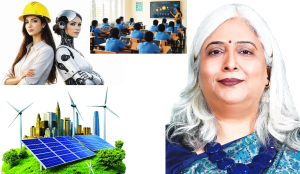
Emergent AI and other smart digital technologies are changing how products, services, buildings and infrastructure are conceived, evaluated and marketed. Yet, human judgement, contextual understanding and interdisciplinary thinking remain essential to ensuring technology meaningfully responds to people, place and purpose.
Interdisciplinary education helps prepare students for this emerging reality. It enables learners to move beyond traditional academic silos, engage constructively with diverse perspectives and approach problems from multiple vantage points. Complex problems rarely have singular solutions. These require inquiry, collaboration and experimentation.
This has important implications for Indian universities. Interdisciplinary education cannot be achieved by simply placing different subjects alongside one another. It requires meaningful collaboration across disciplines, experiential learning, industry engagement and productive opportunities for students to work together on real-world challenges. Equally important is the concurrent integration of Indigenous Knowledge Systems into contemporary learning. India’s rich knowledge traditions offer valuable insights into sustainability, resourcefulness, materials and community practices, helping students develop Desi solutions that are both technologically informed and grounded in regional contexts.
Such an approach is particularly relevant for India. As our country addresses rapid urbanisation, climate resilience, infrastructure, sustainable production, and digital ecosystems, it requires well-trained professionals capable of working across sectors. The future workforce will increasingly be shaped by our ability to connect knowledge and apply it thoughtfully to complex situations. Interdisciplinary education can nurture precisely this capability.
As India advances towards the vision of Viksit Bharat, preparing well-trained, appropriately skilled professionals is not merely an educational priority. It is an important part of building the intellectual and human capacity required to address the country’s complex developmental challenges and shape a more inclusive, sustainable and future-ready society.
The writer is Provost, Anant National University; Views presented are personal.