Hindu Shree Foundation demands minority language status for Sanskrit
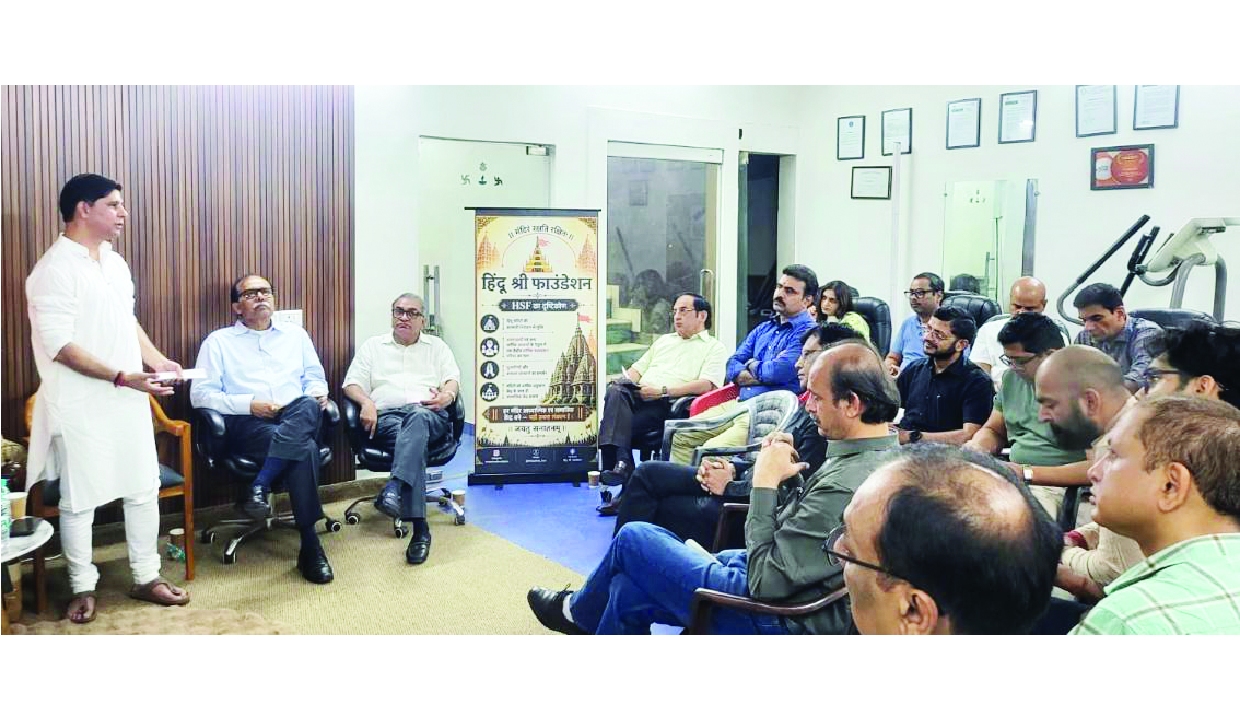
The Hindu Shree Foundation on Sunday urged the Union Government to grant “Minority Language” status to Sanskrit, which is needed to revive and rediscover India’s rich cultural heritage and classical literature.
In its National Executive Committee meeting held in the Capital, the Hindu Shree Foundation said it is high time that the Union Government granted “Minority Language” status to Sanskrit to save this language, which is deeply rooted into our ancient civilisation.
“Sanskrit is the bedrock of India’s traditional knowledge and the mother of many world languages. But it has lost its significance over the years. Minority status is essential for its institutional support, promotion, and preservation,” said Dr Kaushal Kant Mishra, Founder and Convener of Hindu Shree Foundation. “Sanskrit is not just limited to our philosophical and religious subjects, it is a treasure trove of ancient times covering all important subjects — from Ayurveda to science, yoga, astronomy, astrology, arts and crafts. All these subjects today hold high significance and can help students explore and enhance their knowledge,” he said.
In the its meeting, the Hindu Shree Foundation also discussed ways to expand the organisation, its participation in the upcoming Kumbh Mela in Haridwar, and creation of a comprehensive “Hindu Cultural Calendar”.
Justice (Retd) Shiv Kirti Singh suggested that promotional material related to the Hindu Shree Foundation should be circulated in Hindi, English, and Sanskrit so that the organisation’s ideology and activities could be promoted. HSF’s office bearer and former bureaucrat Chitranjan Khaitan proposed that special camps of the Hindu Shree Foundation should be set up at the upcoming Kumbh Mela.
To digitally connect people with the organisation, senior member Jitin Jain will prepare HSF’s Google page and Google form, making the registration and coordination process easier. For this work, the HSF President, Shiv Chaudhary, will constitute a four-member committee.
Alok Mohan Nayak suggested that active workers should first be connected to the national body through programs, and later be included in relevant verticals once State-level executive bodies are formed.