Haj as governance: How India walks the talk on minority rights
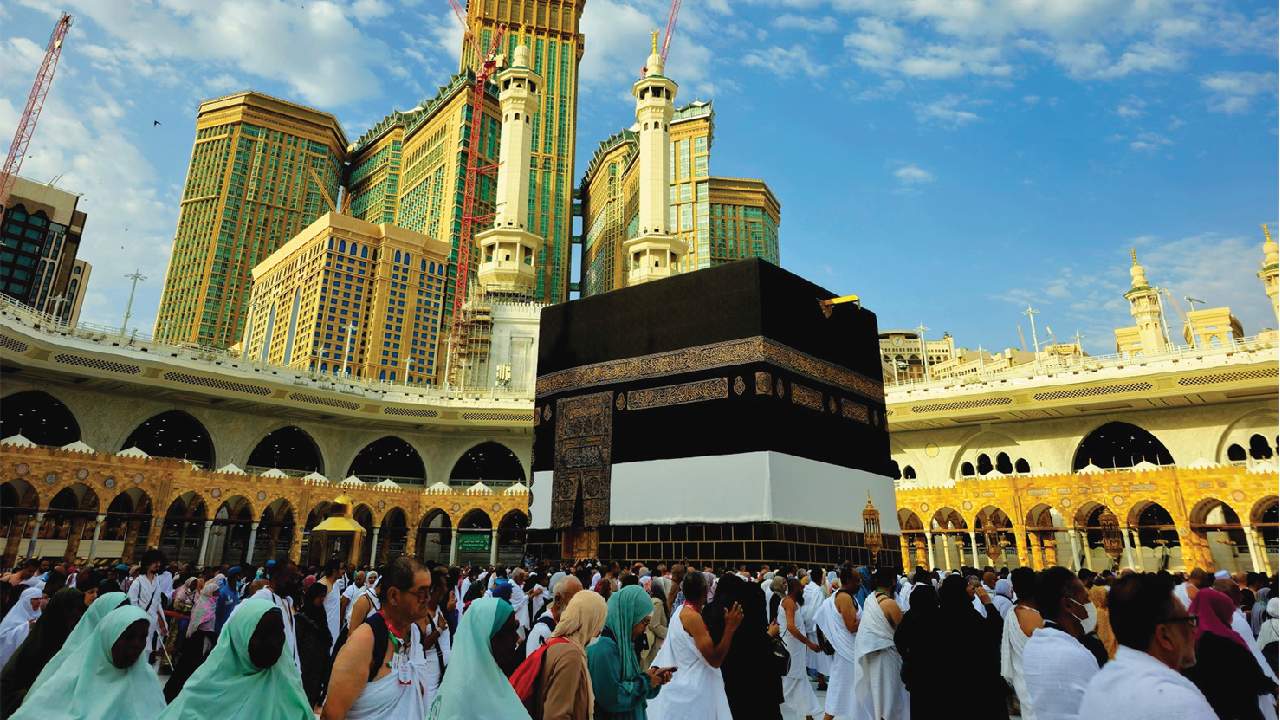
There exists a persistent global narrative, often shaped by selective voices and selective facts, that seeks to cast doubts on the condition of minorities in India. Yet, governance is best assessed not through perception or rhetoric, but through outcomes. On the ground, India’s record reflects constitutional assurance translated into institutional action, where minority rights are not merely articulated but actively ensured. Instances like Haj Management by the Government of India clearly illustrate this reality.
In fact, in India, minority rights are not confined to declarations or academic discourse. They are exercised visibly and meaningfully. The facilitation of Haj, one of the most important religious obligations for Muslims, stands as a clear demonstration of the State’s role in enabling religious freedom through governance. Every year, nearly 1.75 lakh Indian pilgrims travel to Mecca and Madinah, placing India among the largest Haj-sending nations in the world. Managing a pilgrimage of this magnitude is not a routine administrative task; it is a complex exercise in planning, coordination, empathy and execution.
Continuing this established tradition of ensuring a seamless Haj experience for Indian pilgrims, Union Minister for Minority Affairs Shri Kiren Rijiju visited Kingdom of Saudi Arabia last month to oversee preparations and sign the Bilateral Haj 2026 Agreement. In his engagement with Saudi Arabia’s Minister for Haj and Umrah, Shri Tawfiq bin Fawzan Al Rabiah, both sides undertook a detailed review of preparations and agreed on measures to further streamline coordination, logistics and service delivery. The agreement confirmed India’s Haj quota at 1,75,025 pilgrims for 2026 and reflected a shared
resolve to enhance facilities, transportation, accommodation and health services ensuring that scale does not dilute dignity. The Minister’s visit underscored India’s emphasis on transparency, safety, affordability and orderly pilgrimage management. Over the years, the Ministry of Minority Affairs (MoMA), working through the Haj Committee of India, has transformed Haj operations into a system that is increasingly digital, transparent and pilgrim-centric.
Initiatives such as the Haj Suvidha App provide real-time information, access to services and structured grievance redressal, reducing dependence on intermediaries and strengthening accountability. This shift reflects a broader governance approach, one that integrates minority welfare with modern administrative practices.
What distinguishes India’s model is that Haj facilitation is treated not as a seasonal obligation, but as a year-round responsibility. In this context, the recent official visit of Secretary, Ministry of Minority Affairs, Dr Chandra Shekhar Kumar, to the Kingdom of Saudi Arabia assumes particular significance. His visit was a direct follow-up to the Minister’s engagement, aimed at converting policy commitments and bilateral assurances into operational readiness for Haj 2026.
During meetings in Jeddah with Dr Abdulfattah Sulaiman Mashat, Vice Minister for Haj and Umrah, Dr Kumar pressed for timely completion of critical components in line with the bilateral Haj Memorandum of Understanding.
Issues such as early clearance of accommodation in Mecca, licensing of buildings and advance scheduling of chartered flights were taken up firmly, reflecting India’s insistence on predictability, quality and safety for its pilgrims. Preparations for accommodation in Madinah and Mina have already been finalised well within timelines, indicating a proactive start to Haj 2026 planning.
The Secretary also held a series of meetings with KSA Ministers and authorities including Vice Minister of Health, Vice Minister for Population Health, Vice Transport Minister, CEO, Saudi Federal Drug Authority and President, General Authority of Civil Aviation. These discussions focused on medical preparedness, transport facilitation including train travel, aviation coordination and regulatory clearances, all aimed at easing and enhancing the Haj experience for Indian pilgrims.
Beyond high-level meetings, the visit carried a strong field-oriented focus. Inspections of the Indian Haj Pilgrims Office in Madinah, reviews of accommodation and medical facilities, and interactions with Haj officials and service providers underscored a hands-on governance model. Engagements with the Haj Service Provider Company conveyed an unambiguous message: service quality, timeliness and pilgrim satisfaction are non-negotiable.
Taken together, these efforts present a compelling counter-narrative to claims that minority rights in India exist only on paper. Haj facilitation today stands as a practical example of inclusive governance, where religious faith is respected, administrative systems are responsive and dignity remains central to policy execution.
The writer is a Senior Journalist