Govt pushes rural diversification with fisheries, livestock measures
In a significant policy thrust towards broadening rural livelihood options, Finance Minister Nirmala Sitharaman on Sunday unveiled a comprehensive package for the livestock, fisheries and high-value agriculture sectors in Budget 2026-27, seeking to reduce dependence on traditional crop farming.
The Government allocated Rs 1,62,671 crore for agriculture and allied activities for 2026-27, up 7.12 per cent from the revised estimate of Rs 1,51,853 crore for 2025-26.
Presenting her ninth consecutive Budget, Sitharaman said the Government aligns its vision of ‘Sabka Sath, Sabka Vikas’ towards Viksit Bharat. “This requires targeted efforts for increasing farmer incomes through productivity enhancement and entrepreneurship, with special attention to small and marginal farmers,” she said, announcing a slew of measures to diversify rural incomes and create employment opportunities beyond traditional farming.
Zero duty on marine catch
For fisheries, nil duty will be imposed on fish caught in the Exclusive Economic Zones (EEZ) and high seas by Indian vessels. Landing of such fish at foreign ports will be treated as the export of goods. “Safeguards will be put in place to prevent misuse during fish catch, transit and transhipment,” Sitharaman said, adding that these measures aim to support Indian fishermen in fully harnessing the economic value of marine resources beyond India’s territorial waters.
The Government will increase the value limit of duty-free imports of specified inputs from 1 per cent to 3 per cent of the FOB value of seafood products exported during the preceding financial year.
500 reservoirs for inland fisheries
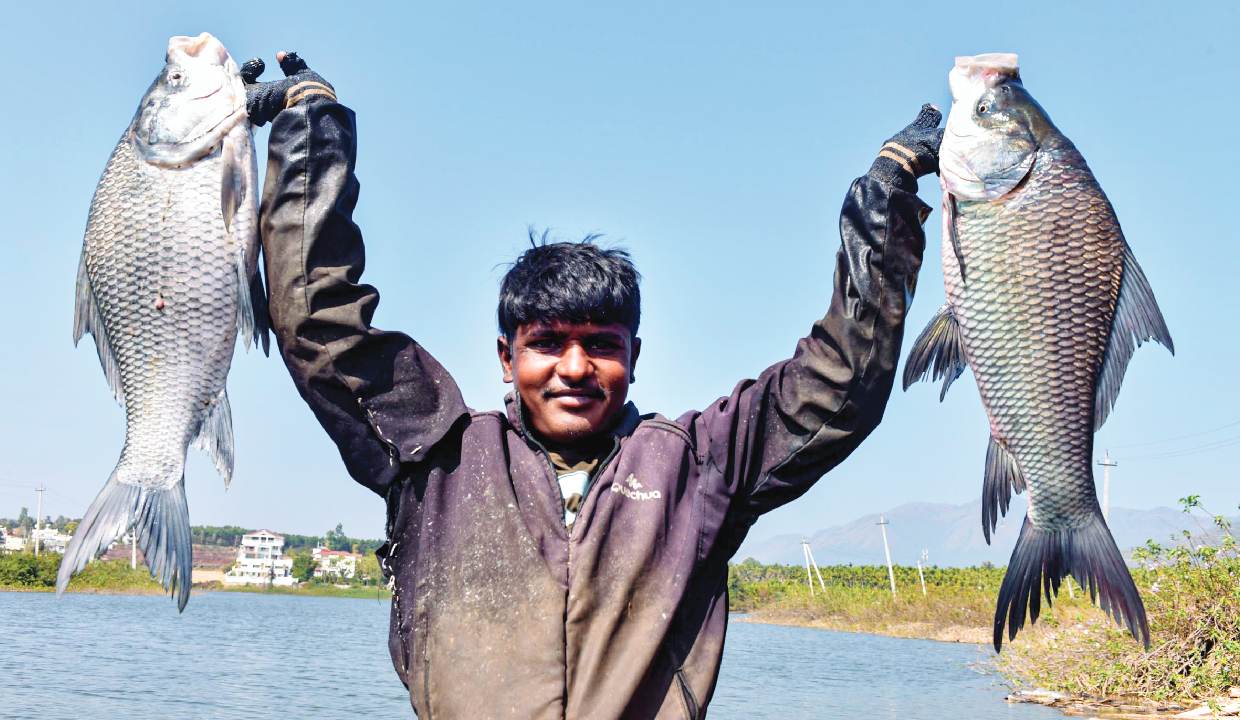
To promote the inland fishery sector, the Government will undertake integrated development of 500 reservoirs and Amrit Sarovars and strengthen the value chain in coastal areas, enabling market linkages through startups, women-led groups and Fish Farmers Producer Organisations.
20,000 more veterinary professionals
Pointing out that livestock contributes close to 16 per cent of farm income, including for poor and marginal households, Sitharaman proposed a loan-linked capital subsidy scheme to scale up the availability of veterinary professionals by more than 20,000. The scheme will support the establishment of veterinary and paravet (para-veterinary) colleges, veterinary hospitals, diagnostic laboratories and breeding facilities in the private sector.
Focus on coconut, sandalwood, cocoa
To diversify farm outputs, increase productivity, enhance farmers’ incomes, and create new employment opportunities, Sitharaman said, “We will support high-value crops such as coconut, sandalwood, cocoa and cashew in our coastal areas. Agar trees in the North East and nuts such as almonds, walnuts and pine nuts in our hilly regions will also be supported.” The minister proposed a coconut promotion scheme aimed at replacing old and non-productive trees with new varieties in major coconut-growing states.
She noted that about 30 million people, including nearly 10 million farmers, depend on coconuts for their livelihood, with India being the world’s largest producer.
A dedicated programme for Indian cashew and cocoa aims to make the country self-reliant in production and processing, enhance export competitiveness and transform them into premium global brands by 2030.
The Government will also partner with state Governments to promote sandalwood cultivation and post-harvest processing “to restore the glory of the Indian Sandalwood ecosystem”, which is closely linked to India’s social and cultural heritage.