A participatory Budget seeks a Commoner’s hand in #ViksitBharat

The ninth Union Budget, tabled in Parliament today in the firm and assured voice of Hon’ble Finance Minister Nirmala Sitharaman, marks a defining moment in Prime Minister Narendra Modi-led India. It is a budget that consciously steps away from political populism and resists the temptation to woo the commoner through short-term giveaways, a feature often associated with earlier eras of governance.
Instead, Budget 2026 repositions the Prime Minister not merely as a political leader but as a CEO of #ViksitBharat-focused on innovation, resilient supply chains, market integration, and sustained growth. This is leadership that prioritises capability-building over consumption, empowerment over entitlement.
The comparison with the 1991 reforms is inevitable. While the liberalisation of 1991 was revolutionary and structural, Budget 2026 is strategic, adaptive, and last-mile inclusive. Backed by confidence drawn from eight Free Trade Agreements since 2021 and India’s steady economic growth trajectory between 6.0-7.0 per cent, the Government signals a leap of faith-aimed at sustaining momentum through infrastructure investment, manufacturing push, “Make in India” alignment, duty rationalisation, MSME support, and deep digital integration. The principle of “Maximum Governance, Minimum Government” is embedded across the budget’s architecture. At this juncture, a genuine and unavoidable question arises: What does the commoner get?
Reduced prices? More disposable income? Homes filled with white goods? Cheaper electronics or vehicles?
There is no magic number-and no immediate cash in hand. With no direct reduction in income-tax slabs, there is no instant fiscal windfall. However, the budget’s intent lies elsewhere: ease of living, reduced anxiety, enhanced security, and the creation of income-generating opportunities rather than short-term consumption.
Addressing the populist questions head-on, Reliefs and rationalisation:
1. Income Tax:
Tax slabs for individuals, HUFs, AOPs, and BOIs remain unchanged. However, there is significant relief through simplified compliance, easier filings, and a less punitive approach. Corporate tax rates also remain unchanged, with calibrated reliance on TCS measures.
2. Electronics & Appliances:
Lower customs duty on components and exemptions on inputs may reduce costs-or at least slow price increases-for TVs, mobile phones, and household appliances.
3. Electric Vehicles:
Removal of basic customs duty on EV batteries could lower electric vehicle costs over time.
4. Business & Sector-specific Measures:
Increased allocations, higher safe-harbour limits, tax holidays, exemptions, and incentives-particularly for IT services-aim to boost enterprise growth.
What the budget does not offer:
1. No immediate tax cuts for salaried individuals
2. Imported luxury electronics and premium devices remain expensive due to higher tariffs
3. No direct cuts in vehicle taxes or registration fees (though GST rationalisation announced earlier helps contain costs)
4. No blanket freebies
In principle, the commoner benefits more by choosing Indian-made or duty-adjusted goods over luxury imports. The shift towards “Vocal for Local” reflects a mature economic mindset-one where benefits accrue gradually but sustainably to the last mile.
Beyond populism: redefining the commoner’s role
The central question, therefore, is not what Viksit Bharat gives me today, but what it enables me to become tomorrow.
Past populist budgets treated the commoner as a beneficiary. Budget 2026 treats the commoner as a shareholder in India’s growth story. It calls for the investment of time, skills, discipline, hard work, and patience. Initiatives such as SHE-Marts exemplify this bottom-up entrepreneurial empowerment.
This is a mindful, inward-looking budget. It links national security with economic resilience, strengthens economic activity along border regions, and preserves indigenous traditions while modernising them through technology and market access. In an uncertain global environment marked by conflict and instability, the commoner increasingly values security of capital and livelihood over short-term cash. Budget 2026 strengthens NBFCs and cooperatives, safeguarding savings of a commoner, offering financial safety nets-especially for medical emergencies. Its focused attention on micro-enterprises extends the Viksit Bharat model to the last mile, where the budget emphasised addressing strategic, liquidity, and technical needs of MSMEs.
A core objective of the Indian Government’s focus on developing Tier 2 and Tier 3 cities in the Union Budget 2026-27 is to achieve balanced regional development and, by extension, reduce the pressure and migration to major Tier 1 metropolitan areas. The ease of living of every Indian gets prioritised in the Budget.
The budget’s inclusive approach towards the elderly, the sick, the vulnerable, women, and the divyangjan stands out. In particular, it is commendable that the Budget 2026 has revealed the essence of Nari Shakti, whereby the role of women in the development journey is chalked out. She is not just a beneficiary seeking concessions, but a contributor to national development. Farmers continue to receive focused attention through plantations, Amrit Sarovars, and fisheries and several other means of intervention across the value chain. The proposed AI-driven “Bharat-Vistaar” platform aims to provide customised, data-driven decision-making support to farmers nationwide.
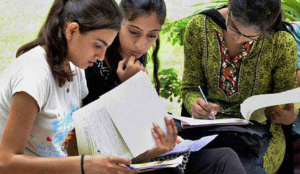
Youth, jobs, and the future With nearly 65 per cent of India’s population under 35, youth empowerment is central to the Viksit Bharat vision. Capital expenditure across sectors is expected to generate future employment, while parallel investments in education, STEM, and skilling ensure workforce readiness.
The integration of AI and new and emerging technologies across value chains offers participatory roles for youth beyond entry-level delivery-extending into mid- and senior-management pathways. Healthcare, tourism, and creative industries are reimagined with AI-enabled career tracks, aligning aspiration with opportunity.
As Prime Minister Narendra Modi aptly stated:
“You and I, we should all encourage people for a Viksit Bharat. We should motivate especially young minds to realise this dream.”
Conclusion
In a turbulent global order with shifting alliances, sovereignty and security are as vital as welfare. Budget 2026 represents an evolutionary milestone on India’s journey to Viksit Bharat 2047-where welfare flows from economic resilience. Budget 2026 includes major initiatives as Rare Earth Corridors, India Semiconductor Mission 2.0, Biopharma Shakti Scheme, Electronic Component Manufacturing Scheme as the drivers of growth and emphasizes on connectivity and trade routes in form of High-speed Rail Corridors and Waterways and Freight Corridors.
By emphasising collaboration between the state and the citizen, investing in core sectors, strengthening education, health and finance, and nurturing cultural and heritage circuits such as the Buddhist Circuit, the budget lays a roadmap rooted in participation, mindfulness, and long-term national interest.
The author is a financial, geopolitical, and security analyst; views are personal