Govt pushes AI and AR-VR to preserve heritage
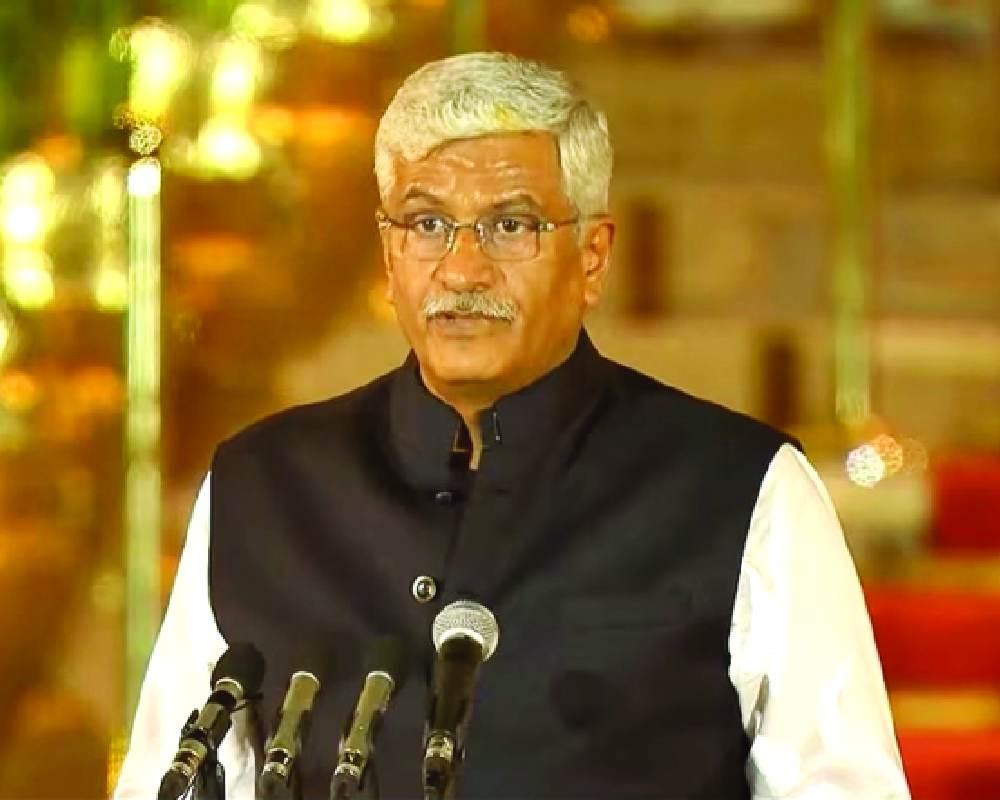
The Government is “actively promoting” the use of artificial intelligence, augmented reality and other advance technologies in the preservation of cultural heritage, digitisation of museums and cultural dissemination, the Centre informed Parliament on Monday.
In a written response to a query in the Lok Sabha, Union Culture Minister Gajendra Singh Shekhawat also said modern digital technologies such as AR-VR (augmented reality-virtual reality), projections, digital kiosks, etc, have been adopted in various museums under the Ministry of Culture to improve and enhance the visitors’ viewing experience.
He was asked whether the Government is promoting the use of AI, augmented reality and other advance technologies in the preservation of cultural heritage, digitisation of museums and cultural dissemination.
“The Government is actively promoting the use of artificial intelligence, augmented reality and other advance technologies in the preservation of cultural heritage, digitisation of museums and cultural dissemination,” Shekhawat said.
Various initiatives include the National Mission on Monuments and Antiquities (NMMA), Museum Digitisation initiative, Immersive Visitor Experiences using Virtual Reality (VR) and Augmented Reality (AR). The ministry has also been using a software named ‘JATAN’ for digitisation of various artefacts showcased in its museums, and till date, eight renowned national-level museums and two ASI museums have been digitised through the ‘JATAN’ software, he said.
Shekhawat also said the Ministry of Social Justice and Empowerment, through ‘TULIP’, aims to empower marginalised artisans by providing them with a platform for global exposure and sale of their products through e-marketing. The Union Minister said the Archaeological Survey of India (ASI) presently maintains one archaeological museum in the Vindhya region at Khajuraho, located in the Chhatarpur district in Madhya Pradesh. The museum was upgraded in 2023 with the addition of new display galleries and the inclusion of more antiquities for public viewing.
In a separate query, he was asked whether the Government is providing adequate funds and resources to the ASI for archaeological excavations and conservation work in Nalanda in Bihar, and whether the Government has formed a team of experienced archaeologists, draftsmen, surveyors and cinematographers for this work.
“Yes sir, the Government is providing adequate funds and resources to the Archaeological Survey of India (ASI) for archaeological excavations and conservation work in Nalanda,” the minister said in his response.
He further said the ASI has a “well-experienced team” for excavation and conservation work, and the involvement of local communities in excavations and conservation work provide employment to the local people, along with enabling them to participate in the preservation of their heritage. “Nalanda is a major tourist destination through ongoing conservation work and archaeological excavations,” Shekhawat said.
There are 3,685 ancient monuments and archaeological sites, and the remains of national importance are looked after by the ASI, he said in response to another question. “The havelis of the Shekhawati region of Rajasthan are not protected monuments under the jurisdiction of the Archaeological Survey of India. At present, there is no proposal for the inclusion of the Shekhawati havelis in the UNESCO’s Tentative List,” he said. In response to a separate query, the minister said, the Ministry of Education through the Central Institute of Indian Languages (CIIL), Mysuru, under the Scheme for Protection and Preservation of Endangered Languages of India (SPPEL), works on the protection, preservation and documentation of “all the mother tongues/languages of India spoken by less than 10,000 people, which are called endangered languages”.
“In the first phase of the scheme, 117 endangered languages/mother tongues have been chosen from all over India for study and documentation,” he said.
In his response, he also shared a list of these 117 endangered languages, which include Lamongse, Bhunjia (East Central Zone), Kagate (North East Zone) and Nihali (West Central Zone).