Giribala’s counsel says voice samples were never refused
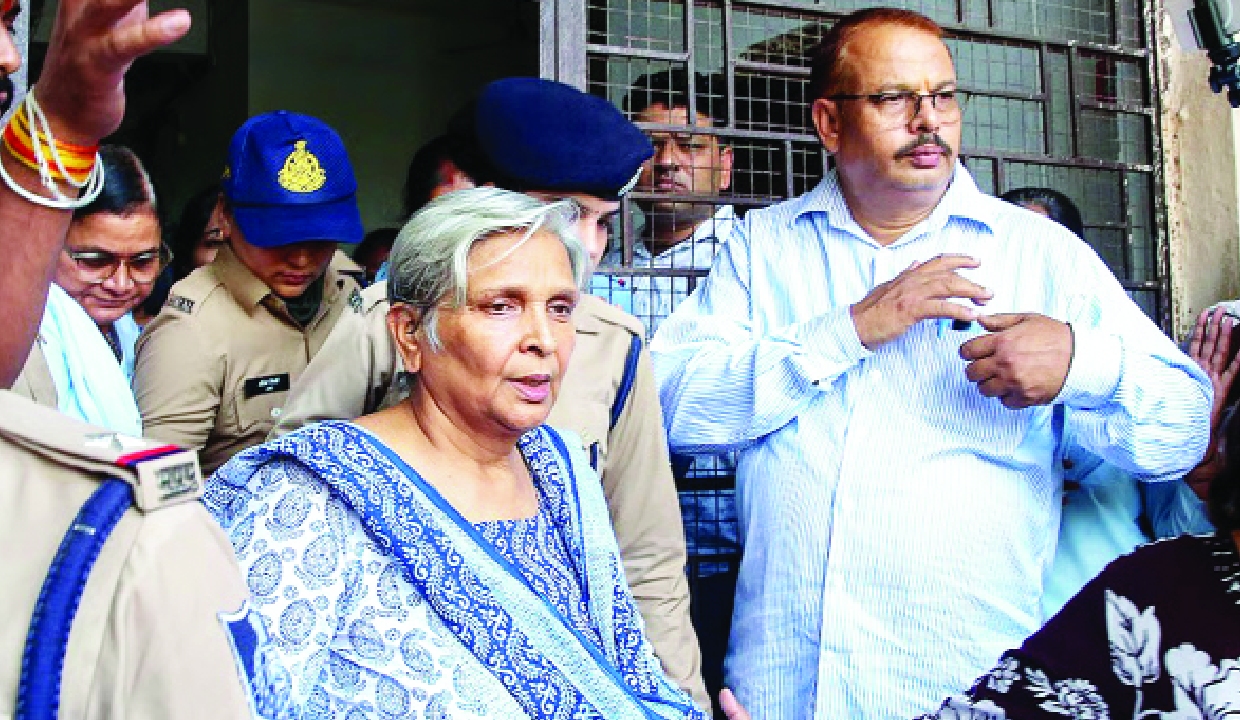
In a significant development in the high-profile Twisha case, counsel for accused Giribala Singh has publicly responded to the ongoing controversy over the collection of voice samples, asserting that the accused never refused to provide them.
Speaking to the mediapersons, advocate Enosh George Carlo said the court record would clearly show what transpired during the proceedings.
He maintained that the issue was not a refusal to provide voice samples but legal concerns regarding the transcript supplied by the Central Bureau of Investigation (CBI) for the recording process.
According to Carlo, the accused sought legal advice before reading the transcript, a right available to every accused person, but were not given adequate opportunity to consult their lawyer. Despite this, he claimed Giribala Singh spent nearly three hours providing voice samples during the process.
The counsel further said that on July 11, the defence had formally informed the CBI that the accused had no objection to reading the transcript and providing voice samples.
“We have nothing to hide and therefore no reason to fear. Our clients have cooperated with the investigation at every stage,” Carlo said.
Referring to Monday’s court proceedings, the advocate said the court questioned both accused through video conferencing on whether they had any objection to providing voice samples.
According to him, both clearly stated they had no objection and were willing to read whatever transcript was provided. He claimed this was also recorded in the court’s order sheet.
Carlo argued that once the accused expressed their consent before the court, there was no need for the CBI to pursue its application under Section 349 of the Bharatiya Nagarik Suraksha Sanhita (BNSS).
He said the court observed that an earlier order had already addressed the issue, making further proceedings on the application unnecessary.
Citing the Supreme Court’s 2016 judgment in Sudhir Kumar vs State (NCT of Delhi), Carlo said the guidelines require voice samples to correspond with the recording they are intended to match. If there are doubts regarding the transcript, he said, it is the investigating agency’s responsibility to provide proper clarification to the accused.