FTAs with UK, Oman may be operationalised in April; New Zealand in September: Goyal
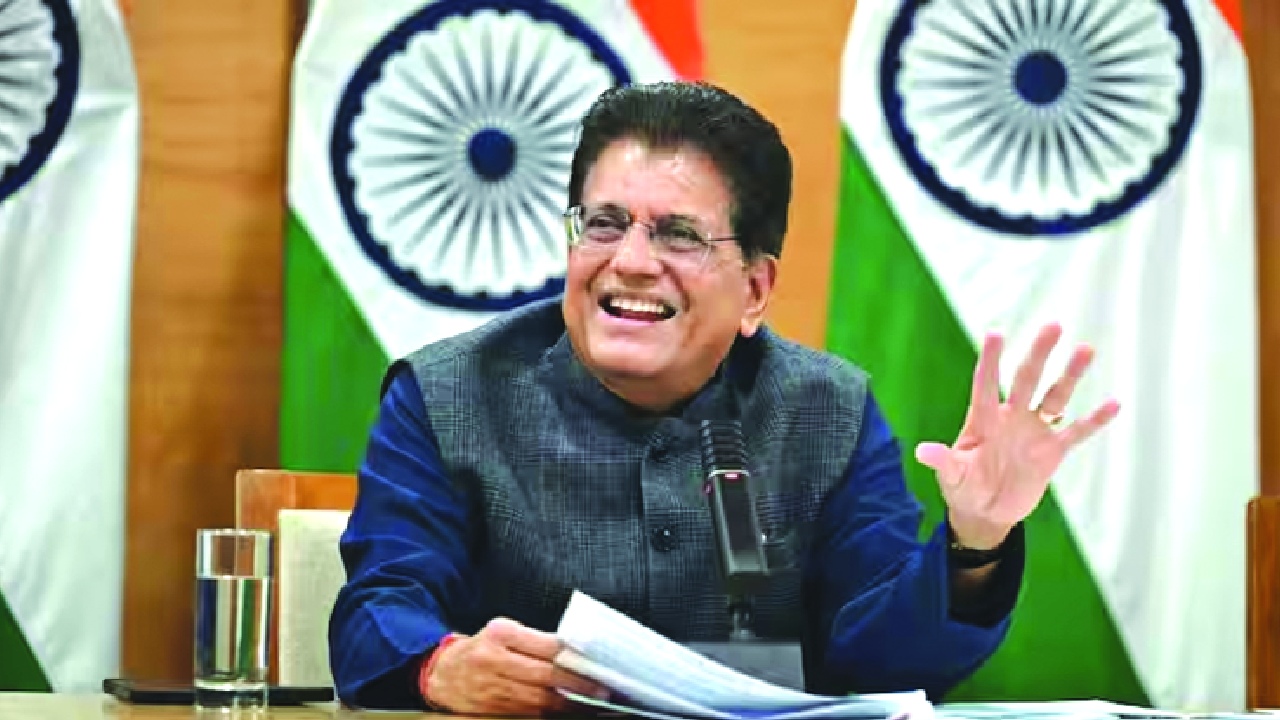
India’s free trade agreements (FTAs) with the UK and Oman are likely to be implemented in April, while the pact with New Zealand may come into force in September, Commerce and Industry Minister Piyush Goyal said on Friday. He also said that the 27-nation bloc, the European Union, also wants to implement the trade deal as early as possible. “The 27 countries want us to implement it as soon as possible,” he said here while announcing the rollout of seven components of a INR25,060 crore export promotion mission.
At the sidelines, he told reporters that the FTAs with the UK and Oman are likely to be implemented in April.The FTA with New Zealand is expected to come into force in September, he said.
India-UK FTA: India and the UK, on July 24, 2025, signed the Comprehensive Economic and Trade Agreement (CETA) under which 99 per cent of Indian exports will enter the British market at zero duty, while tariffs on British products such as cars and whisky will be reduced in India.The pact needs approval from the UK parliament before it is implemented.In India, the Union cabinet approves such agreements. After it gets approved by the British parliament, it will be implemented on a mutually agreed date.CETA aims to double the $56 billion trade between the world’s fifth and sixth largest economies by 2030.
India-Oman FTA: India, on December 18 2025, signed a trade pact — Comprehensive Economic Partnership Agreement (CEPA) — with Oman, its 17th deal so far as the country aims to boost bilateral trade and investments. As per the agreement, Oman has offered zero-duty access on over 98 of its tariff lines or product categories, covering 99.38 per cent of India’s exports to the Gulf country.All major labour-intensive sectors, including gems and jewellery, textiles, leather, footwear, sports goods, plastics, furniture, agricultural products, engineering products, pharmaceuticals, medical devices, and automobiles, will attract nil duty.
India-New Zealand FTA: On December 22, 2025, India and New Zealand announced that they had concluded talks on a free trade deal that will give India tariff-free access to the island nation’s markets, bring in $20 billion of investment over the next 15 years, and help double bilateral trade in the next five years.
While the agreement will eliminate or reduce tariffs on 95 per cent of New Zealand’s exports of items ranging from wool, coal, wood, wine, to avocados and blueberries to India, New Delhi made no concessions on allowing imports of dairy, onions, sugar, spices, edible oils and rubber to protect farmers and the domestic industry.
New Zealand, which committed to investing $20 billion in India over the next 15 years in manufacturing, infrastructure, services, innovation and job creation, will also get quota-based tariff cuts for kiwifruit and apple exports. The deal is expected to be signed in the first half of 2026 and aims to double bilateral trade to $5 billion in five years.
India-EU FTA: On January 27, India and the European Union (EU) announced the conclusion of negotiations for the free trade agreement, described as ‘mother of all deals’, under which 93 per cent of Indian shipments will enjoy duty-free access to the 27-nation bloc, while import of luxury cars and wines from the EU will become less expensive.
The deal, concluded after negotiations spanning about two decades, will create a market of about 2 billion people across the world’s fourth-largest economy, India, and the second-largest economic bloc, the EU.
The pact is expected to be signed later this year and is likely to be implemented in early 2027. The NDA Government, since 2014, has signed trade deals with Mauritius, the UAE, the UK, EFTA, Oman and Australia, and announced trade deals with New Zealand. In 2025, India signed a trade deal with Oman and the UK and announced the conclusion of a trade deal with New Zealand.
India-Israel FTA: The two in November 2025 inked terms of reference (ToR) to formally launch negotiations for a free trade agreement.The first round of negotiations is going to start soon.The ToR include market access for goods by eliminating tariff and non-tariff barriers, investment facilitation, simplification of customs procedures, increasing cooperation for innovation and technology transfer, and easing norms to promote trade in services.
India-GCC FTA: On February 5, India and the six-nation bloc of Middle Eastern nations, the Gulf Cooperation Council (GCC), inked terms of reference on Thursday for formally launching negotiations for a free trade agreement (FTA). On February 23-24, the GCC secretary general is coming to India. The terms of reference (ToR) outline the scope and modalities of a proposed trade pact. GCC is a union of six
countries in the Gulf region — Saudi Arabia, the UAE, Qatar, Kuwait, Oman and Bahrain. India has already implemented a free trade pact with the UAE in May 2022.
India-Canada FTA: Goyal said that the two countries are also finalising the ToR for a trade pact. The two countries were earlier negotiating a trade pact, but it was paused by Canada in 2023. Now they have decided to resume talks from the beginning, as a lot has changed on the global trade front during these two years.