From Stocktake warning to Himalayan coalition: WSDS 2026 calls for transformative climate action
Global leaders, ministers and climate experts called for faster and deeper climate action at the 25th World Sustainable Development Summit (WSDS) in New Delhi, warning that incremental progress will not be enough to meet global targets.
Prime Minister Narendra Modi, in a special message read out at the event, underlined India’s civilisational ethos of living in harmony with nature.
He called for decisive and equitable climate action rooted in climate justice and support for the Global South.
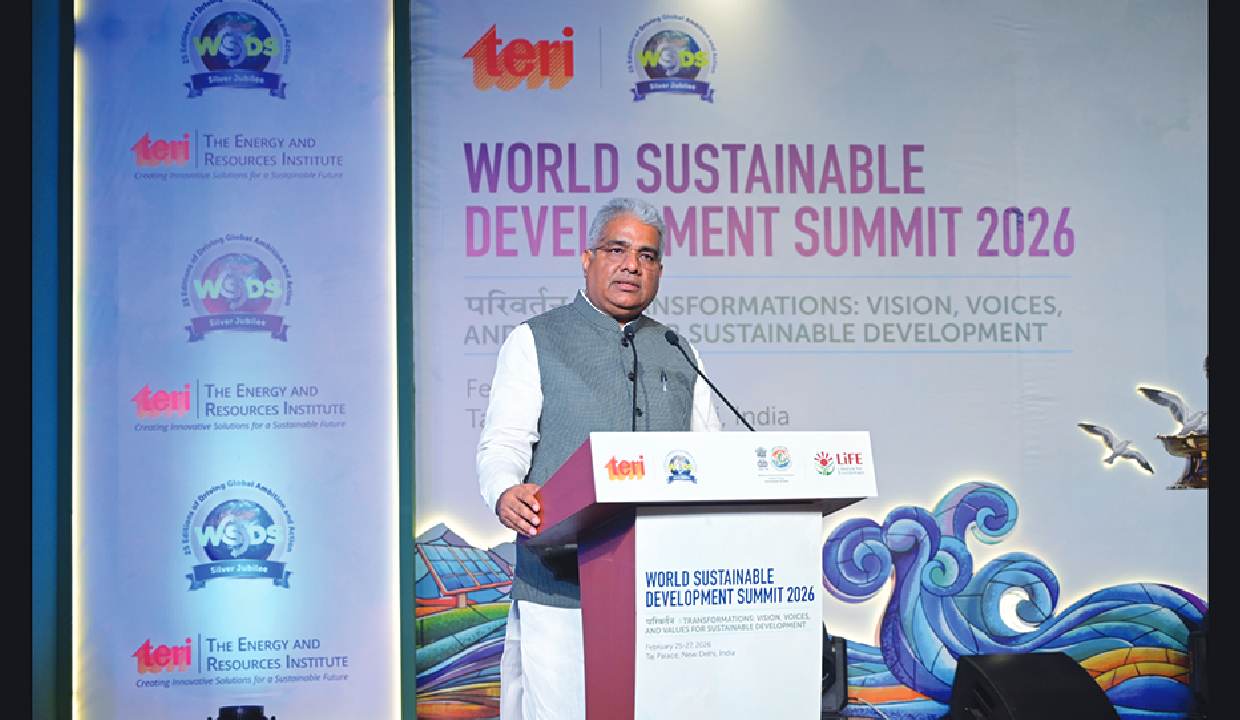
The Silver Jubilee edition of the summit, organised by The Energy and Resources Institute (TERI), was inaugurated by Union Environment Minister Bhupender Yadav on Wednesday with the theme for this year as “Transformations: Vision, Voices and Values for Sustainable Development”, signalling a shift from gradual change to systemic reform.
In his inaugural address, Yadav said the first Global Stocktake under the Paris Agreement shows the world is not on track to limit warming to 1.5°C. “This is not a crisis of science, but of speed and scale,” he said.
He stressed that transformation must reshape energy systems, economic models and governance frameworks. He also launched HIM-CONNECT, an initiative to strengthen climate resilience and innovation in the Himalayan region.
Nitin Desai, Chairman of TERI, said the challenge today is not awareness but action. He urged regional Governments, corporates and households to focus on implementation. TERI Director General Vibha Dhawan said the summit continues to bridge science, policy and practice while amplifying Global South voices.
On the second day of the summit, multilateralism and regional cooperation dominated discussions. Ministers from Sri Lanka, Nepal and the Maldives highlighted the urgency of collective climate action.
Nepal’s Environment Minister Madhav Prasad Chaulagain warned that the fragile Himalayan ecosystem is under severe stress. “Our mountains are melting, ecosystems are devastated, and people are suffering,” he said.
A flagship session on building a Himalayan coalition stressed that climate risks in the region go beyond national borders.
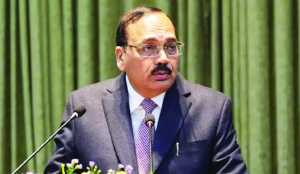
With the Himalayas warming at nearly twice the global average, speakers called for joint biodiversity monitoring, coordinated conservation and a structured regional framework. Manipur Governor Ajay Kumar Bhalla said technology, data and community participation must work together to build resilience.
The Montreal Protocol was cited as a successful example of global environmental cooperation. Participants noted that cutting short-lived climate pollutants such as methane, HFCs and black carbon can slow warming faster than many long-term measures.
Reducing methane was described as one of the quickest ways to limit temperature rise in the near term.
In another key session on greening manufacturing and trade, leaders discussed carbon pricing, emissions trading systems and cleaner technologies. There were calls for stronger regulations and international partnerships to reduce emissions from industry and shipping.
UN-Habitat Executive Director Anacláudia Rossbach said rapid urbanisation and climate change are deepening inequality. She stressed that technology is essential for better planning and resilient cities. UNEP’s Asia-Pacific Director Dechen Tsering said the real challenge is finance and called for reforming financial systems to align investments with climate and nature goals.
As WSDS 2026 second day concludes, the message from global leaders is clear: the era of incrementalism is over. The decade demands transformative action grounded in science, solidarity and scalable solutions.