From Jantar Mantar to the Supreme Court: The battle for peaceful protest
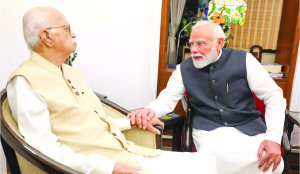
Prime Minister Narendra Modi has reached out to the nation in connection with the protests at Jantar Mantar, New Delhi. He has made appeals through social media more than once, and his messages have been published and broadcast prominently in the print and electronic media.
The Prime Minister spoke in detail about the new anti-paper leak law, along with other measures the Government is likely to undertake to make competitive examinations foolproof. He has shown magnanimity through his messages by pardoning those who used filthy, abusive language against him and his departed mother during the protest movement at Jantar Mantar and surrounding areas.
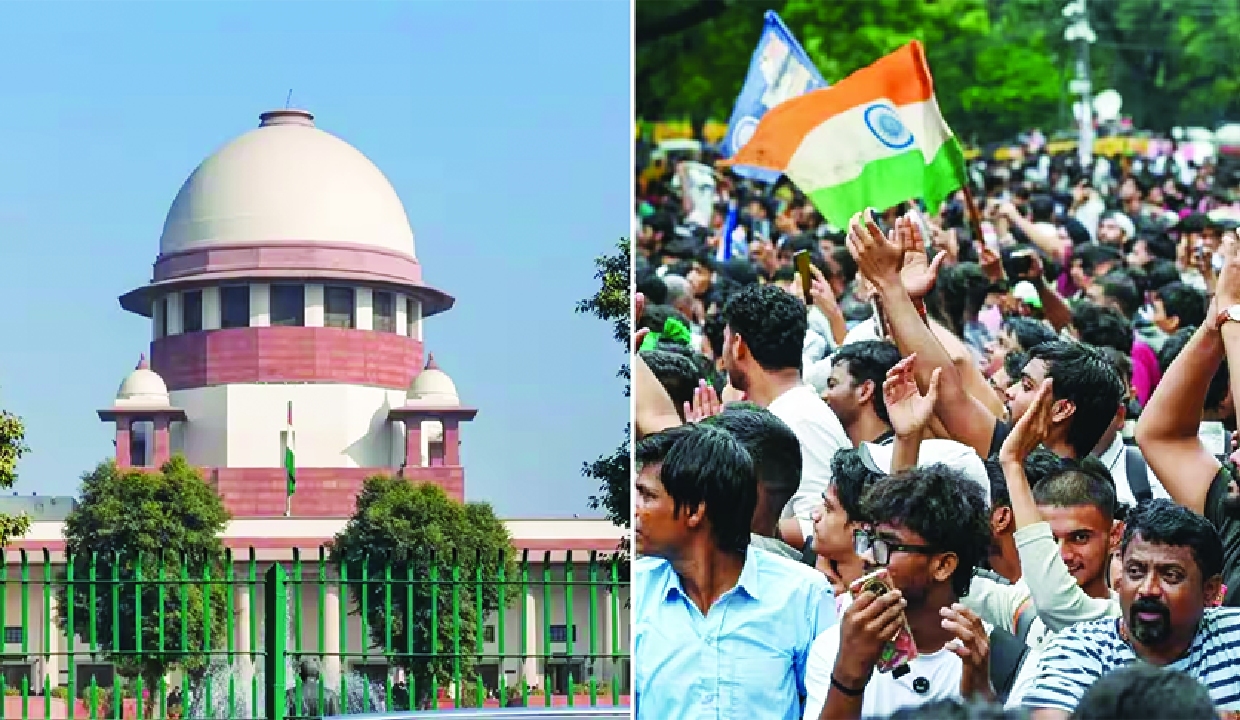
His Government at the Centre is responding judiciously before the Supreme Court, which is dealing with a batch of petitions arising out of the protest movements. Several sensitive issues are being deliberated, and the nation is keeping a close watch on those deliberations. The outcome from the apex court would carve out guidelines for the constitutional right to protest.
In contrast, the organisers of the protest movement have been stubborn, defiant, and unapologetic. Their members have been disrespectful even to the Supreme Court and have openly expressed their disagreement with the observations and directions issued by the judges. They have also announced plans to return to the spot of the protest.
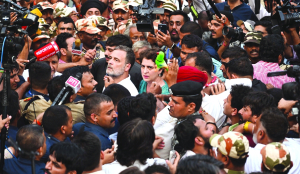
This raises the question of whether a future protest movement on the same issue will garner similar support, strength, and sympathy witnessed from July 20 onwards, prior to its withdrawal on July 25, 2026, after a 36-day agitation that began on June 20, 2026.
Since then, several developments have taken place. The Supreme Court, which was initially cautious, has undertaken a few hearings and issued significant directions. This judicial intervention has now taken a crucial step forward.
Beyond the initial petitions, the deliberations in the apex court have assumed a new dimension with family members of injured police and paramilitary personnel entering the legal proceedings to demand justice and oppose any unilateral move to withdraw FIRs registered against errant protesters. This move served to check the momentum with which the organisers of the protest movement were forwarding their narratives unhesitantly.
Further, a significant de-escalation occurred when prominent Ladakh-based education and climate activist Sonam Wangchuk officially called off his 26-day indefinite hunger strike on July 23. Following assurances conveyed by Union Ministers regarding student grievances and examinations, Wangchuk broke his fast, removing a major flashpoint that had heavily charged the emotional momentum of the agitation.
With Wangchuk having effectively stepped back from the agitation, some activists are trying to keep the momentum going, but they have not been as successful in gaining his level of credibility. Furthermore, none of them have acknowledged or spoken about the negative aspects of the protest movement. Now, it appears that the battleground has shifted from the streets of Jantar Mantar to the Supreme Court. The legal arena is now where the most important decisions will be made. The apex court has a heavy responsibility on its shoulders. It has to balance two vital needs of a healthy democracy.
First, it must protect every citizen’s constitutional right to peaceful protest and free expression. Second, it must ensure public safety, the rule of law, and fairness to the police officers who were injured while doing their duty.
How the court resolves these questions will set a crucial rulebook for the future. It will show the nation how peaceful dissent and lawful governance can coexist without sliding into chaos.
To achieve this, the Supreme Court is looking into several major steps. It is considering setting up an independent, high-powered team to investigate complaints of police heavy-handedness.
At the same time, it is examining how crowd control is handled to protect the safety of everyone involved. The court is also reviewing violence directed against security personnel to ensure that accountability applies equally to all sides. Ultimately, these hearings aim to create clear, nationwide guidelines that keep public spaces safe while respecting the voice of the people. In this context, it becomes crucial to examine the dual track adopted by the protest leadership throughout these proceedings.
This strategic approach exposes a sharp paradox. Rather than allowing the judicial process to run its course, public statements outside the courtroom continued to challenge the institutional authority of the very bench examining their grievances. On one hand, they ask the highest court in the land to protect their constitutional rights. On the other hand, attempting to pressure the court through outside hostility undermines the integrity of their own legal petitions.
Such confrontational tactics severely damage their standing as serious and responsible stakeholders in a constitutional democracy.
A legitimate struggle cannot maintain credibility when legal arguments inside the courtroom are coupled with street-level attacks against the bench outside.
Ultimately, abandoning judicial decorum does not strengthen a movement-it weakens its legal foundation and alienates the broader public.
This stance carries a high cost, causing ordinary citizens to lose confidence. These are the very people who sacrificed their time and energy to march to Jantar Mantar in genuine solidarity.
When organisers act with defiance instead of responsibility, everyday citizens feel let down. This disappointment has a lasting impact. It makes people hesitant to join future protest movements, even when the issues and demands are entirely genuine.
Citizens become wary of investing their time and energy if protests are hijacked by aggressive defiance rather than constructive dialogue. If public trust completely breaks down, the vital democratic right to protest risks being hollowed out. Instead of being a living, breathing tool for positive change, it could remain trapped solely in textbooks and academic debates.
The writer is a senior journalist covering legal affairs; Views presented are personal.