Food surplus, income scarcity
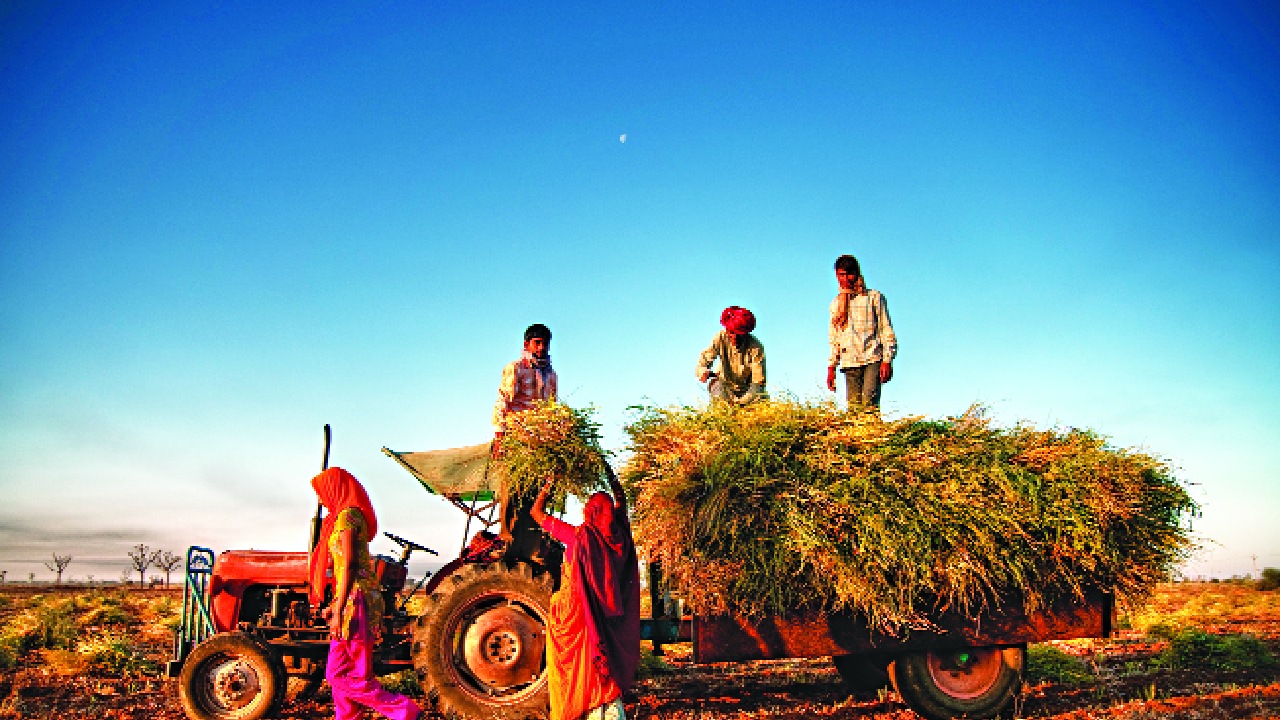
Even as the focus is generally on the manufacturing and services sectors, it is agriculture which is the hero of this year. Food grain production is set to cross 355 million tonnes. Horticulture output is expected to surpass 375 million tonnes. Production of milk has exceeded 250 million tonnes, and is projected to be more than 270 million tonnes. Even in the other allied activities such as poultry, fishing, shrimp farming, and others, the estimates are optimistic. At the end of day, the farm sector may boost growth to 7-8 per cent.
Yet, there is an irony. Under the Kisan Samman Nidhi welfare scheme, the Government will dole out INR 6000 a year per farmer’s household to boost incomes, and help the poor farmers to tide over livelihood problems. This is the extreme national paradox. When it comes to production, the country is gearing towards surpluses. Technology adoption is in fast gear, which is evident from the sales of tractors, and demand for fertilisers, and new seed varieties. This year, the production of tractors has crossed one million units, a figure that is likely to make the developed world envious.
So, Indian farmers can afford to buy a million tractors, yet they need a INR 6,000 per year subsidy for subsistence-level existence. One of the major reasons for this dichotomy is that an overwhelming majority of the farmers, more than 85 per cent, are small and marginal farmers. The bulk of them own just about a hectare of land, or maybe a maximum of two hectares. For this 85 per cent, agriculture is merely a mode to survive and access the minimum basic amenities, and not to earn a surplus that will enable them to save and invest.
It is the balance 15 per cent of the farmers who reap the benefits of surplus agriculture production, as well as the output in horticulture, dairy, and allied segments. Existing policies, even if they are aimed at helping the poor farmers, end up boosting the incomes of the richer counterparts. Take the minimum support price system (MSP), which offers a price cushion. Only the rich and landed households benefit from it. Forget about the gains, the poor farmers are not even aware of it. Repeatedly, the governments have failed to focus on the 85 per cent to enhance their incomes, returns, and livelihoods.
MS Swaminathan, possibly the chief architect of the Green Revolution, gave a three-fold recipe to improve the lives of the poor farmers. “There are three ways to improve the incomes of farmers. MSP procurement is one of them. We also need to improve productivity. The marketable surplus from agriculture needs to be enhanced. We should look at adding value-addition to biomass. For example, paddy straw is a biomass product that can be used to make edible mushrooms,” he explained in an earlier interview.
Swaminathan’s solutions are laudable, and they are practical and achievable. In the case of MSPs, the Government is on board, and enhances them across crops at regular intervals. The farmers may complain that the support prices are low, but they are substantial to cover expenses. The problem with MSP is two-fold. First, as mentioned earlier, most farmers do not get it because of exploitation, logistical issues, and lack of awareness. Second, the Government is unable to extend MSPs to all the farmers because of financial constraints. Providing MSP for 350 million tonnes will bankrupt it.
Productivity hikes are a remarkable feature of agriculture over the last three to four decades. In the early years of the Green Revolution, Punjab, Haryana, and some parts of western Uttar Pradesh witnessed massive increases in productivity per hectare. It enabled the nation to progress from a food deficient to food surplus one. Over the past two decades or so, poorer states such as Uttar Pradesh, West Bengal, Madhya Pradesh, Odisha, Andhra Pradesh, and Telangana have seen huge rises in productivity. This explains the record productions in agriculture and horticulture this year.
However, the third point that Swaminathan raises is the most interesting one, and it relates to the marketable surplus of agricultural products. Value-addition is something that the nation has failed to do despite a lot of noises and claims. Yes, there is diversification, as in farmers growing fruits and vegetables, or getting into dairy. But adding value to the produce is missing. For decades, especially since Pepsi entered the Indian market in the 1980s, riding on promises to transform the food processing sector, the policy-makers have promised to deliver on this front.
Sadly, it has not happened. Like the MSPs, and the use of new seeds varieties, and other inputs to boost productivity, food processing has helped the richer, or the new-gen, farmers. There are several stories about educated and younger farmers growing crops that sell at huge premiums, even in the global markets. There are examples of profitable links between farm communities, and industry. Yet, these are limited in numbers, and benefit small sections. The Government is unable to scale up these projects across the states.
One of the ways to manage value-addition, and better and more prosperous linkages between farming and industry is to resurrect the three dead farm laws. Years ago, the Narendra Modi regime had surrendered them due to massive farmers’ protests. Since the Government went ahead with the four labour codes recently, it implies that it fears the political and economic backlash from the farmers more than the trade unions. Or else, the voices and clout of the unions are not as loud and influential. On the farm laws, the farmers completely bamboozled the Modi regime.
Of course, it is not about being vote banks. Like the farmers, the industrial workers form a formidable political power base. So wherein lies the problem? It lies with the vested interests that dominate agriculture. Is it not ironic that a farmer in, say, Chhattisgarh is not allowed to sell wheat or rice in neighbouring Jharkhand and Odisha? In some cases, it is a criminal offense to sell across the state borders. That is because the local vested interests control the local mandis, and the farmers are forced to sell in these markets. Naturally, they are exploited by the middlemen.
Similarly, corporate farming, which was one of the tenets of the three farm laws, can help the farmers. They can sign contracts with firms for food processing. Remember, more than 30 per cent of horticulture is wasted because of the lack of storage facilities. But no firm will invest in them unless there is a clear legal framework. One hopes that after labour reforms the days of the farm laws will return.
The author has worked for leading media houses, authored two books, and is now Executive Director, C Voter Foundation; views are personal