Follow the storages, not oil wells
The US wants to stop the flow of Iranian oil to stop the war
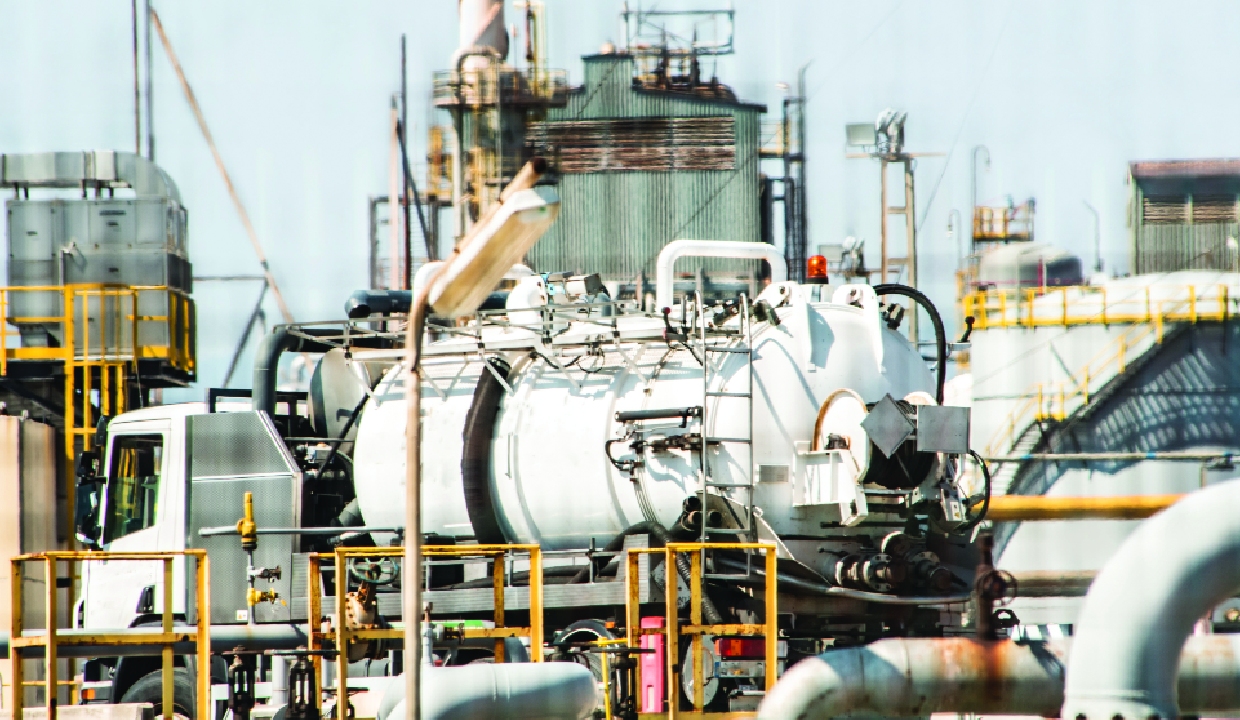
It is a matter of days, maybe two or three, before Iran’s crude oil storage capacity on Kharg Island, which accounts for 90 per cent of its exports, and is blocked by the US military, is full. This is the new grand strategy that the US president, Donald Trump, has dreamed up to finish the ongoing war. Once there is nowhere to store the oil, Iran will be forced to shut its “fragile… oil wells.” If the island remains blockaded, the stored oil cannot be shipped out. It will be a classic economic squeeze, which will force Iran to come to the peace table.
However, Iran has maintained its own blockade of the Strait of Hormuz, through which 25-30 per cent of the global crude oil passed through each year before the war. In effect, it has imposed huge economic costs on the global suppliers and buyers, and the repercussions are even felt in the retail markets in the US. Since Iran has millions of barrels floating on the open sea, which can easily be sold to earn huge revenues, it has an economic buffer to counter the US blockade. Iran wants Kharg Island to be open before serious peace talks can begin.
Of course, there is a Trump deadline, a temporary two-week ceasefire announced on April 8, which is now extended till Iran’s storage achieves full capacity. There is an Iran counter, which maintains that the Strait will remain choked until Kharg Island is un-choked. Producers have found alternate routes to bypass the Strait, at least temporarily, and in parts. The International Maritime Organisation (IMO) is preparing a massive evacuation plan for the hundreds of vessels that are stranded in the Strait, but it will be activated only when there are “clear signs of de-escalation in regional tensions” from both the sides.
“Based on the fact that the Government of Iran is seriously fractured, not unexpectedly so and, upon the request of Field Marshal Asim Munir, and Prime Minister Shehbaz Sharif, of Pakistan, we have been asked to hold our Attack on the Country of Iran until such time as their leaders and representatives can come up with a unified proposal,” Trump announced in a post on Truth Social. He added that the US would continue the blockade, and remain “ready and able.” In effect, he candidly admitted that he had indeed extended the ongoing two-week ceasefire “until such time as their (Iran’s) proposal is submitted, and discussions are concluded, one way or the other.”
Instead of mere economic sanctions, and a freeze on Iran’s global financial and other assets, which are in place, America has gone a few steps further. It aims to squeeze Iran’s economy, which depends on oil exports from the Kharg Island. “The US Treasury will continue to apply maximum pressure through Economic Fury to systematically degrade Teheran’s ability to generate, move, and repatriate funds. Any person or vessel facilitating these flows, through covert trade and finance, risks exposure to US sanctions,” warned Treasury Secretary Scott Bessent. He feels that restraining Iran’s sea trade will target “revenue lifelines.”
Some experts think that the grand plan may not work in a few days. For years, despite the sanctions, Iran was able to both siphon out oil, and funnel in revenues through legal and illegal channels. These illicit methods are quite robust and stable, and will be used to sell millions of barrels of oil on the high seas, and bring back the dollars, and yuan. China will be an over-eager buyer. In addition, Iran will charge premiums on the sales, which will boost revenues. Everything depends on how porous the US blockade is. It is easier for Iran to control the Strait compared to the US’ ability to choke Kharg Island.
As the world waits for some sort of a peace to emerge, the IMO is holding discussions on operational evacuation details that include the priority of the departure of the vessels in the Strait “based on how long crews have been stranded, along with other logistical and safety considerations.” Of course, the IMO will interact with Iran and Oman, which together proposed the traffic separation scheme to route the vessels in the region, which was adopted in 1968. The complication is that during the war, Iran devised a new routing system, which includes “coastal navigation paths and, in some cases, associated payments.”
As recent experiences indicate, the IMO, apart from the various regional nations, will need to deal with possible irregularities and illegalities. According to reports, there were recent incidents related to security, as shipowners resorted to fraudulent communications, and talked about “fake passage arrangements.” Once the Strait is open, after peace is declared, there will be a hurry among the owners, crews, insurers, and buyers to expedite the process. There will be attempts to surreptitiously enable their ships to leave before the others. This can create confusion, random accidents, and logistics uncertainty.
Most nations want a speedy resolution, a solution that enables both sides to come to the table, and claim victory to their constituents. The easiest way is for both to declare the end of the respective blockades. Iran keeps the Strait free, and the US sails away from Kharg Island. But the world has figured out that while it watched Iran’s nuclear progress, it had a more powerful ticking bomb in its possession. “Iran’s most powerful weapon is not a (nuclear) bomb. It is the geography it controls,” stated a media report, which implied the Strait.
Think about it. A narrow 21-mile choke point in the sea, which allows for a few safe lanes of shipping. One does not need to sink dozens of ships, as a single episode creates a credible and long-sustaining threat. “Military planners call this anti-access/area-denial strategy. The goal is not to defeat the US Navy in open battle. The goal is to create conditions so dangerous that commercial shipping simply refuses to enter,” explains the same report. Now, the US has done the same, fighting military-commerce RDX with a similar dynamite.
It is a matter of who blinks first. The US feels Iran will because it will run out of storage, shut the wells, and be deprived of the revenues. Iran thinks there will be additional pressure on the US, which has built over three weeks, if it can resist for maybe a week or so. Both sides know the implications, and do not wish to be the first one to bat their eyelids.