FAIFA calls for El Niño-ready farming in India
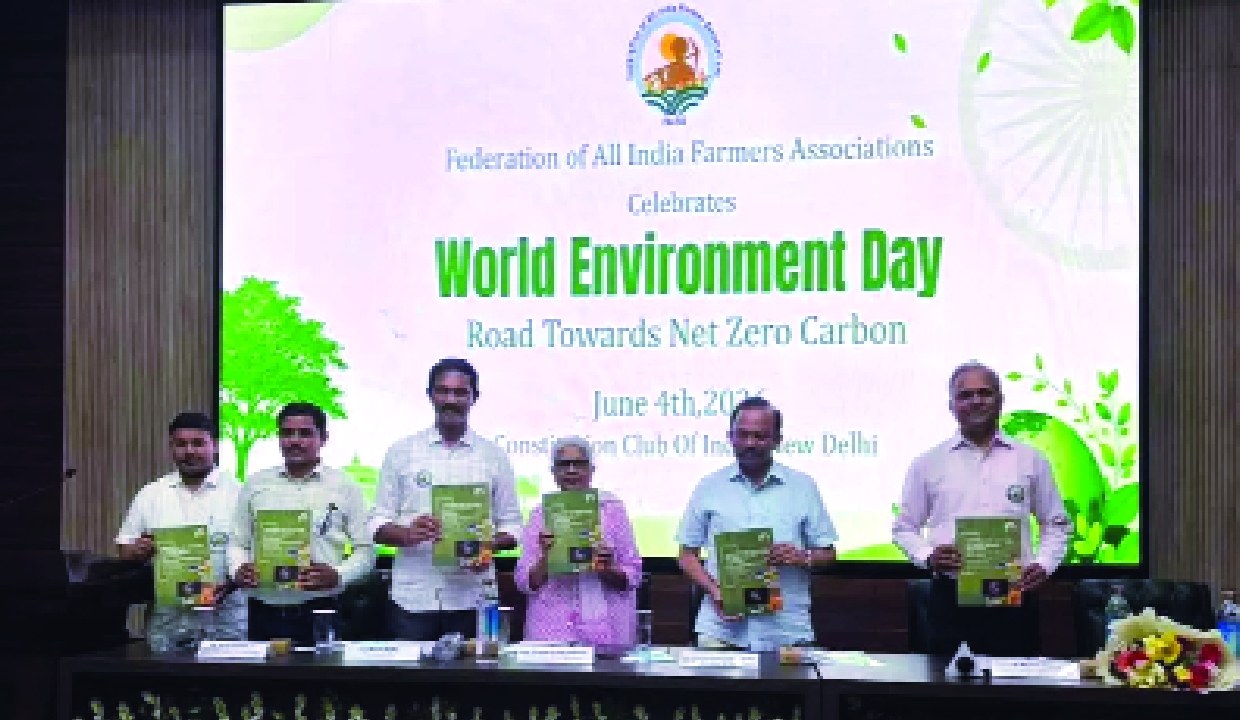
Marking World Environment Day 2026, and as India prepares for an increasingly uncertain agricultural future marked by climate variability, extreme weather events and the growing influence of El Niño conditions, the Federation of All India Farmer Associations (FAIFA) on Thursday released a landmark report calling for an urgent transition towards climate-resilient farming systems capable of safeguarding food security, farmer livelihoods and long-term agricultural sustainability.
The report, “Inspired by Nature: El Niño-Ready Farming for Climate Resilience and Our Future,” was released by Magunta Sreenivasulu Reddy, Member of Parliament, Ongole, Andhra Pradesh. The report presents a comprehensive roadmap for addressing some of the most pressing challenges confronting Indian agriculture today. It examines the growing impact of extreme heat, erratic rainfall, soil degradation, groundwater stress and resource-intensive farming practices, while outlining practical pathways for building a more resilient agricultural ecosystem.
Speaking at the event, Reddy said, “The Government of India has taken several significant steps in recent years to promote sustainable agriculture, climate resilience and environmental conservation through initiatives focused on digitisation in agriculture, natural farming, clean energy and farmer empowerment.”
These efforts have created a strong foundation for building a more resilient agricultural sector.
As we mark World Environment Day, it is encouraging to see organisations like FAIFA complementing these efforts through constructive dialogue, knowledge sharing and practical recommendations that can help prepare Indian agriculture for future climate challenges.”
A central theme of the report is the growing strategic importance of El Niño and its implications for Indian agriculture. The report notes that El Niño events have historically been associated with weaker monsoons, moisture deficits and increased vulnerability during the kharif season. Against this backdrop, FAIFA argues that agricultural planning must increasingly focus on preparedness, adaptation and risk management rather than reactive responses to climate-related disruptions.
The report advocates a dual transition—ecological and technological—to strengthen resilience across agricultural systems. It calls for restoring soil health, reducing excessive dependence on chemical inputs, improving water-use efficiency, promoting crop diversification and encouraging nature-inspired farming practices that enhance long-term sustainability, according to a Press release.