Explained: Why the Government has now fixed LPG production targets for every refinery
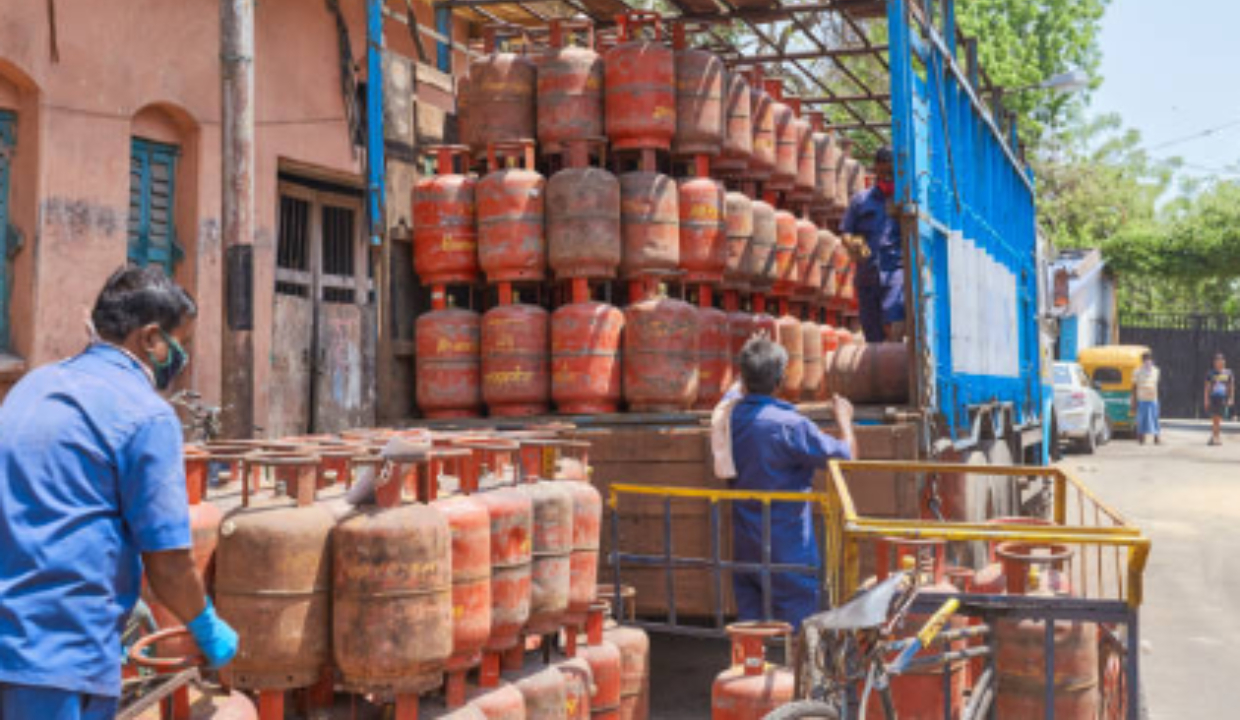
The government has, for the first time, fixed maximum cooking-gas LPG production targets for individual public- and private-sector refineries and upstream companies. The order, issued by the Petroleum and Natural Gas Ministry on August 13, sets combined production potential at 63,810 tonnes a day. This is more than double the domestic LPG output of the last fiscal year and about 70 per cent of the country's daily consumption.
This is the direct result of the West Asia crisis, which exposed how vulnerable India's cooking-gas supply is to a disruption in imports.
What the Order Does
Per-facility benchmarks. The ministry has specified maximum LPG production levels for 21 refineries and upstream companies, 18 public-sector refineries ordered to produce a total of 31,470 tonnes a day, plus private players and upstream gas producers.
The private sector split. Reliance Industries' older refinery at Jamnagar (the 33-million-tonne domestic-tariff-area plant whose products sell locally) must produce up to 18,000 tonnes a day, the largest single quota. No target has been set for Reliance's separate only-for-exports refinery at the same site. Russia's Rosneft-backed Nayara Energy's Vadinar refinery has been asked to produce 4,480 tonnes a day.
Upstream producers. Gas producers and processors like ONGC and GAIL, which make LPG from natural gas, have been given a combined target of 6,460 tonnes a day.
A standing framework, not an emergency. The limits "kick in whenever there is a supply constraint." Companies must maintain infrastructure for LPG storage, evacuation and transport, and pursue upgrades, including converting naphtha into LPG and upgrading fluid catalytic cracking units, to maximise output. The government has empowered itself to order ramps in production for specified quantities and periods whenever it deems it necessary for "adequate availability, equitable distribution and supply at fair prices."
Six-monthly review. The production schedule will be reviewed every 1 January and 1 July, allowing new refineries and capacity additions to be folded in.
Why Now: The Strait of Hormuz Shock
India consumed 33.2 million tonnes of LPG in 2025-26 (about 91,000 tonnes a day). Of that, 13.1 million tonnes was produced locally, the rest, 21.3 million tonnes, was imported. Import dependence exceeds 64 per cent, and India gets about 90 per cent of its LPG imports through the Strait of Hormuz from nations like Saudi Arabia.
When the Iran war effectively shut Hormuz, imports were cut off. The government's March response was emergency and ad hoc, refineries were ordered to divert petrochemical streams to LPG, sales to industrial and commercial users were initially stopped, household refill periodicity was stretched, and households were nudged toward piped natural gas. Domestic production was ramped to about 55,000 tonnes a day at the peak of the crisis, then the emergency orders were gradually withdrawn after supplies eased from mid-June.
The new framework is the permanent version of that scramble: facility-wise benchmarks, standing infrastructure obligations, and a legal basis for the government to order ramps at short notice.
What It Means
For prices: the order's stated aim is to prevent the shortages and rationing seen during the crisis. With a 63,810-tonne-a-day potential ceiling, roughly 70 per cent of daily consumption, the government is building a domestic buffer that can absorb a future import shock.
For imports: the framework does not end import dependence, 70 per cent of daily consumption is not 100 per cent, but it raises the ceiling on what India can produce at short notice, shrinking the exposure gap that made the crisis painful.
For the companies: Reliance's 18,000-tonne quota is the biggest single obligation, reflecting the Jamnagar DTA refinery's scale. The requirement to hold storage and evacuation infrastructure, and to notify the Centre for High Technology on upgrades, adds a compliance layer to normal refinery economics.
What Comes Next
The first six-monthly review lands on January 1, 2027, that is when new refinery capacity and technology upgrades get folded into the schedule. The standing framework's real test will be the next disruption to overseas LPG supplies, whether the benchmarks translate into supply without the rationing of March 2026.
(With PTI Inputs)