Ex-Maldives Vice President calls for Bangladesh peace
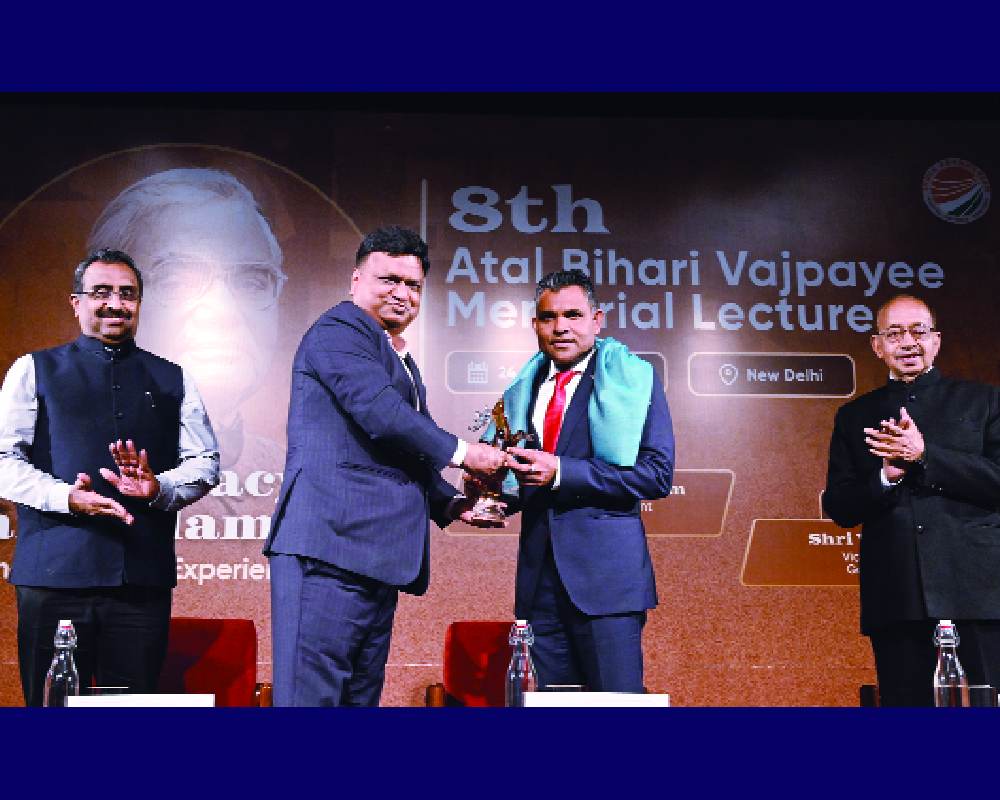
Former Maldives Vice President Faisal Naseem on Wednesday urged world leaders to place peace at the centre of global decision-making, warning that many contemporary crises are the result of human actions and can be prevented through cooperation and foresight. His remarks came against the backdrop of growing concern over political instability, radicalisation and the safety of minorities in Bangladesh.
Speaking to the media on the sidelines of the 8th Atal Bihari Vajpayee Memorial Lecture, Naseem said that conflicts driven by human choices must be addressed through dialogue rather than violence. Emphasising collective responsibility, he noted that major powers need to engage with one another to de-escalate tensions and prevent further loss of life.
“Disasters created by humans are not inevitable. They can be reduced if countries work together and choose dialogue over conflict. Peace must take priority above all else,” he said, adding that history and tradition consistently point to peace as the only sustainable path forward.
Addressing concerns over radicalisation, particularly in the context of Bangladesh, Naseem stressed the importance of early intervention by Governments. He said leadership requires anticipating risks and acting before situations spiral out of control. According to him, preparedness and proactive governance are essential to maintaining social harmony and preventing violence.
Naseem, who served as the Maldives’ vice president from 2018 to 2023, delivered the keynote address at this year’s memorial lecture. His comments come at a time of heightened international attention on Bangladesh following political turmoil in 2024 after the removal of the Sheikh Hasina-led Government. Reports of attacks on religious minorities, including the recent killing of a Hindu youth, Dipu Chandra Das, over alleged blasphemy claims, have triggered protests in India and drawn criticism from rights groups abroad.
At the same event, BJP leader and India Foundation President Ram Madhav highlighted the Maldives as an example of how religious identity and democratic governance can coexist.
He noted that while the Maldives is constitutionally an Islamic State, it remains one of the few such countries to function as a democracy.
“The Maldivian experience shows that Islam, peace, and democracy are not mutually exclusive. A strong commitment to democratic institutions can go hand in hand with religious identity, social stability,” Madhav said.