Escape into the painted lanes

In the heart of the capital, the Lodhi lanes have shed their grey skin to become a living garden of public art.
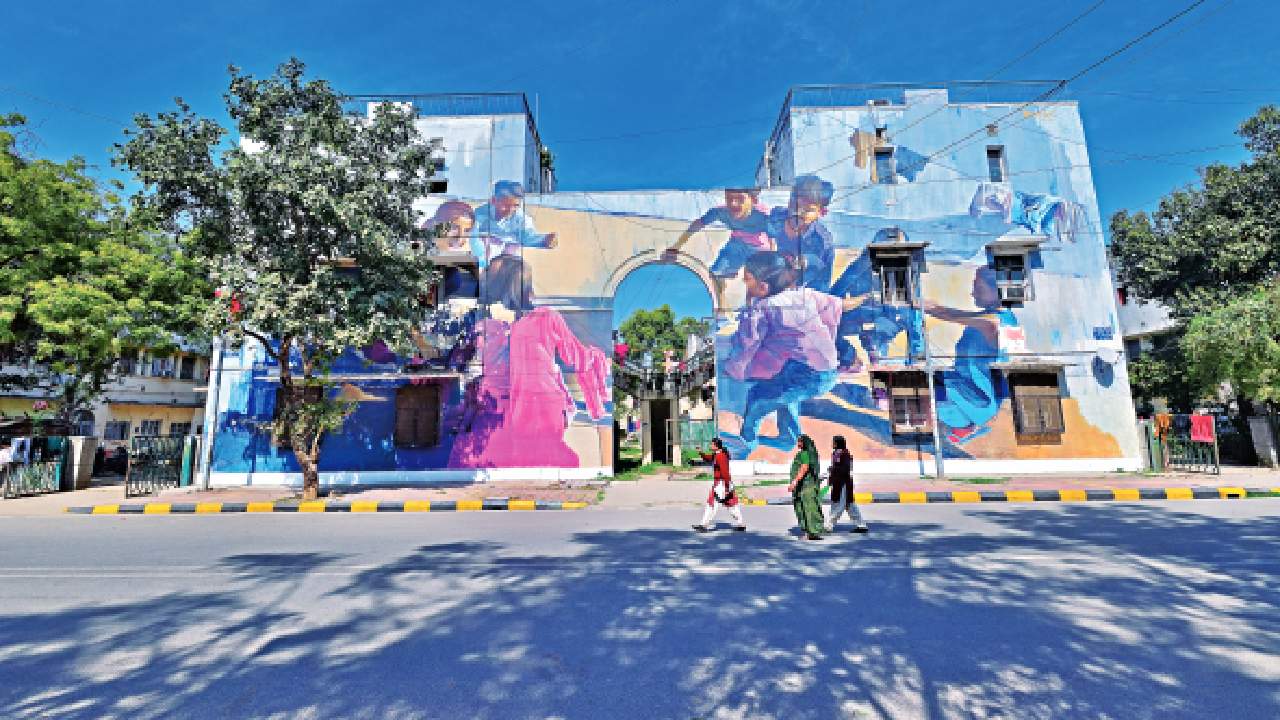
“The world will be saved by beauty.” Dostoevsky wrote that down, probably never thinking a quiet corner in Delhi would actually prove him right, one brick at a time. For the longest time, Lodhi Colony was a sea of bureaucratic grey. It was a rigid, symmetrical leftover from the 1940s built to house the cogs of the British Raj. For decades, those arched gateways were there. They were functional. They were nothing more than the background noise of a city always in a rush.
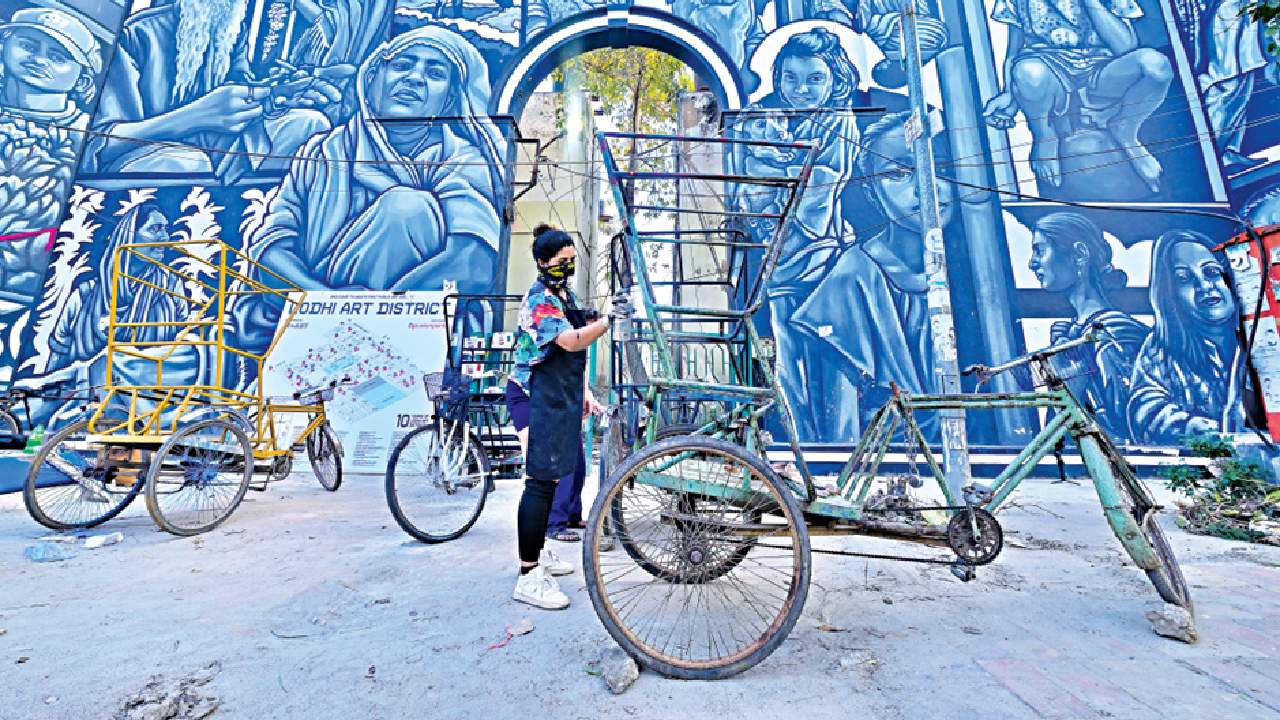
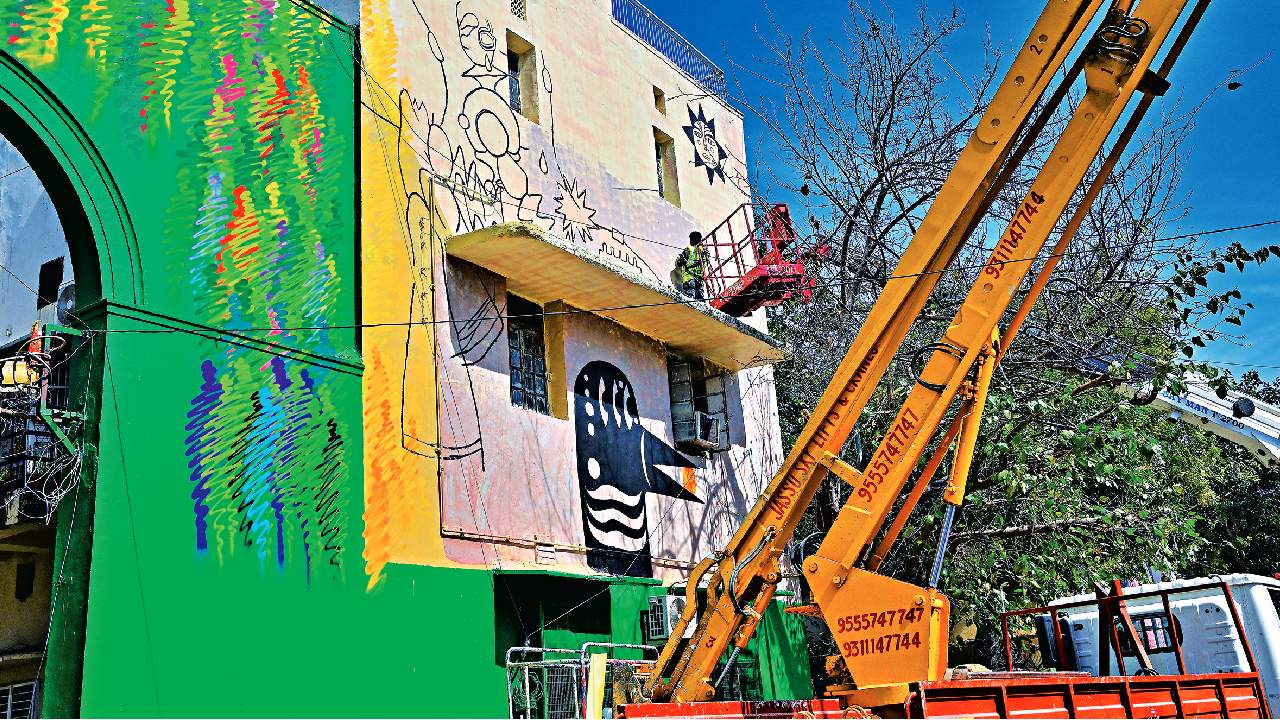
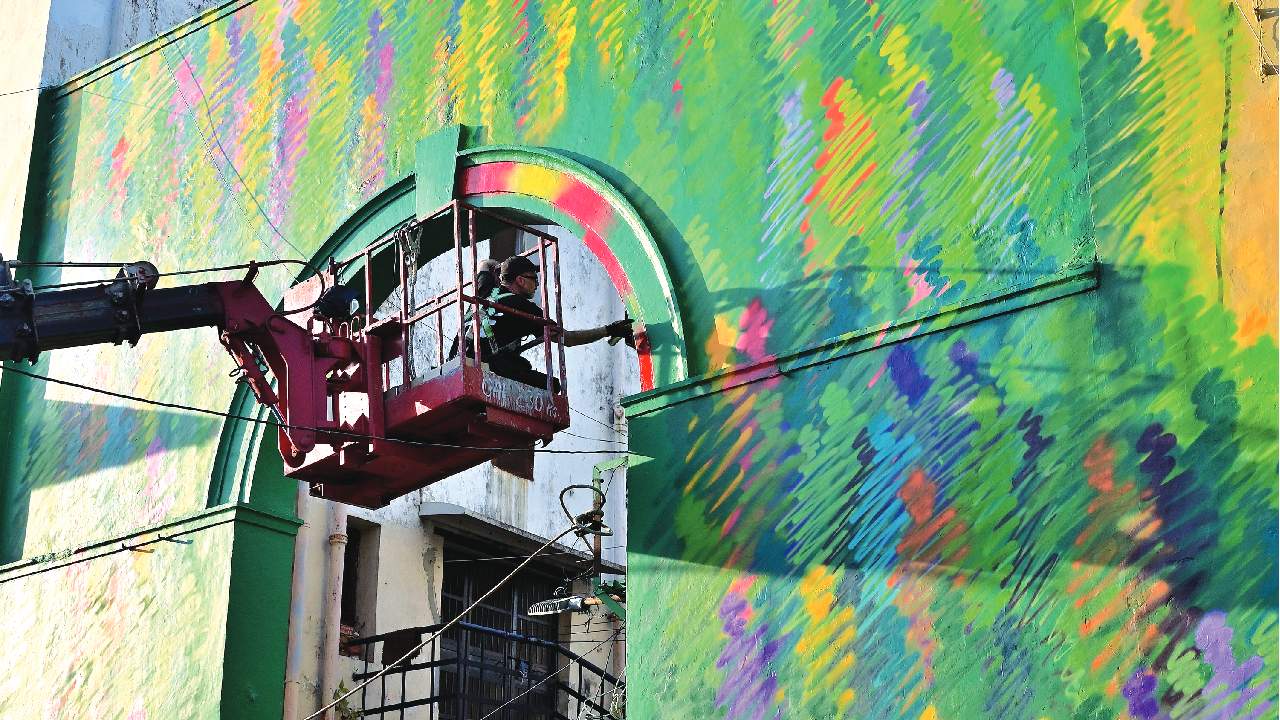
But that heavy silence has finally broken. Today, it is replaced by a permanent, defiant explosion of colour. It is like a never-ending Holi painted onto the very skin of the city. It is a place where the festival of colours refuses to wait for a date on the calendar. It lives there, every single day. Strolling these lanes feels like wandering into the city’s private diary. What was a quiet government estate has blossomed into India’s first open-air museum. It is a gift to all, showing every ordinary building has a story. These walls carry the street’s lively spirit. With Lodhi Art District marking 10 years alongside St+art India Foundation and Asian Paints, the colony now feels like home-art for one and all. Here, the city finally finds its voice. That wall’s turned into a huge, colourful garden door-where two worlds bloom together. High on the scaffolding, Artist Suso33 from Madrid paints with a dancer’s grace. Right beside him, his wife Annabelle is busy capturing the whole transformation.
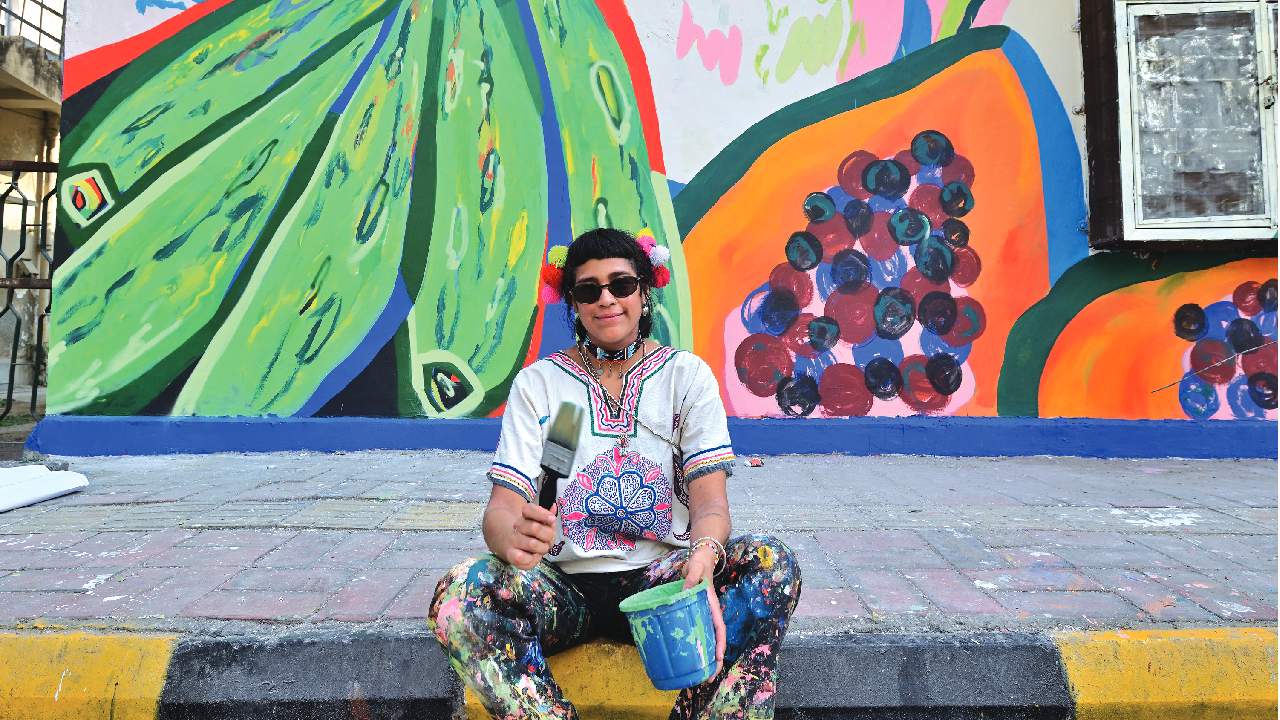
She tells us that Indian people are so full of colour that Suso felt he simply had to reflect that spirit in his work. If you ask what drives a project this big, the answer is actually quite simple: it is love. That love is what gets the art onto the stone, a shared passion that fuels every stroke. Working alongside local artists like Ishan and Tarini, they are creating a visual handshake. This is slow, thoughtful work. It involves the residents who stop to offer a word of encouragement or stand in awe. By the time the final stroke is placed, the flags of India and Spain will meet on the brickwork as a gift of friendship. The creativity spills right off the walls and onto the wheels moving through the city. Down a nearby lane, artists are busy turning ten rickshaws into bright, rolling masterpieces. In a time when fewer people pick this old-school way of travel, these painters give the rickshaw a new soul.
They paint them so well that you want to hop in for a ride. This keeps the heritage of the streets alive, turning a boring commute into a walk through a gallery. A local artist from Kotla, who has spent ten years doing this, smiles while wiping a smudge of yellow paint off his hand. This spirit of inclusion defines Lodhi. It is a place where the art belongs to everyone, regardless of status. The streets are a theatre and every person walking by is a guest of honour. Of all the stories on these walls, one hits deep. The mural Water: Past, Present, Future brings together Raissa Pardini from the UK and the late Hanif Kureshi, a true visionary. They walked the crowded lanes of Old Delhi, talking to traditional sign painters to capture the perfect visual language. This was the last design Hanif Kureshi finished before he passed. It is a vivid tribute to a man who always said the streets make the best gallery.
The mural ties ancient Indian stepwells to the crises ahead. We are the ones who must guard our heritage. From the sharp lines of Bartek Swiatecki to the playful stories told by Jumu from Berlin, Lodhi has turned into a global village. But the real magic is just in noticing things. It is the way the morning sun hits a mural of a bird in flight, or how a plain wall can suddenly make a stranger feel a bit less alone. Lodhi lanes have shown Delhi that beauty belongs to everyone. It turns a quick walk to the shops into a discovery. In these lanes, every day feels like Holi, and every wall celebrates what it means to be alive together. The best part is that the gates stay open. Anyone can wander these streets and find a spot they love. Those walls are just waiting for you to look up.
Just stop. Park the car, pocket the phone. The real magic of the Lodhi lanes is how the light hits a three-storey bird at four in the afternoon. These walls spent eighty years watching the city grow, and now, they are finally talking back. When you wander through, you naturally slow down. You find yourself breathing a bit deeper and looking at everything like a kid again. It is rare to find a spot that wants nothing but your time, yet somehow makes you feel like you belong. The paint is fresh, the stories go deep, and the streets are wide open for you. Who hates the mess of a spray bottle or hands covered in colour? The lanes of Lodhi walls show exactly how much a bit of paint can change your mood. You can still volunteer or just get totally lost in these art-filled paths. So, go ahead. Wander. You are walking right through the heart of Delhi. Once you see the city in these colours, the plain grey walls everywhere else just do not cut it anymore.