ECI, State poll panels resolve to synergise laws on local body, LS polls
The Election Commission of India (ECI) and the various state poll panels on Tuesday resolved to work together to synergise laws relating to local body polls with those relating to Parliament and State legislature elections.
A declaration adopted at a conference of the Election Commission and State poll panels here stated that “in national and constitutional interest, EC suggested to work out mutually acceptable mechanisms and legally viable frameworks to synergise with all SECs across the country for all possible election processes, including the sharing of ECINET, EVMs, and electoral rolls.”
It stated that the EC and State Election Commissions will work together to “synergise” the laws relating to the elections to panchayats and municipal bodies with those relating to the elections to Parliament and State legislatures.
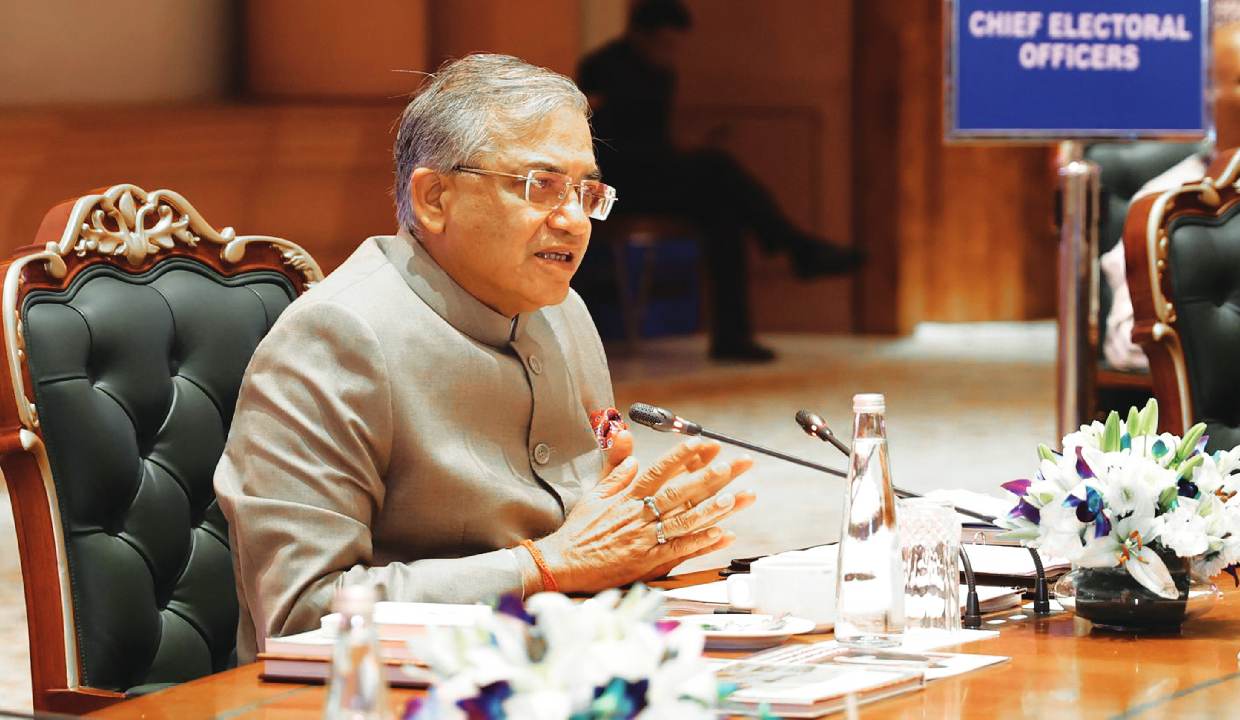
Lok Sabha and state assembly polls — termed direct elections where voters elect their representatives — are governed by the Representation of the People Act, 1950 and 1951 and relevant rules. The participants also agreed that the preparation of pure electoral rolls is the bedrock of democracy and that the transparent conduct of elections in an efficient manner strengthens democracy. Addressing the gathering, Chief Election Commissioner Gyanesh Kumar said that in national interest and constitutional synergies, the EC and state election commissions (SECs) should work together, keeping the elector in mind.
While the EC is mandated to hold elections to the posts of the President of India, the Vice President, Lok Sabha, Rajya Sabha, state legislative assemblies and state legislative councils, SECs hold panchayat and municipal polls.
The EC also launched a book, ‘A Confluence of Democracies’, at the round table being held after a gap of 27 years. The last such conference was held in 1999. “The day-long conference included presentations on EVMs, ECINET, and sharing of electoral rolls,” a spokesperson said.
State poll panels take EC’s electoral rolls, used for assembly polls, and employ them as per their requirements for holding local body polls.
The shelf life of an EVM is 15 years, and machines at the end of their life cycle are usually given to state poll panels for holding local elections. The EC at present uses ‘M3’ or Mark III type of EVMs to hold LokSabha and assembly polls.
The EC does not charge states for using their EVMs. Once an EVM leaves the EC’s custody, it is no longer called ECI-EVM. Machines that complete their life cycle are destroyed under security.
The Union law ministry is provided funds in the Union budget to help EC buy required EVMs from Electronics Corporation of India Ltd (ECIL) and Bharat Electronics Ltd (BEL) -- the two PSUs which manufacture the voting machines.
The Election Commission will also offer to help state ECs develop technology platforms similar to ECINET, as well as training support for their officials in election management. ECINET is a digital platform to simplify election-related services.
“The primary objective of the round table conference is to foster synergies in the functioning of ECI and SECs with respect to electoral processes and logistics within their respective legal frameworks,” the EC had earlier said.